
How to Increase Your SEO Traffic in 30 Days?

Let’s be honest—most SEO guides promise you the moon but deliver results sometime around… never. But here’s the thing: while SEO is an ongoing process that typically takes months to show serious results, there are absolutely ways to know how to increase your SEO traffic in 30 days if you focus on the right tactics.
I’m not going to tell you you’ll 10x your organic traffic overnight. That’s not how this works. But can you boost your website traffic by 50% or more in a month? Absolutely, especially if you’ve been leaving easy wins on the table.
This 30-day SEO plan focuses on quick wins that compound over time. Think of it as giving your website a turbo boost while building a sustainable SEO strategy for the long haul.
Ready? Let’s get into it.
The Basics of SEO (And Why 30 Days Matters)
Traditional SEO can take 6-12 months to show major traffic gains. But that doesn’t mean you can’t see meaningful results faster.
The key is focusing on low-hanging fruit: pages already ranking on page 2 of Google search results, content that’s almost good enough, technical issues holding you back. These are your quick wins.
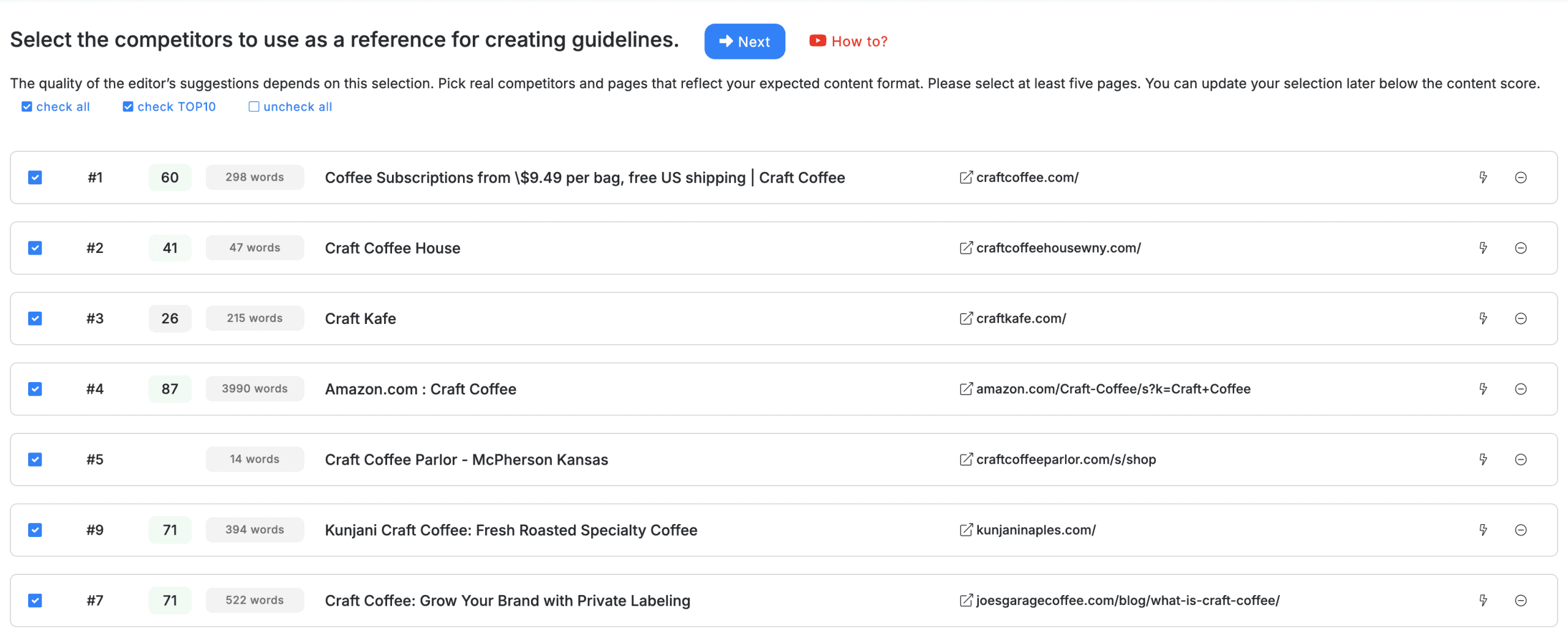
And here’s where a tool like NEURONwriter comes in handy; it helps you identify exactly where those opportunities are hiding on your site.
Your 30-Day SEO Roadmap: 12 Tactics to Boost Rankings Fast
Week 1: Foundation & Quick Wins
1. Audit Your Best (Almost-Best) Content
First things first: you need to know what you’re working with.
Fire up Google Search Console and identify pages ranking in positions 4-15. These are your golden opportunities—they’re already getting some visibility, but they’re not quite capturing the traffic they could be.
Why focus here? Because moving from position 11 to position 5 is exponentially easier than trying to rank a brand-new page from scratch. You’re already in Google’s good graces; you just need to give them more reasons to boost you higher.
Use tools like Google Analytics to see which pages are driving traffic but have high bounce rates or low engagement. These need optimization, not abandonment. High bounce rates are often the first sign of user fatigue. Using advanced churn prediction can help you identify if these visitors are likely to leave your ecosystem entirely, allowing you to optimize the content specifically for retention.
In NEURONwriter, you can analyze these pages against your top-ranking competitors to see exactly what’s missing. Are you lacking semantic keywords? Is your content thinner? Do competitors cover subtopics you’ve ignored? This is detective work, but it pays off fast.
2. Optimize Title Tags & Meta Descriptions for Higher CTR
Here’s a secret many people miss: sometimes your ranking is fine, but your click-through rate is terrible.
Your title tag is prime real estate in search engine results pages. If it’s boring, vague, or doesn’t match search intent, people will scroll right past you—even if you’re ranking #3.
Spend Days 3-4 going through your highest-traffic pages and asking: “Would I click this?”
A good meta description won’t directly improve rankings, but it will absolutely increase the amount of traffic you get from your current positions. Think of it as free advertising space—use it wisely. Add numbers, questions, power words. Make it compelling.
NEURONwriter’s SERP analysis shows you what’s actually working for pages that outrank you. Don’t copy them, but learn from what makes people click.
3. Update & Expand Your Existing Content
This is probably the single most effective tactic to increase traffic in 30 days.
Google loves fresh, comprehensive content. If you published an article two years ago and haven’t touched it since, it’s probably underperforming—not because it was bad, but because it’s outdated.
Here’s your action plan:
- Pick 3-5 of your highest-potential posts (those positions 5-15 again)
- Add 500-1,000 words of new, valuable information
- Update statistics, examples, and screenshots
- Add missing semantic terms you found in your audit
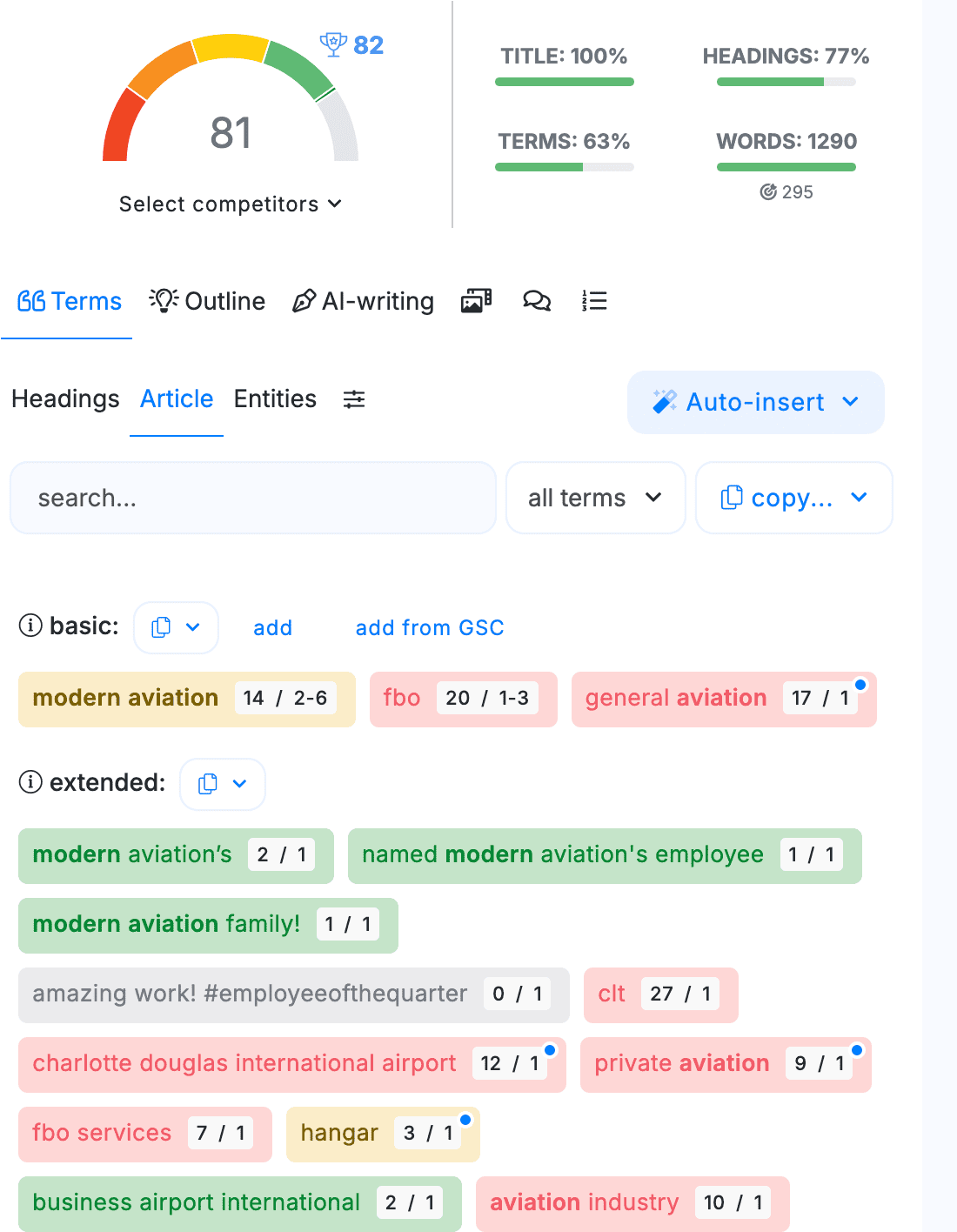
Use NEURONwriter’s content editor to identify keyword gaps. It’ll show you terms that top-ranking content includes but yours doesn’t. This isn’t about keyword stuffing—it’s about comprehensive coverage.
One client I worked with increased visibility on a single post by 147% in three weeks just by expanding it from 1,200 to 2,400 words and covering subtopics they’d originally skipped.
Week 2: Technical & Structural Optimization
4. Fix Your Technical SEO Issues (Yes, They Matter)
I know, I know—technical SEO sounds boring. But here’s the thing: if Google can’t properly crawl your site, all your content efforts are wasted.
Spend a day running your site through tools like Google Search Console and fix the obvious issues:
- Broken links (internal and external)
- Pages with slow load times
- Mobile usability problems
- Missing XML sitemaps
- Duplicate content issues
You don’t need to be a developer for most of this. Many issues have simple fixes. And the traffic boost from making your site more crawlable? It’s real.
This is an important aspect of SEO that gets overlooked because it’s not as sexy as “content creation.” But proper SEO requires a solid foundation.
5. Build an Internal Linking Strategy That Actually Works
Internal linking is one of the most underutilized SEO strategies out there. It’s free, it’s under your complete control, and it works fast.
Here’s the concept: your highest-authority pages (homepage, popular blog posts) can pass “link juice” to newer or underperforming pages. By strategically linking from strong pages to weaker ones, you help search engines understand your site structure and boost the rankings of pages that need help.
Action steps:
- Identify your most authoritative pages (high backlinks, good rankings)
- Find relevant opportunities to link to pages you want to boost
- Use descriptive anchor text (not just “click here”)
- Create content clusters where related posts link to each other
Use tools like Ahrefs or NEURONwriter’s topic research feature to map out logical content clusters. For example, if you have a pillar post about “Content Marketing,” link to it from posts about “Email Marketing,” “Social Media Strategy,” and “SEO Copywriting.”
Good internal linking can improve user experience while helping Google understand which pages on your website are most important.
6. Go After Long-Tail Keywords (The Low-Hanging Fruit)
If you’re trying to rank for “SEO” or “marketing tips,” good luck—you’re competing with giants. But “how to optimize blog posts for featured snippets in WordPress”? That’s winnable.
Long-tail keywords have three advantages:
- Lower competition
- Higher intent (people know what they want)
- Faster ranking potential
Use keyword research tools like NEURONwriter to find these opportunities. Look for search terms with:
- Decent search volume (even 100-500 searches/month is valuable)
- Low difficulty scores
- Strong commercial or informational intent
Create focused, specific content for these terms. You don’t need 3,000-word masterpieces—sometimes a tight 800-word post that perfectly answers the question will outrank everything else.
Week 3: Advanced Content Optimization
7. Target Featured Snippets (Position Zero Is the New #1)
Featured snippets are those boxes that appear at the top of Google search results—above even the #1 organic result. They’re pure gold for driving traffic to your website.
The beautiful part? You don’t need to rank #1 to win them. Google often pulls snippets from pages ranking #3-8.
How to optimize for snippets:
- Identify questions in your niche (use tools like Google’s “People Also Ask”)
- Structure answers clearly with headers, lists, or tables
- Provide concise, direct answers (40-60 words work well)
- Use schema markup where appropriate
In NEURONwriter, you can see snippet opportunities directly in the SERP analysis. Look for queries where Google is already showing a snippet—that’s your cue that Google wants structured answers.
I’ve seen single snippet wins increase traffic to a page by 200% because they capture both the snippet traffic AND maintain their organic ranking.
8. Improve Content Readability & User Experience
Google’s algorithm has gotten scary good at understanding user behavior. If people click your link and immediately bounce back to search results, Google notices. And your rankings drop.
This is where improving site speed, structure, and readability comes in:
- Break up walls of text with subheadings
- Use bullet points and numbered lists
- Add relevant images (optimized for speed)
- Improve your typography (bigger fonts, better contrast)
- Make your website mobile-friendly
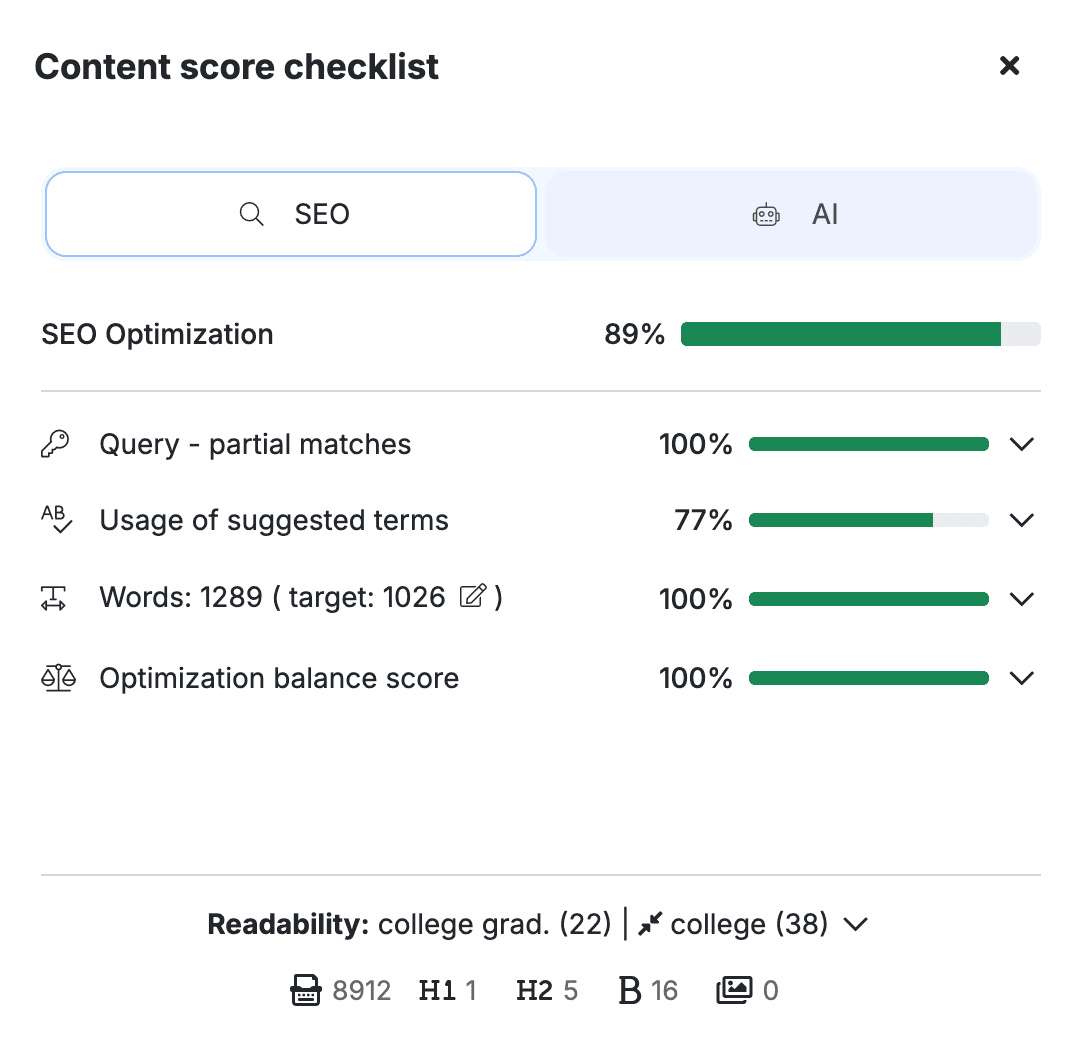
NEURONwriter provides readability metrics that help you optimize your site more effectively. Aim for conversational, scannable content that keeps people engaged.
Remember: the goal isn’t just to get visitors to your website—it’s to keep them there and make your website valuable enough that they come back.
9. Create Topic Clusters (Establish Authority Fast)
This is a more modern approach to SEO that works incredibly well: instead of isolated blog posts, create clusters of related content all linking back to a central “pillar” page.
For example:
- Pillar: “Complete Guide to Email Marketing”
- Cluster: “Email Subject Line Tips,” “Best Email Marketing Tools,” “Email Segmentation Strategies,” “How to Reduce Unsubscribe Rates”
Each cluster post links to the pillar, and the pillar links to all clusters. This signals to search engines that you have comprehensive coverage of a topic—you’re an authority.
NEURONwriter’s content planning features make it easy to map these out. You can see related topics, identify gaps in your coverage, and plan a cluster that actually drives targeted traffic.
This approach is especially powerful for increasing your chances of ranking for competitive keywords—you’re not fighting for one keyword with one post, you’re building topical relevance across dozens of related terms.
Week 4: Acceleration & Momentum
10. Use AI-Assisted Content (But Keep It Human)
Let’s talk about the elephant in the room: AI content creation.
Can you use AI to scale content production? Yes. Should you just vomit out ChatGPT content and call it a day? God, no.
Google has explicitly said they don’t penalize AI content—they penalize low-quality content. The distinction matters.
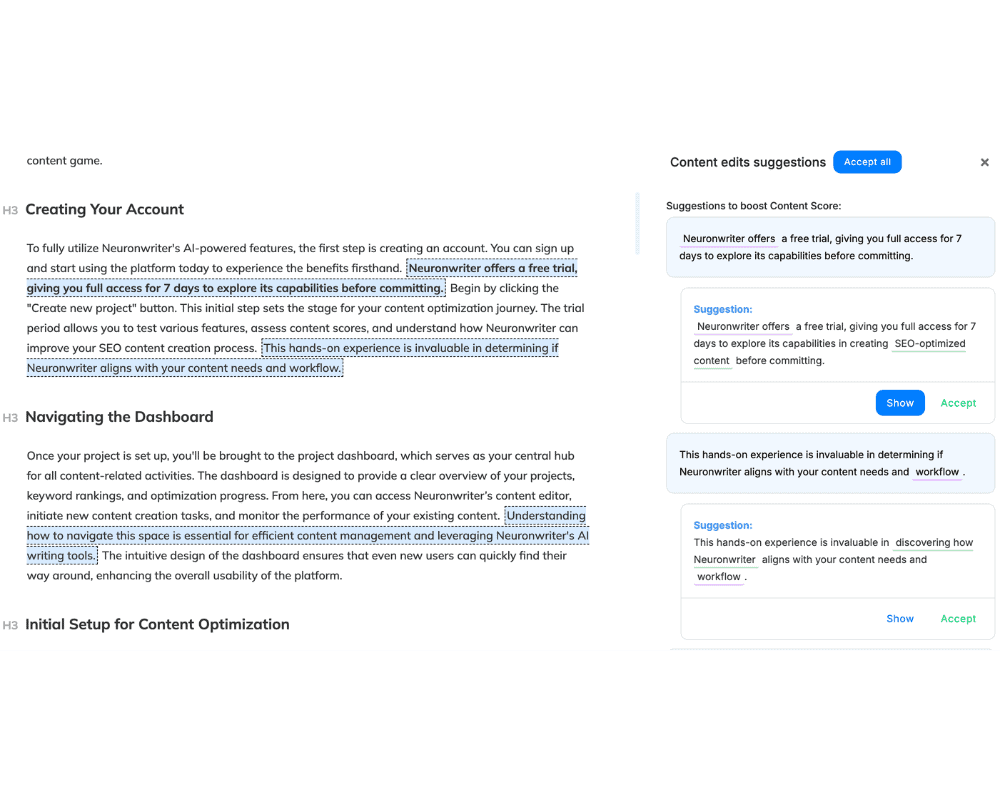
NEURONwriter’s AI writing features help you create first drafts faster while maintaining quality standards. You still need to:
- Add personal insights and examples
- Fact-check everything
- Ensure it matches search intent
- Make it genuinely useful (not just keyword-stuffed fluff)
Use AI to handle the heavy lifting of research and structure, then add your expertise to make it valuable. This is how you can significantly boost content production without sacrificing quality.
Think of AI as a really fast junior writer. You still need to edit, refine, and add the secret sauce that makes content actually helpful. When trained the right way, AI can be an incredibly powerful piece of tech, such as Quiq’s agentic AI, for example, which allows travel and hospitality businesses to provide personalized assistance at scale. You can use AEO consulting services to help you out as well.
11. Align Every Page with Search Intent
Here’s where a lot of SEO efforts fail: you optimize for a keyword without understanding what people actually want when they search for it.
If someone searches “best running shoes,” they want a comparison list—not a 5,000-word history of footwear. If they search “how to tie running shoes,” they want a quick tutorial, maybe with images or video.
Study what’s currently ranking for your target keywords. What format are they using? Listicles? How-tos? In-depth guides? Product reviews?
Match that format. Google has already told you what it thinks best answers that query—don’t try to reinvent the wheel.
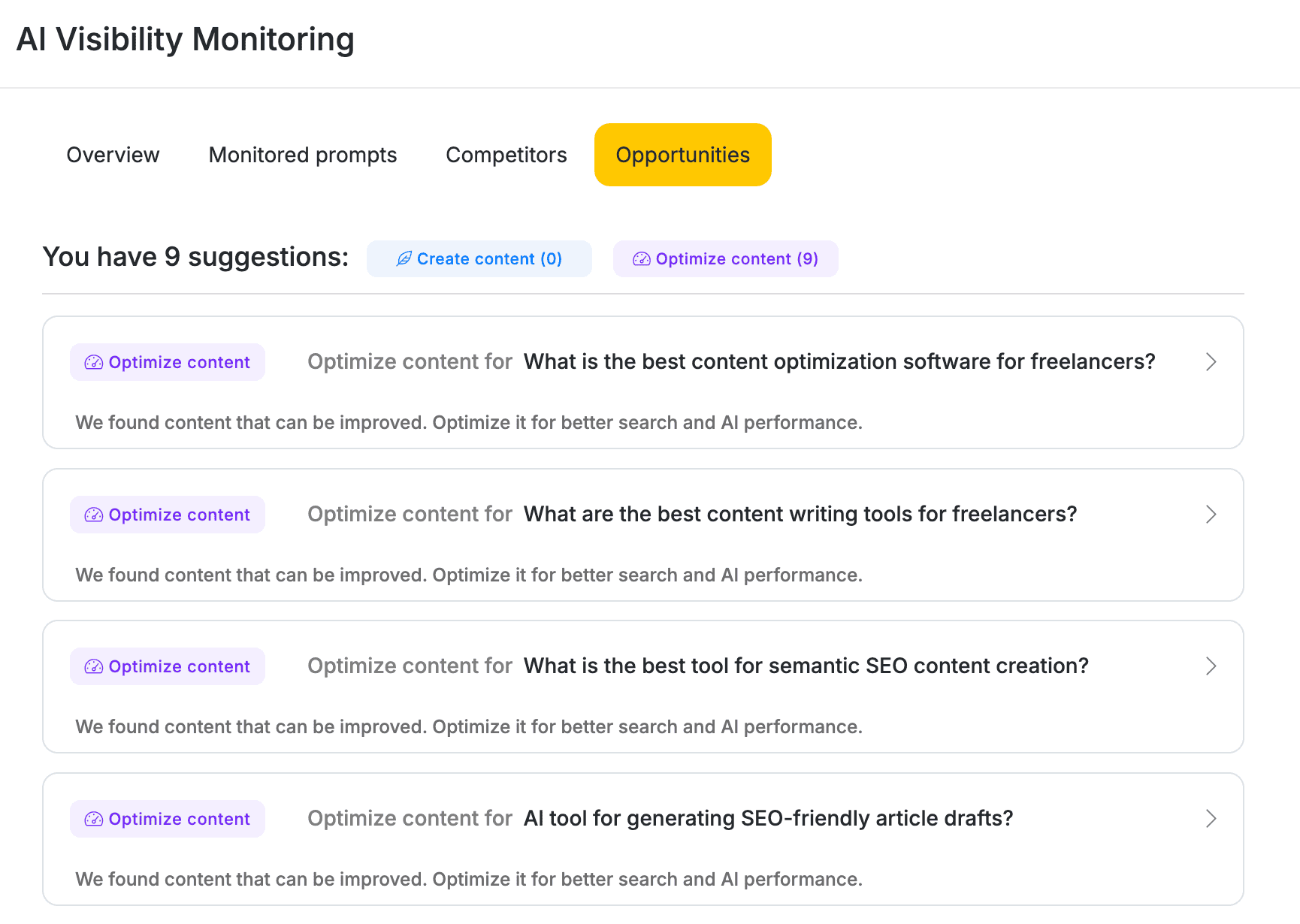
NEURONwriter’s SERP analysis breaks this down for you: you can see content length, structure, format, and topics covered by top-ranking pages. Use that intelligence to create content that aligns with what both Google and users expect.
12. Monitor, Measure & Iterate (SEO Works When You Work It)
The final tactic isn’t really a tactic—it’s a mindset.
SEO works best when you treat it like an experiment. You try things, you measure results, you double down on what works.
Set up proper tracking:
- Google Analytics for traffic and behavior metrics
- Google Search Console for rankings and click-through rates
- Position tracking in NEURONwriter or your preferred SEO tool
- Note what you changed and when
After your 30-day sprint, review what moved the needle:
- Which pages gained rankings?
- Where did you see traffic increases?
- What tactics created the biggest boost?
Then do more of that. SEO is an ongoing process, not a one-time project.
The pages that jumped from position 12 to position 6? Maybe they can hit position 3 with another update. The tactics that didn’t work? Maybe they need more time, or maybe they’re just not right for your site.
What Results Should You Actually Expect?
Let’s set realistic expectations. If you implement these 12 tactics properly over 30 days, here’s what you might see:
- Best case: 30-50% traffic increase (especially if your site had technical issues or very outdated content)
- Typical case: 10-25% traffic increase
- Minimum: Improved rankings on 5-10 key pages, even if traffic hasn’t fully materialized yet
Remember, some of these changes take a few weeks to fully show in search traffic. Rankings might improve in week 3, but the actual traffic bump might not appear until week 5-6.
Don’t get discouraged if you’re not seeing massive changes on day 10. You’re building momentum.
Beyond the First 30 Days: Building a Sustainable SEO Strategy
Here’s the reality: this 30-day plan will get you quick wins, but SEO is an ongoing process. The real magic happens when you turn these tactics into habits.
After your initial sprint:
- Keep updating old content quarterly
- Continue building high-quality backlinks (yes, off-page SEO still matters)
- Expand successful content clusters
- Monitor Google Analytics and Search Console monthly
- Stay current with algorithm updates and SEO best practices
Consider using tools like Google’s Webmaster Tools and analytics tools to track your long-term progress. The goal is to drive more traffic consistently, not just spike for a month and crash.
And if you’re serious about this? Consider working with an SEO consultant or investing in a proper SEO tool like NEURONwriter that helps you maintain momentum without burning out.
Your 30-Day Challenge Starts Now
The difference between websites that succeed with search engine optimization and those that don’t isn’t usually talent or budget—it’s consistency and smart prioritization.
You don’t need to master every aspect of SEO overnight. You don’t need thousands in ad spend or to get backlinks from The New York Times (though that’d be nice).
You just need to:
- Identify where you’re leaving easy wins on the table
- Systematically optimize your website using proven tactics
- Track what works and do more of it
Want to significantly improve your search rankings in 30 days? Stop overthinking it. Pick one tactic from this list, implement it this week, then move to the next.
Whether you’re running a local business optimizing your Google My Business listing and focusing on local SEO, or you’re trying to increase website traffic for a SaaS blog, these fundamentals work.
Free SEO wins are sitting right there in your Google Search Console data. Pages ranking on page 2 that could be on page 1. Content that’s 80% of the way there but needs that final 20%. Technical issues that take an hour to fix but unlock weeks of better crawling.
Start with the audit. See where you actually stand. Then use tools like NEURONwriter to make your website rank higher, faster, and more consistently than you thought possible.
The question isn’t whether you can increase visibility and boost your online presence in 30 days.
The question is: are you actually going to do the work?
Your 30-day challenge starts now. Let’s get to work.
Ready to increase your chances of ranking higher in search engine results pages? Try NEURONwriter’s free trial and see how much easier optimizing your site can be when you have data-driven insights guiding every decision.
FAQs: How to Increase Your SEO Traffic in 30 Days
Can you really increase website traffic in 30 days?
Yes, if you focus on quick wins like updating existing content, fixing technical issues, and optimizing pages already ranking on page 2. Sites with existing authority see the fastest results—boosting traffic by 50% is realistic if you have optimization gaps.
What’s the fastest way to get more traffic to your site?
Update and expand content that’s already ranking in positions 5-15. This drives relevant traffic faster than creating new content from scratch because you’re building on existing authority and attracting visitors to your website who are already searching for your topics.
Should I use free and paid SEO tools?
Start with free tools like Google Search Console and Google Analytics, then invest in paid tools like NEURONwriter for deeper insights. The combination helps you increase traffic and improve rankings faster through proven SEO methods.
How do I make my website to rank higher without using clickbait?
Focus on honest, compelling titles that match search intent. Using clickbait hurts rankings when people bounce immediately. Instead, create comprehensive content, optimize your website for local searches if relevant, and build quality through substance, not tricks.
Do I need to create a website from scratch to improve visibility?
No. Optimizing an existing site yields faster results. Focus on driving traffic using content updates, technical fixes, and strategic optimization rather than starting over from zero authority.