
SEO for healthcare: your guide to medical SEO for 2026

Healthcare marketing feels more complex than it should. Competition keeps growing, patient expectations shift fast, and paid channels drain budgets without building long-term value. Still, one thing stays consistent: people search first. They use a search engine to compare providers, read explanations, and decide who feels trustworthy before they ever make contact. That moment shapes the entire patient journey.
This guide to healthcare SEO shows how medical SEO actually works across the healthcare industry. You’ll learn how clear structure, useful healthcare content, and smart SEO strategies help healthcare organizations attract organic traffic and reach potential patients with confidence. If you want practical guidance that fits real healthcare work, read the full article.
What you’ll learn
- Why healthcare SEO matters in 2026 and how it helps healthcare organizations appear where patients search first, not just rely on referrals or ads.
- How to build SEO that works locally and nationally, including service pages, local listings, and content that matches real patient search intent.
- Practical SEO strategies for healthcare providers, from technical SEO and local SEO tactics to content that answers the questions patients are actually typing into search engines.
- Real examples and checklists you can use to audit your current SEO efforts and start improving performance without turning SEO into a full-time project.
Why does healthcare SEO matter so much today?
Because potential patients rarely start with a referral alone — they start with a search engine. In fact, research shows that around 77 % of people use search engines like Google, Bing, or Yahoo when they look for health information online, not specialty sites or social platforms.
Before booking care, contacting a practice, or choosing a provider, most people look things up online. They compare healthcare websites, read explanations, and check reviews. Search engine results shape trust long before any human interaction happens.
That reality makes healthcare SEO essential for every healthcare organization. When your healthcare website ranks where people actually look, you’re more likely to be the provider they discover, consider, and contact. When you don’t, patients often move on to competitors in seconds.
Organic visibility also supports long-term growth. Paid ads stop the moment budgets pause. Organic traffic keeps coming as long as pages answer real questions and match what people search for. For healthcare companies, clinics, and hospitals, that consistency matters. It helps attract new patients, supports existing ones, and builds credibility across the healthcare landscape.
Core healthcare SEO strategies that work today
Healthcare SEO works best when it follows how people actually search, not how teams want to structure their websites. Patients look for care in moments of uncertainty. They want fast clarity, simple explanations, and a clear next step. Effective healthcare SEO strategies focus on meeting that intent across every stage of the search journey.
The sections below break down practical SEO strategies that healthcare providers, clinics, and healthcare organizations can apply without turning SEO into a full-time job. Each strategy supports visibility in search engine results while keeping patient trust and usability front and center.
1. Build clear, service-focused pages for your healthcare services
One of the strongest healthcare SEO strategies is to create dedicated service pages that match the actual searches people make when they look for care. These pages help a healthcare provider show up in relevant search engine results and give potential patients the clarity they need before they call or book. Search engines reward structured, helpful pages that explain what services a healthcare organization offers and who they’re for — and patients respond to that clarity.
When search engines see pages with clear titles, helpful descriptions, and well-organized content about specific healthcare services, they are more likely to rank those pages for relevant queries. That means more organic traffic from people actively searching for exactly what your healthcare website offers.
Real-life example:
A regional health system creates a page titled “Cardiology Services in Boston” that explains what heart care includes, lists common conditions treated, and highlights the cardiologists on staff. Another page might be “Pediatric Care for Children’s Wellness” that outlines well-child visits, vaccines, and developmental screenings. Each page uses patient-friendly language, describes the service step-by-step, and answers practical questions a potential patient might type into a search engine. Local pages like these help the organization appear when someone searches for “cardiology near me” or “children’s doctor in Boston,” and they also improve how search engines interpret the healthcare content on the site.
What to include in a strong service page:
- Clear description of the specific healthcare service
- Who it’s for (age group, condition, situation)
- Common questions and plain-language answers
- Contact or booking information
- Location or facility details if relevant
These elements make it easier for both patients and search engines to understand what the page offers, strengthening your medical SEO foundation and helping your healthcare site reach the right audience.
2. Strengthen local SEO and optimize your Google Business Profile
If you want your healthcare business to be found by people searching for care nearby, local visibility is critical. Local SEO for healthcare is one of the most effective healthcare SEO strategies because most patients use search engines to find care in their area. When your listing shows up in local results — especially in map packs and top results — you get more traffic to your website, calls, and appointments. That’s where SEO becomes truly important for medical practices, clinics, hospitals, and other healthcare organizations.
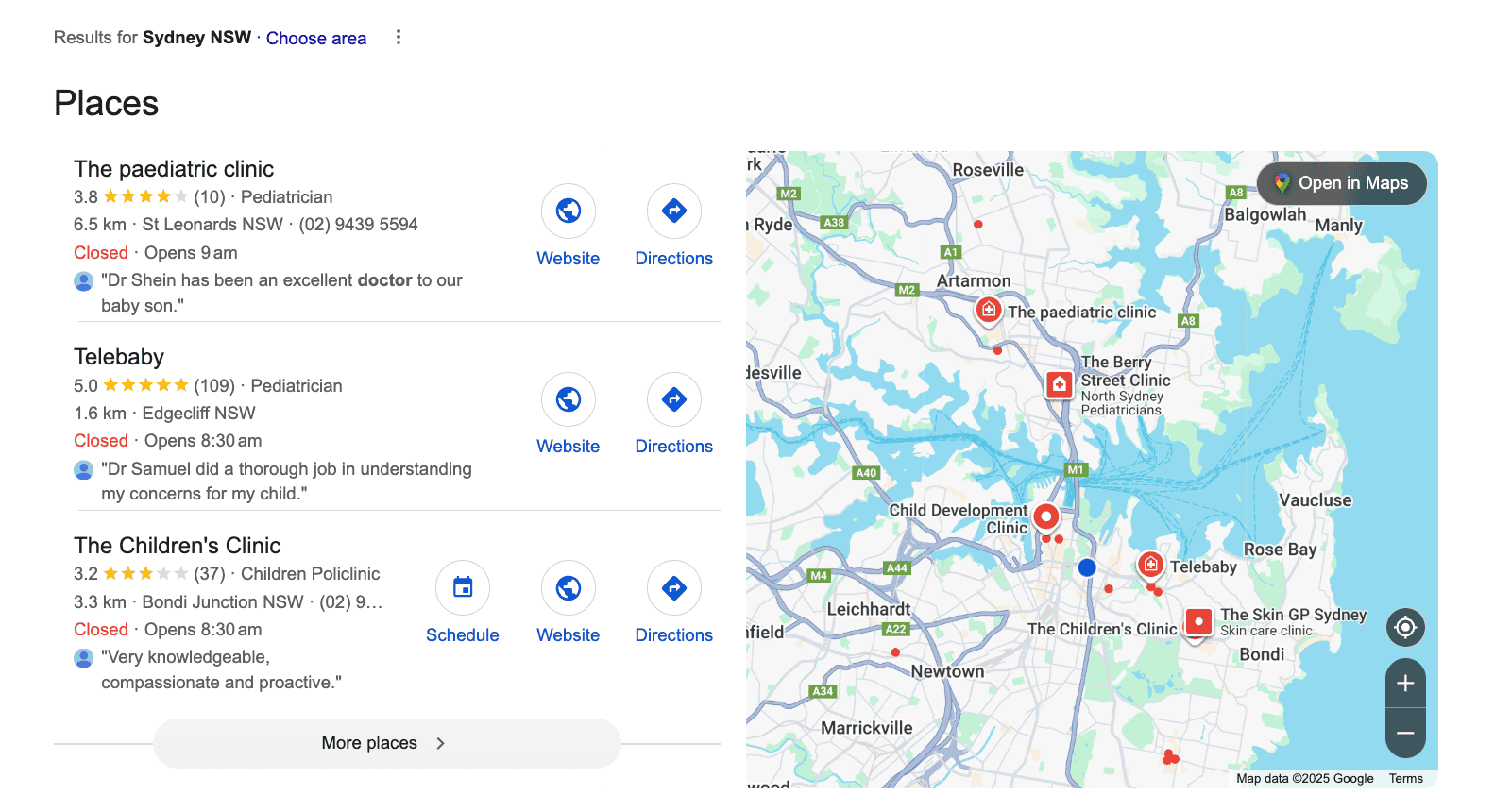
Start with your Google Business Profile. This free listing lets search engines connect your healthcare organization’s name, location, opening hours, contact details, and services directly with local searches. When it’s complete and accurate, it can boost visibility and help you show up for searches like “find healthcare providers near me.”
Core local actions that help improve your healthcare SEO:
- Optimize your Google Business Profile with accurate name, address, phone number, and services.
- Use category and service descriptions that reflect real patient searches.
- Encourage and respond to patient reviews to build credibility.
- Create location-specific pages on your medical site and use local keywords in content.
These steps make it easier for search engines to connect your practice with local patients at the moment they need care.
Myth-busting: “Local SEO is just about having a Google listing”
Some people think that simply claiming a profile is enough. It isn’t. Good local SEO isn’t just a listing on Google — it’s accurate, consistent information across platforms, thoughtful use of on-page SEO on your healthcare website, and active engagement with reviews and updates. Many healthcare businesses miss out because they never return to refine these details or use insights from real patient searches to inform their seo tactics. Done well, healthcare SEO services elevate your visibility more sustainably than ads alone.
When you might work with specialists
For many healthcare providers, especially larger practices or hospitals, working with an SEO agency or seo experts who understand seo for healthcare companies and seo for medical practices can save time and ensure you’re following seo best practices effectively. A good partner can help you improve your healthcare SEO performance, refine local healthcare SEO strategy, and align your efforts with patient behavior and search trends.
Local search is a foundational part of a guide to medical SEO that works in the real world — not just theory. When you build this foundation well, it supports every other aspect of your SEO and makes your healthcare organization more discoverable when patients search for care.
3. Create educational healthcare content that answers real patient questions
To build an effective healthcare SEO strategy, you must go beyond service pages and help people find the healthcare information they’re actively searching for. SEO for the healthcare industry means showing up when someone types a question into a search engine, not just when they’re ready to book. Good content educates, builds trust, and signals to search engines that your site is relevant and valuable.
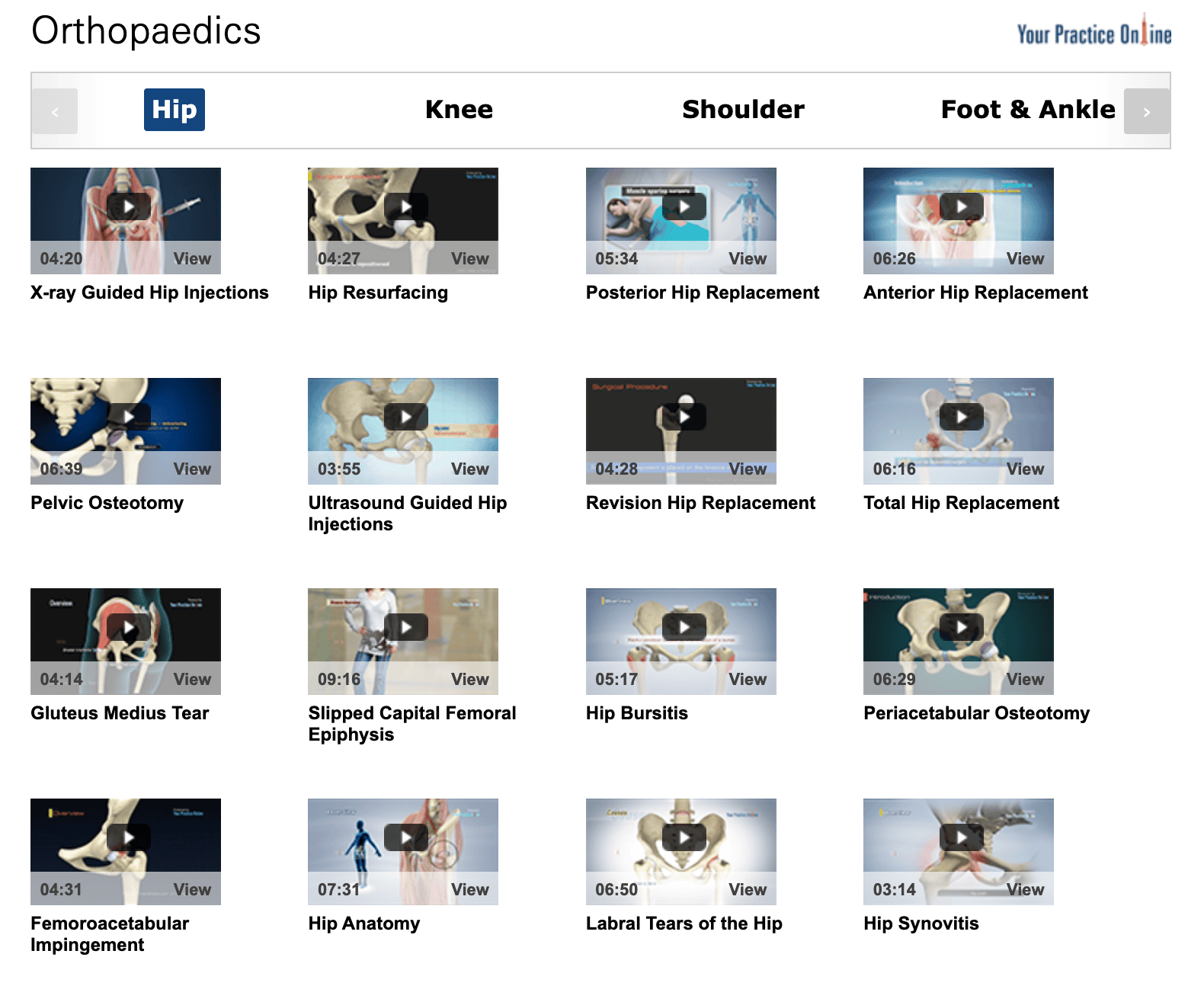
That’s why it’s healthcare SEO important to invest in content that reflects real patient intent and is structured with on-page SEO in mind.
Here’s how to think about it:
- SEO involves understanding patient needs and providing clear, accurate answers.
- Quality content adds value for readers and gives search engines a reason to rank your pages.
- SEO and content go hand in hand — great content boosts visibility, and good SEO ensures people find it.
- A solid content foundation is essential for healthcare because it supports broader goals like awareness, trust, and long-term patient engagement.
Action checklist: score your content performance
Use this checklist to see how well your healthcare content supports your SEO goals. Give yourself one point for each item you’ve implemented today:
Planning & Strategy
☑ Your healthcare content aligns with common patient searches and questions (symptoms, treatments, care options).
☑ You’ve created a documented medical SEO strategy that reflects real-world patient intent.
☑ You’ve targeted both general and long-tail keywords that reflect “find the healthcare” queries.
On-Page & Structure
☑ Each content page has a clear focus and includes relevant keyword usage without stuffing.
☑ You’ve implemented on-page SEO best practices for titles, headers, meta descriptions, and image alt text.
☑ Pages include internal links to related topics to help readers and search engines navigate your site.
Value & Quality
☑ Your content is medically accurate and easy to understand for potential patients.
☑ You include clear calls to action that help healthcare providers convert readers into appointments.
☑ You’ve reviewed and updated older content to keep it fresh and relevant.
Measurement & Improvement
☑ You’re tracking engagement metrics like page views, time on page, and organic traffic to your site.
☑ You use an SEO tool (like Google Analytics, Search Console, or another platform) to monitor content performance.
☑ You’ve benchmarked content performance against competitors to understand gaps and opportunities.
Optional (Advanced)
☑ You’ve created downloadable resources (guides, checklists) that position you as a trusted source.
☑ You’ve partnered with subject-matter experts to ensure accuracy and build credibility.
Scoring Guide
- 9–12 points: Excellent content foundation — your healthcare SEO content is likely performing well.
- 5–8 points: Good base, but opportunities exist to strengthen relevance and technical alignment.
- 0–4 points: Time to refine your medical SEO strategy and content approach to better support patients and search engines.
Great content will continuously improve traffic to your website and help drive real healthcare outcomes (from awareness to appointments) without relying solely on paid channels.
4. Show trust and credibility — dos and don’ts
Healthcare SEO is more than just keywords and traffic. It refers to building patient confidence, improving transparency, and meeting expectations that go far beyond traditional ecommerce SEO. For many healthcare providers, especially in hospital SEO or larger systems, search engines treat health and medical content with extra scrutiny because decisions about care are serious decisions for patients. That’s why healthcare seo is essential — it helps connect people with accurate, relevant care at the right time, and reduces confusion when they search for answers online.
This is why healthcare providers must be deliberate: patients trust what they find first, and search engines reward sites that demonstrate authority and clarity. Done right, SEO builds visibility, supports patient education, and attracts people when they actively find the healthcare information they need. Done poorly, you risk traffic that doesn’t convert because patients don’t feel confident or clear about next steps.
Here’s a set of clear dos and don’ts to ensure your healthcare organization’s online presence supports a successful healthcare SEO approach — whether you’re running a single clinic, a large hospital, or managing SEO through a healthcare SEO agency or seo company partner.
Dos
- Do highlight real expertise and credentials. Show your team’s qualifications, certifications, and experience such as acute care NP programs for nurses or other courses. Patients make decisions based on trust, and search engines evaluate authoritativeness when ranking healthcare content.
- Do provide accurate, up-to-date healthcare information. Healthcare is dynamic. Outdated or incorrect content undermines credibility. Keep facts current and review regularly.
- Do follow technical seo best practices for healthcare. Elements like site speed, mobile friendliness, and structured data help search engines understand and present your site better, improving SEO performance.
- Do align content with real patient intent. Create answers that match common searches. This improves relevance and increases the chance of ranking higher for queries that matter to your audience.
- Do measure and refine your efforts. SEO isn’t a single project. Track key signals like organic traffic, time on page, clicks from local results, and conversions, then refine based on performance.
- Do involve knowledge holders. Partner with healthcare professionals to review content when accuracy matters — especially for technical subjects or treatments.
Don’ts
- Don’t rely only on short-term tactics. SEO is long term. Quick tricks may offer temporary visibility but won’t help you build sustained trust or visibility over time.
- Don’t publish vague or generic content. Content that doesn’t address specific questions or scenarios won’t rank well and won’t help patients make decisions.
- Don’t ignore accessibility and compliance. Poor accessibility (like missing alt text or bad mobile experience) and compliance issues can hinder patients and harm rankings.
- Don’t let outdated pages linger. Content that hasn’t been reviewed in months or years can create misinformation — especially in healthcare where guidance evolves.
- Don’t treat SEO as separate from user experience. Search engines increasingly view how people interact with a site — bounce rates, time on page, and clear next steps matter. Ignoring this disconnects your healthcare strategy from how people use search engines.
5. Improve technical SEO and amplify your content marketing, with a real-world example
Strong technical SEO lays the foundation for every successful healthcare SEO strategy and directly impacts your SEO ranking in search engines. The way your medical website is built — how fast pages load, how easy it is to navigate, and whether search engines can crawl and index your pages efficiently — all influence how often your content appears in search results. On top of that, smart content marketing helps your site capture attention, answer real needs, and turn visibility into real patient engagement. Together, they make your broader SEO efforts more effective.
Let’s look at a real example from the medical world to see how this works in practice.
Real-world example: local medical website dramatically increases traffic
A medical center focused on local SEO and expert content saw page views climb sharply after improving technical foundations and publishing helpful articles. The strategy included:
- Making sure pages loaded quickly and provided a smooth experience on phones and tablets
- Organizing pages around clear service categories so search engines could crawl the site more easily
- Publishing educational content that answered questions potential patients were typing into search engines
As a result, the center experienced a 626 % increase in organic traffic — a clear sign that when technical SEO and content marketing work together, the impact on visibility and patient discovery can be dramatic.
What this shows
This example highlights how SEO for healthcare providers isn’t just about publishing pages and hoping they rank. It’s about making your site accessible and understandable to both search engines and real people searching for healthcare and medical information.
- Technical SEO ensures your site is fast, crawlable, and secure. Search engines reward sites that load quickly, use clear structures, and make it easy to discover content.
- Content marketing ensures that the pages search engines index actually answer real questions. When your articles, service pages, and guides align with what people search for, ranking tends to improve naturally.
These two elements are not separate. Together they help your site rise in rankings, attract more visitors, and become a trusted resource in a crowded healthcare landscape.
6. Combine technical SEO with targeted content marketing frameworks
What many teams miss is that SEO for healthcare providers isn’t just about visibility — it’s also about meaningful engagement. While earlier sections focused on visibility and local presence, this tactic focuses on the middle of the funnel: how content meets patients at different phases of their journey and how the site’s technical structure supports that content.
- SEO helps search engines understand what your content is about and who it’s relevant to — especially in complex fields like health and medicine, where accuracy and trust are paramount.
- Healthcare SEO involves making sure both the message and the mechanics of your site work together. To rank well and convert, answers must be accurate, structured clearly, and easy for search engines and users to navigate.
- This tactic bridges technical SEO for healthcare with content marketing so that useful pages actually rank and perform.
Create a “Content + Structure” map for every major topic
Rather than publishing content randomly or only when something comes up, create a structured map that:
- Lists core healthcare topics relevant to your audience (symptoms, conditions, treatments, FAQs) — this is your content marketing foundation.
- Identifies the user intent (informational, local, transactional) behind each topic — this ensures you’re writing with purpose.
- Aligns each topic with a technical element (schema markup, internal links, mobile usability, page speed) so that search engines can process and serve the content effectively.
- Designs pathways between pieces so readers can move from discovery (e.g., symptom info) to action (e.g., scheduling care) without confusion.
This combined approach ensures both parts of SEO work together — visibility and experience — rather than in isolation.
Why this is a distinct tactic (not overlapping)
Earlier strategies focused on visibility and local presence. This tactic focuses on how users digest the information once they land on your site — and how search engines index and value that information. It’s especially relevant for:
- Practices producing rich medical content that needs structured support to rank well
- Hospitals and multi-location networks where content must serve both broad information and local intent
- Content marketing plans that want predictable results from investing in SEO
Example in practice
Many healthcare sites use content calendars, but few map each topic to a technical action. For example, a page about knee pain causes includes:
- Structured schema markup for health topics
- Internal links to service page (orthopedic care)
- FAQs with structured data
- Fast mobile load and clear calls to action
Because each article answers user questions and is structured for indexing, it performs better in SEO ranking and engages users more deeply.
Quick do / don’t
Do:
✔ Build topic clusters (core + related pages)
✔ Pair content with technical enhancements like schema, sitemaps, and internal linking
✔ Track metrics like organic traffic and time on page together
Don’t:
✘ Publish content without considering how search engines interpret structure
✘ Ignore mobile speed or accessibility
✘ Treat content and technical SEO as separate projects
By linking content marketing with technical SEO, you create a foundation where both messages and mechanics reinforce each other — which is often what separates average healthcare sites from those that consistently attract and convert patients.
Over to you
Healthcare SEO refers to the ongoing work that helps patients discover your services in the moments that matter most. Whether you’re a small clinic or focusing on seo for hospitals, search optimization is no longer optional — it’s an imperative for healthcare organizations that want to stay visible and relevant. Along the way, you’ll confront common SEO issues, but the right mix of strategy and execution can improve patient engagement and bring more traffic to your website.
Good SEO makes it easier for people to find the health and human services you provide, and local signals like local SEO tactics help you connect with your community when they’re actively searching for care. As you continue to improve your SEO, remember that seo refers not just to rankings but to how well your site answers real questions relevant to your healthcare audience. Thoughtful optimization helps people find trustworthy information, feel confident in their decisions, and ultimately choose you for care.
If you’re ready to optimize their SEO further, these strategies give you a strong foundation — and plenty of direction — to build on as search behavior and expectations evolve.