
SEO for plastic surgeons: how to handle plastic surgery SEO?

Running a plastic surgery practice in 2026 means dealing with rising ad costs, stronger competition, and growing pressure to maintain visibility in an industry where trust, safety, and outcomes matter. Many plastic surgeons rely on paid ads even as CPCs in healthcare and cosmetic surgery continue to climb. Others lean on social media despite volatile reach and shifting algorithms.
Yet the most stable and underused channel remains SEO for plastic surgeons.
Most plastic surgery clinics underinvest in organic search. That gap creates opportunity. When a plastic surgery practice appears in the right search results, it reaches people who are actively preparing for a decision… often quietly researching procedures, timelines, risks, and recovery expectations.
SEO becomes the channel that moves new patients from uncertainty to booking without constant spend. And today, we’ll show you how to leverage it.
Why plastic surgeons should take care of SEO
People researching aesthetic and reconstructive care start with search engines, not ads. Across medical sectors, most journeys begin with educational queries, and more than 46% of Google queries show local search intent. That means patients uncover clinics long before they ever click an ad or see a social post.
For a plastic surgery practice, this shapes a predictable advantage. When healthcare knowledge management pages offer the right information offer the right information, with clean structure and reliable search engine optimization, you increase visibility and appear when potential patients compare options or evaluate safety. The clinics that show up first (especially those that rank higher on the search engine results page) capture demand consistently and build trust earlier.
SEO helps a plastic surgeon reach, educate, and convert patients long before consultations begin.
Best practices for SEO for plastic surgeons
#1 Build a keyword strategy that reflects real plastic surgery decision behaviour
People don’t search for a plastic surgeon out of nowhere.
They move through a clear, predictable pattern: uncertainty → evaluation → selection.
When you understand this flow, it becomes much easier to plan keywords without relying on a marketing agency, a marketing company, or a plastic surgery SEO company. This is the foundation of most SEO services for plastic surgeons, and it’s one of the most important components of plastic surgery SEO you can learn yourself.
Think of keywords as small signals that tell search engines what your plastic surgery services are about. When your pages reflect how real people search, your online visibility grows organically — the same way larger clinics often achieve results without heavy online marketing or expensive cosmetic surgery SEO retainers.
Below is the simplest, most practical breakdown for clinic owners doing SEO on their own.
Early-stage searches: symptoms, concerns, and “is this normal?”
At this stage, people aren’t looking for surgery. They’re trying to understand their situation. These searches come from confusion or curiosity:
- “breast asymmetry causes”
- “nose breathing issues after injury”
- “is eyelid heaviness normal”
These belong on top-of-funnel educational content: short explainers, FAQs, or blog posts. You don’t need advanced digital marketing skills here. Just clear, helpful writing.
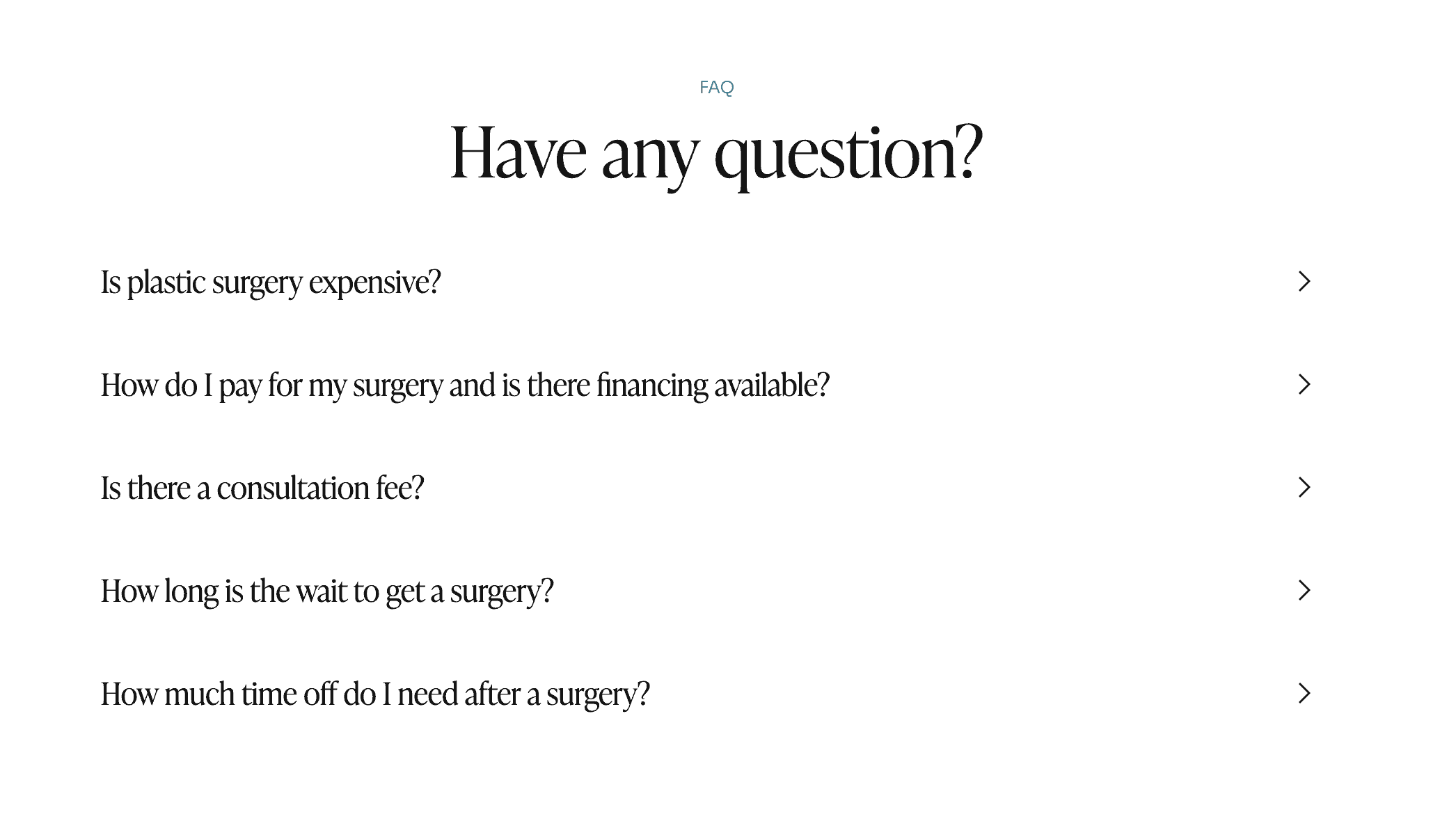
Pages like this introduce your clinic long before someone makes a decision. They also serve as simple content marketing assets that reassure readers and guide them gently into your world.
Mid-stage searches: comparisons, recovery timelines, risks
Now people want specifics. They’re aware a procedure might help, and they want to understand options:
- “breast lift vs augmentation”
- “rhinoplasty recovery timeline”
- “facelift risks and age recommendations”
These keywords belong on well-structured treatment hubs, comparison guides, or Q&A pages. At this stage, on-page SEO matters more — clean headings, clear formatting, and content that matches what people expect to see.
This is also where many clinics ask for help from marketing experts, but you can manage it yourself with a simple checklist: answer all common questions, use clear paragraphs, and link related pages together.
Late-stage searches: urgency and booking intent
These searches come from people ready to act:
- “rhinoplasty surgeon [city]”
- “best mommy makeover clinic near”
- “blepharoplasty consultation tomorrow”
These belong on your core service pages and local landing pages. Each page should mention your location, your experience, and the exact procedure type in a natural, calm way. This is often where a marketing for plastic strategy turns into measurable consultations, and where smart SEO and marketing work together.
People searching at this stage are comparing surgery clinics in your area. Good structure, clear expectations, and strong trust signals help you stand out.
Putting it together for one full treatment path
Here’s how a plastic surgery practice might map everything for one procedure:
Symptom / Awareness
“bulbous nose causes,” “post-pregnancy abdominal muscle issues”
→ Add simple explainers with visuals or short paragraphs.
Evaluation
“tummy tuck vs lipo,” “septoplasty + rhinoplasty combined,” “breast implant options explained”
→ Place these on structured hubs, FAQ sections, and comparison pages.
Booking
“tummy tuck surgeon [city],” “rhinoplasty specialist near”
→ Build high-quality service pages with photos, credentials, and clear internal links.
When you organize keywords this way, you’re not guessing. You’re matching your pages to the exact steps people take as they learn, evaluate, and choose. This strengthens your ranking signals, improves trust, and supports the broader SEO strategies for plastic surgeons without needing external help.
It’s a simple approach, but it’s the most reliable way for plastic surgery practices to structure content that attracts steady organic demand.
#2 Structure your plastic surgery website so search engines understand your offering
Clear structure helps search engines interpret your pages and match them with people searching for your services. It also reduces friction for visitors evaluating sensitive, high-stakes plastic surgery procedures.
Follow a simple step model:
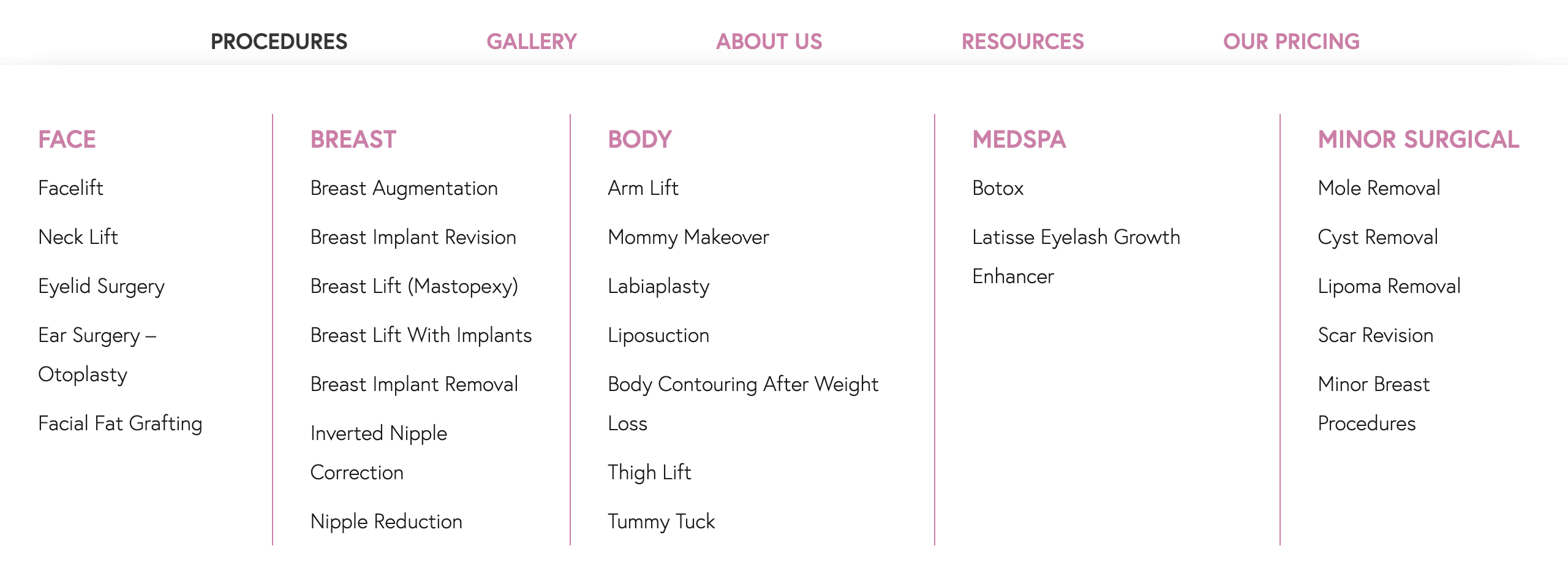
Step 1: Group the services you offer
Organize your site into clean categories:
- Facial surgery
- Body procedures
- Breast procedures
- Reconstructive work
- Non-surgical treatments
This mirrors search behaviour and supports top of search results for each group.
Step 2: Use clean, readable URLs
Examples that help you rank higher include:
- /rhinoplasty
- /tummy-tuck
- /breast-augmentation
Short URLs help search engines understand relationships between topics: a foundation of good on-site SEO.
Step 3: Connect related pages
If someone reads about “breathing issues after trauma,” link them to rhinoplasty + septoplasty.
If someone explores “diastasis recti,” link them to tummy tuck details.
Internal linking supports optimization, improves user flow, and spreads authority.
Step 4: Add structured data
Medical schema helps clarify procedures, outcomes, and expertise.
This small step supports plastic surgeon marketing and strengthens your SEO efforts without technical complexity.
Improve your local or category-specific visibility
Local visibility still matters; but slightly differently for plastic surgeons. Unlike routine dental care, many plastic surgery patients are willing to commute, cross cities, or even travel regionally for great results. That means local signals still influence discovery, but they’re not the whole story. People look for expertise first, and proximity second.
Still, you want your clinic to appear cleanly in google maps and nearby queries, because many early interactions start there. This is where SEO stands for search engine clarity: search engines need correct, consistent information before they trust your clinic enough to show it.
For local SEO
Treat your google business profile as a lightweight trust anchor:
- Add the correct categories
- Keep your hours and contact info accurate
- Upload high-quality photos (clinic, staff, operating spaces)
- Add procedure descriptions
- Maintain consistent NAP details across the web
Photos influence behaviour more than most clinics realise. A clean operating room photo, or a polished consultation room, often performs better than generic stock images.
Some clinics also evaluate plastic surgery software to organize patient data, streamline messaging, and maintain more consistent local signals across online properties.
Local optimization helps patients verify legitimacy quickly; a subtle but essential part of your SEO strategy, especially for people comparing cosmetic surgeons in the same region.
For non-local or category-specific visibility
Because patients are willing to travel, visibility beyond your immediate city becomes more important. This is where many clinics benefit from broader exposure:
- trusted platform profiles
- medical directories
- credible industry listings
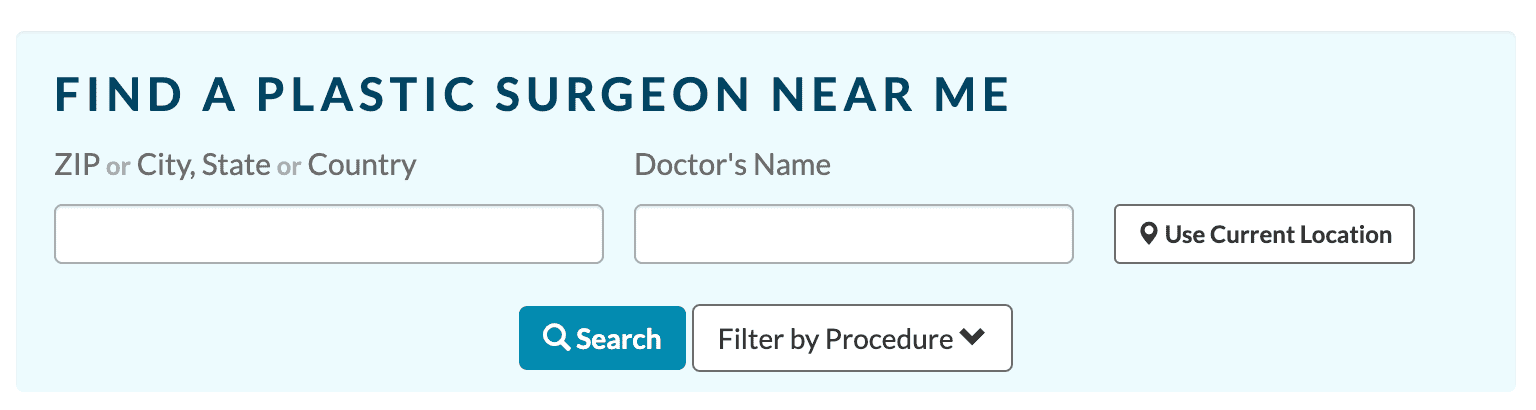
These signals reinforce professionalism and support both cosmetic surgery marketing and long-term results for plastic surgeons. They also help people who already know what they want — often those comparing clinics across cities — discover your pages without relying solely on local ranking factors.
Bold signals that matter most
reviews, recency, photo quality, accurate categories
These influence both local performance and patient decision-making, especially for clinics offering high-value procedures where outcomes matter more than distance. They also support strategies that attract high-value patients: people making careful decisions, reviewing details, and comparing expertise over convenience.
Create helpful plastic surgery content that reduces friction and supports decisions
People making cosmetic or reconstructive decisions want clarity. Good plastic surgery content reduces uncertainty, explains outcomes, and builds confidence — especially for cosmetic surgery patients.
Use a content ladder:
Early questions
- “is breast asymmetry serious”
- “why does my nose look crooked”
These introduce expertise gently.

Mid-stage clarifications
- “breast lift recovery day by day”
- “tummy tuck swelling stages”
- “rhinoplasty week-by-week healing”
These fit well into structured hubs.
Deeper formats
- visual timelines
- FAQ explainers
- myth debunkers
- cost breakdowns
A simple cluster example:
A “Rhinoplasty in [City]” hub connected to:
- septoplasty + rhinoplasty
- recovery timeline
- swelling phases
- before/after expectations
- breathing function outcomes
- revision rhinoplasty
- cost factors in your region
This architecture mirrors the PDF’s implant cluster example and builds credibility over time.
It also supports effective SEO and improves organic traffic from motivated readers.
Build trust signals that influence ranking and conversions
Trust sits at the center of successful plastic surgery. People evaluating procedures look for reassurance long before they look for pricing or availability. When your clinic shows clear expertise, safe environments, and transparent expectations, visitors engage longer, click deeper, and convert more reliably. Search algorithms respond to this behaviour too: trust-driven engagement often strengthens SEO rankings without additional effort.
For clinics doing their own plastic surgery marketing, this is one of the simplest areas to improve. Strong trust markers require no complex tools, and they help both readers and search engines understand what makes your practice safe and credible. If you’re just understanding SEO for the first time, this is the easiest place to start.
Use concise, high-impact trust markers:
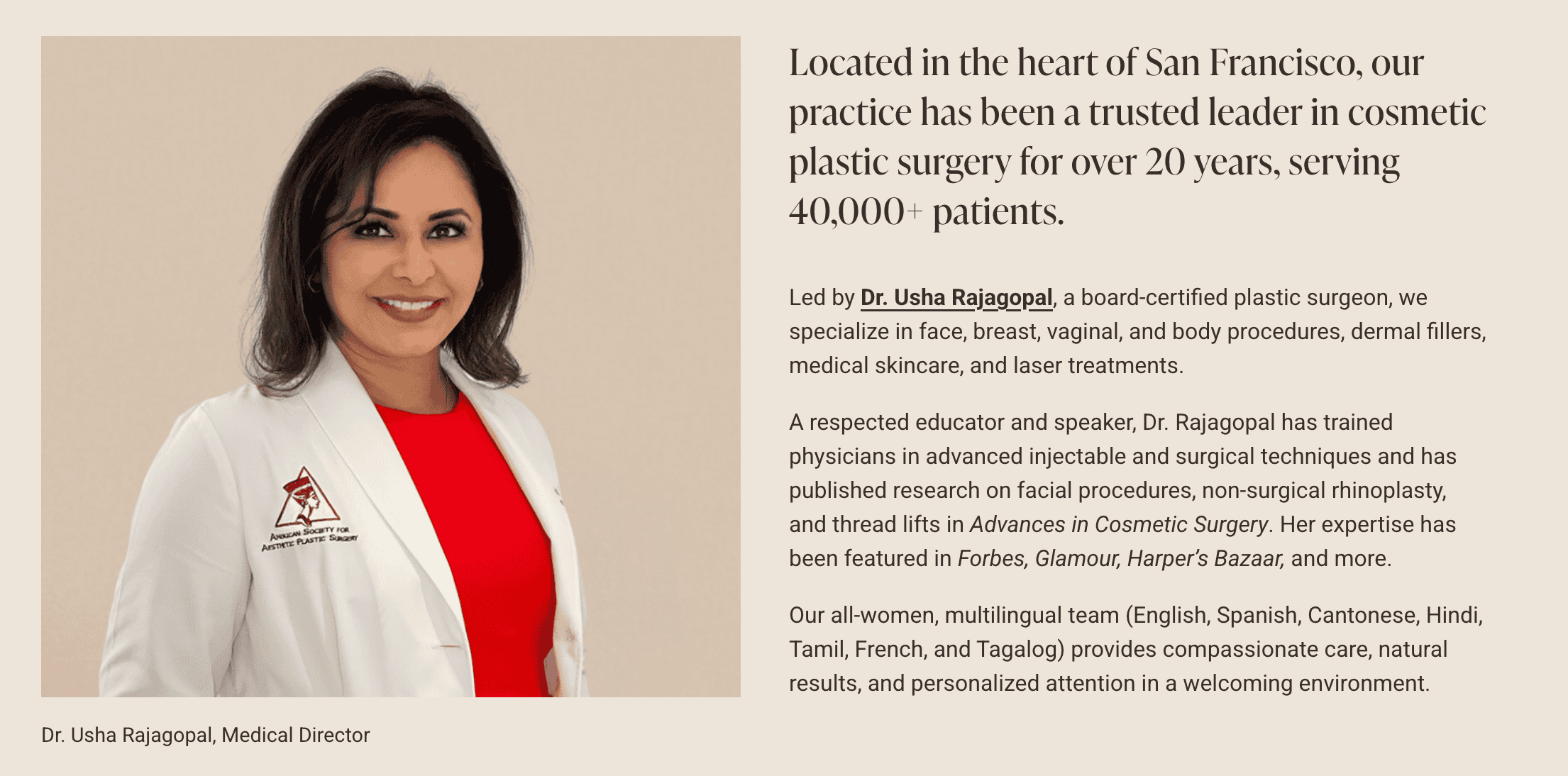
Surgeon bios with credentials
Training, certifications, fellowships, hospital affiliations, and years of experience immediately lower anxiety. For plastic surgeons seeking stronger authority signals, this is one of the fastest wins. It also supports your wider plastic surgery SEO services because people spend more time reading bios — a signal search engines interpret positively.
Real facility photos
Operating rooms, consultation spaces, and recovery areas help people visualize where they’ll be treated. This matters whether someone searches “rhinoplasty surgery near me” or compares clinics across cities. Authentic visuals consistently outperform polished stock imagery.
Before-and-after galleries
Patients rely on real results to judge fit and skill level. They examine lighting consistency, angles, and outcome naturalness. These galleries often drive the highest engagement on a site, which indirectly strengthens SEO and involves user behaviour patterns.
Testimonials and review snippets
Recency matters. Volume matters. Specificity matters. When reviews describe the experience, care, and post-op support in detail, they provide credible proof that no ad can replace.
Clear pricing guidance
You don’t need exact numbers — even ranges help reduce friction. Many readers simply want to know if a procedure is realistic for their situation.
Safety protocols
Accreditation, sterilization steps, anesthesia oversight, and surgical checklists build confidence. Safety content also earns more time-on-page, which supports your broader engagement profile.
Clinics that prioritize advanced training often review leading medical simulation companies to strengthen surgical preparedness and maintain high standards of care.
Membership badges and compliance logos
ASPS, board certifications, continuing education, and compliance badges take seconds to add and send immediate quality signals.
These trust elements support proven strategies inside any modern plastic surgery marketing plan. When visitors understand your process and feel safe, they stay longer and convert more often: two patterns that strengthen both engagement and search performance.
Grow authority with ethical, relevant backlinks
A small number of high-quality links from credible medical and local sources outperforms dozens of irrelevant backlinks. Authority grows through genuine involvement, not volume.
Use ethical methods:
Medical + local categories
- Healthcare directories
- Reputable city listings
- Hospital affiliations
Partnerships
- dermatologists
- ENT surgeons
- physical therapy groups
- reconstructive specialists
These create natural, safe link paths.
Community involvement
- charity events
- women’s health organizations
- educational workshops
- scholarship programs
These generate real mentions: the safest off-site SEO available.
Local media
Reporters often cover:
- pro bono reconstructive work
- community outreach
- educational seminars
These provide trustworthy backlinks that strengthen your long-term authority and contribute to successful plastic surgery SEO.
Improve your optimization with technical consistency and lightweight audits
Technical elements shape patient experience and help search engines interpret your pages. They don’t need to be overwhelming. Start with the essential technical SEO tasks.
Must-do essentials
- Compress images
- Review Core Web Vitals
- Fix broken internal links
- Maintain strong mobile usability
- Keep pages clean and fast
These requirements ensure good SEO and stable performance.
Many clinics also review operational tools that reduce administrative load. Healthcare AP automation guides can help streamline invoicing and vendor payments so teams have more time to support patient communication and marketing tasks.
Helpful upgrades
- Add medical schema
- Improve crawl paths
- Review HTTPS configuration
- Use AI-supported audits
These tools surface technical weaknesses and content gaps, supporting data-driven strategies without deep expertise. Technical improvements reinforce every other part of your strategy and give your plastic surgery practice’s website a more stable foundation.
How NEURONwriter helps plastic surgeons improve SEO
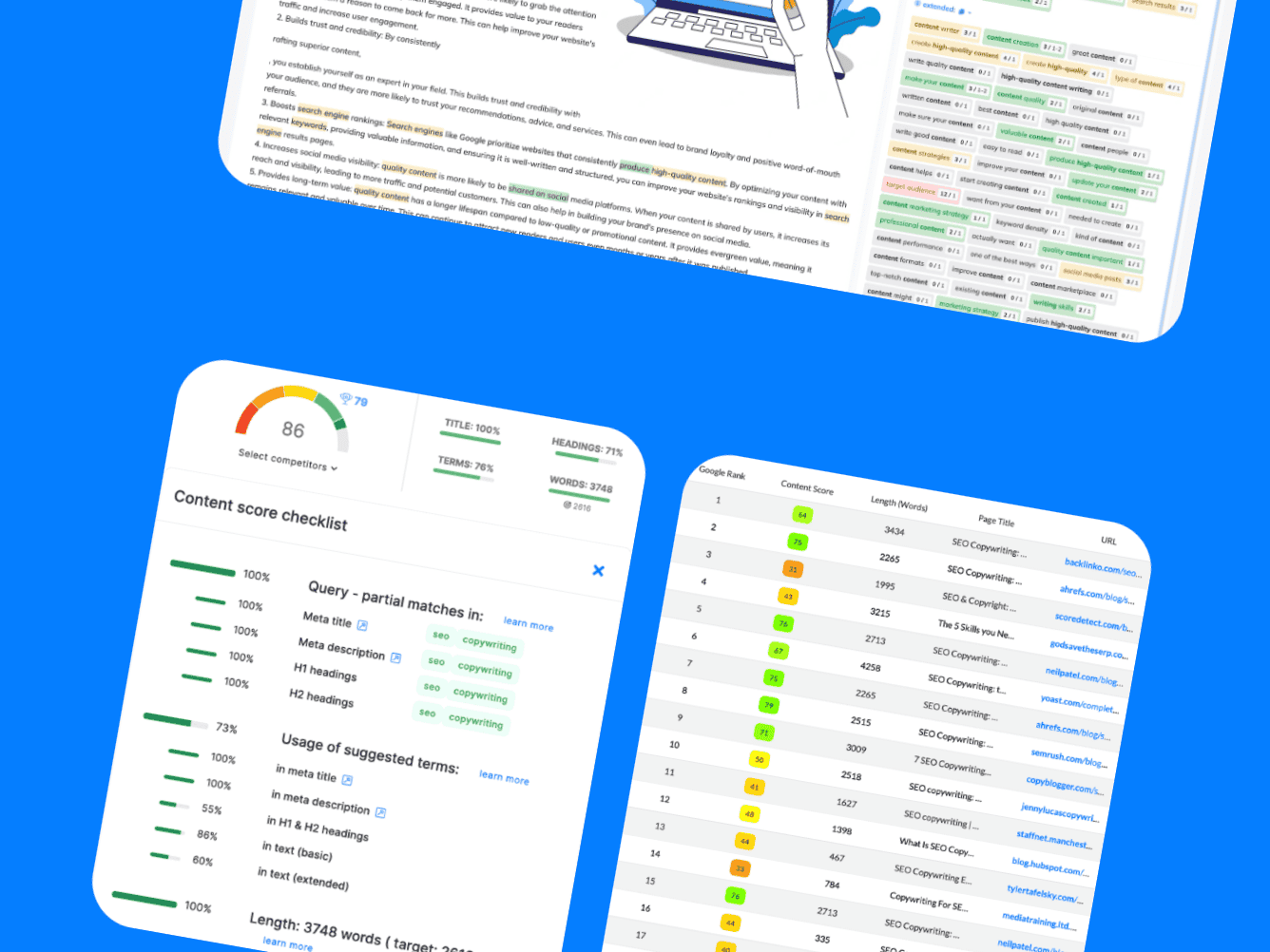
NEURONwriter simplifies content planning, competitive analysis, semantic coverage, and internal linking — giving practices a structured way to publish reliable pages without a full content team.
Planning & competitor insight
The tool analyzes top pages for your target keyword, helping you create content that competes effectively in organic search.
Semantic and intent-based recommendations
NEURONwriter identifies related terms, procedure-specific phrases, and intent patterns — essential for SEO strategies for plastic surgery, plastic surgery SEO strategies, and shaping the important components of plastic surgery content.
Real-time writing guidance
It offers structure, readability checks, metadata suggestions, and internal linking prompts.
This helps clinics publish pages aligned with effective SEO for plastic surgeons.
Templates & production flow
Drafts, outlines, and expansions help maintain consistent output — a core element of any plastic surgeon SEO campaign.
Internal linking suggestions
The tool recommends logical paths between procedure pages, education pieces, and FAQs – improving site architecture in a way that supports expert SEO and clinic-level growth.

NEURONwriter doesn’t replace expertise; it supports plastic surgeons who want to scale content with the right keywords research, focusing on SEO, but also on their users’ experience.
Time to implement SEO strategies for your plastic surgery practice
What if your clinic appeared first whenever someone researched a procedure in your city? In 2026, SEO for plastic surgery is no longer optional — it’s a marketing strategy for plastic surgery practices that want sustainable, predictable growth.
When plastic surgery practices must compete with rising ad costs and shifting algorithms, SEO becomes the reliable channel that brings surgery patients directly to your pages. If you apply the best practices in this guide — structure, content, trust, technical health, and ethical authority building — your clinic can grow steadily with solid SEO foundations.
Use this guide as the calm, structured way for plastic surgery practices to build long-term visibility and earn patient trust where it begins: search.