
YouTube SEO: The Ultimate Guide to Optimizing Videos.
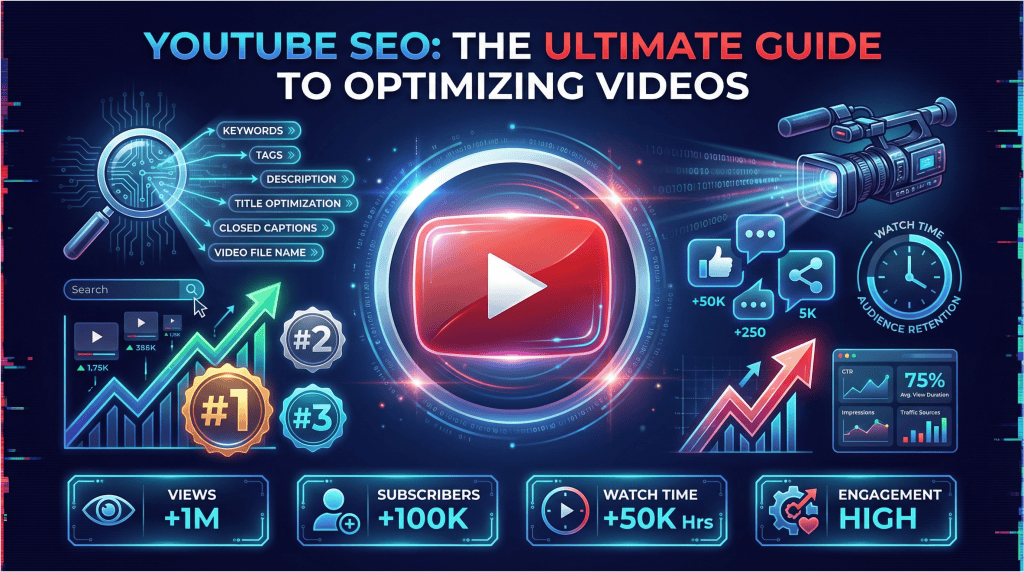
In 2026, YouTube is not just a video-sharing platform; it’s the second-largest search engine in the world, with over 2.5 billion monthly active users
While Google remains the king of search, YouTube has carved out a unique space where visual content reigns supreme. For businesses and content creators, this presents a massive opportunity to reach a highly engaged audience. However, simply uploading a video is not enough. To succeed on YouTube, you need a robust SEO strategy.
This guide will walk you through the entire process of YouTube SEO, from keyword research to video optimization and promotion. We’ll cover the key ranking factors, the tools you need, and the strategies that will help you get more views, subscribers, and traffic from YouTube.
How YouTube Algorithm Works.
YouTube’s algorithm is a complex system that ranks videos based on a variety of factors. While the exact formula is a closely guarded secret, YouTube has provided some insights into what it prioritizes. According to YouTube, their algorithm’s goals are to “help viewers find the videos they want to watch” and to “maximize long-term viewer engagement and satisfaction”
This means that YouTube’s algorithm is not just about keywords; it’s about the viewer’s experience. The more engaged your viewers are, the more likely YouTube is to recommend your videos to others. This creates a positive feedback loop that can lead to exponential growth.
Key Ranking Factors
While there are hundreds of ranking signals, here are some of the most important ones:
| Ranking Factor | Description |
| Audience Retention | The percentage of your video that people watch. This is arguably the most important ranking factor. |
| Watch Time | The total amount of time people spend watching your videos. |
| Engagement | Likes, dislikes, comments, shares, and subscribes. |
| Click-Through Rate (CTR) | The percentage of people who click on your video after seeing it in the search results. |
| Keyword Relevance | How well your title, description, and tags match the user’s search query. |
| Video Quality | High-definition videos are more likely to rank well. |
Step 1: YouTube Keyword Research.
Keyword research is the foundation of any successful YouTube SEO strategy. Without it, you’re just guessing what people are searching for. Here’s how to find the right keywords for your videos:
Use YouTube Suggest
YouTube’s search bar is a great place to start your keyword research. Simply type in a seed keyword, and YouTube will suggest a list of related queries. These are all terms that people are actively searching for, so you know there’s an audience for them.
“Double Dip” into Google Search
Don’t forget that YouTube videos can also rank in Google’s search results. This is a great way to get even more traffic to your videos. To find keywords that are likely to rank in both YouTube and Google, look for queries that trigger a video carousel or a dedicated video SERP feature in Google’s search results.
Step 2: Create High-Retention Videos
As we mentioned earlier, audience retention is one of the most important ranking factors on YouTube. If you can keep people watching your videos for longer, you’ll be rewarded with higher rankings. Here are some tips for creating high-retention videos:
- Hook your viewers in the first 15 seconds: The first 15 seconds of your video are crucial. If you can’t grab your viewers’ attention in that time, they’re likely to click away.
- Use pattern interrupts: Pattern interrupts are a great way to keep your viewers engaged. These can be anything from a change in camera angle to a funny sound effect.
- Tell a story: People are more likely to watch a video to the end if it tells a compelling story.
- Use high-quality audio and video: No one wants to watch a video that’s blurry or has poor audio quality. Invest in a good camera and microphone to ensure your videos look and sound professional.
Step 3: On-Page Video Optimization
Once you’ve created your high-retention video, it’s time to optimize it for search. Here are the key on-page optimization factors to focus on:
- Title: Your title should be catchy, descriptive, and include your target keyword.
- Description: Your description is a great place to include more information about your video, as well as links to your website and social media profiles. Make sure to include your target keyword in the first few sentences.
- Tags: Tags are another way to tell YouTube what your video is about. Use a mix of broad and specific tags to reach a wider audience.
- Thumbnail: Your thumbnail is the first thing people will see when they come across your video in the search results. Make sure it’s eye-catching and accurately represents the content of your video.
- Captions/Subtitles: Adding captions or subtitles to your videos can help you reach a wider audience, including people who are deaf or hard of hearing, as well as people who are watching your video in a noisy environment.
Step 4: Promote Your Videos
Once you’ve published your video, it’s time to promote it. Here are some ways to get more eyes on your videos:
- Share on social media: Share your videos on all of your social media channels, including Facebook, Twitter, and LinkedIn.
- Email your list: If you have an email list, send out an email to your subscribers letting them know about your new video.
- Embed on your website: Embed your videos on your website or blog to get more views and drive traffic to your YouTube channel.
- Use community posts: If you have over 1,000 subscribers, you can use YouTube’s community tab to promote your videos to your subscribers.
How NEURONwriter Accelerates Your YouTube SEO
NEURONwriter is a comprehensive content optimization platform that extends far beyond traditional blog content. It’s specifically designed to help content creators dominate both written and video content channels. Here’s how NEURONwriter transforms your YouTube SEO strategy:
YouTube Ideas: Your Video Content Ideation Engine
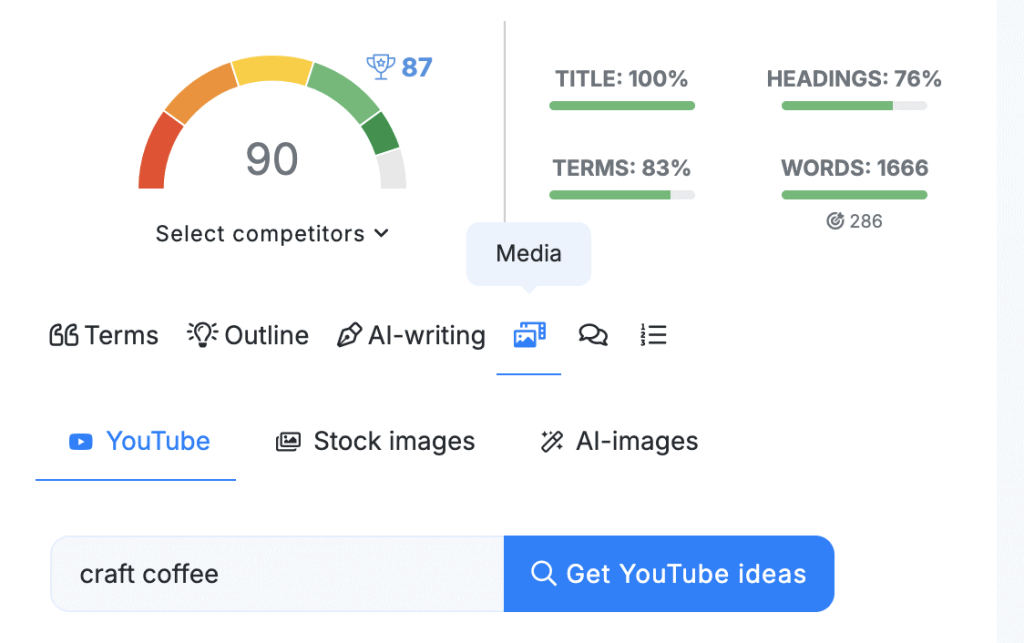
NEURONwriter YouTube Ideas feature is a dedicated tool for generating video topic ideas based on keyword analysis and competitor research. Instead of guessing what your audience wants to watch, YouTube Ideas analyzes search trends and competitor content to suggest high-potential video topics. This means you can plan your content calendar with confidence, knowing that each video addresses a real audience need.
Content Creation & Optimization
Content Editor: Optimize your video titles, descriptions, and scripts with NEURONwriter real-time SEO scoring. The Content Editor analyzes your content against top-ranking videos and provides actionable recommendations to improve your keyword targeting and readability.
Content Designer: Generate full video scripts, intros, outros, and chapter breakdowns in minutes using advanced NLP and AI algorithms. Simply specify your topic, and Content Designer will automatically develop the entire script structure, saving you hours of writing time.
Ready-made AI Templates: Accelerate your video content creation with pre-built templates for video descriptions, CTAs, and promotional copy. These templates are optimized for engagement and can be customized to match your brand voice.
Custom Templates: Create personalized AI templates tailored to your unique video format. Whether you’re creating tutorials, reviews, or vlogs, you can build templates that maintain consistency across your channel while speeding up your production workflow.
Keyword Research & Semantic Analysis
NLP Term Database: Find semantically related keywords and tags that improve your video’s discoverability. NEURONwriter’s NLP engine identifies the exact terms and phrases that YouTube’s algorithm associates with your target keywords, helping you optimize your tags and descriptions for maximum reach.
Next Content Ideas: Analyze your competitors’ content to identify trending topics in your niche. This feature suggests related key phrases that can inspire new video ideas and helps you plan your content strategy months in advance.
Visual Content Creation
AI Image Generation: Create custom thumbnails that stand out in search results and increase click-through rates. NEURONwriter AI can generate unique graphics based on your video topic, eliminating the need for expensive design tools or freelancers.
Strategic Planning
Topic Research: Identify new video opportunities and build topical authority in your niche. NEURONwriter helps you create content clusters around core topics, which signals to YouTube that your channel is an authoritative source.
Competitor Analysis: See exactly what videos your competitors are ranking for, what keywords they’re targeting, and how you can create better content. This competitive intelligence allows you to find content gaps and opportunities that others have missed.
Cross-Platform Integration
WordPress Integration: Embed your videos in blog posts with one click, creating a powerful cross-platform SEO strategy. This integration helps you drive traffic from your website to your YouTube channel while improving your blog’s engagement metrics.
Google Search Console Integration: Track how your videos perform in Google Search (not just YouTube search). Many videos rank in Google’s main search results, and NEURONwriter GSC integration helps you monitor and optimize for this additional traffic source.
By using NEURONwriter in conjunction with the strategies outlined in this guide, you can take your YouTube SEO to the next level and start getting more views, subscribers, and traffic from your videos. Try NEURONwriter free trial to see how it can transform your video content strategy.
FAQ
Q: How long does it take to see results from YouTube SEO?
A: It can take anywhere from a few weeks to a few months to see results from YouTube SEO. It all depends on the competitiveness of your keywords and the quality of your videos.
Q: How many videos should I be publishing per week?
A: There’s no magic number, but a good rule of thumb is to publish at least one video per week. This will help you build momentum and keep your subscribers engaged.
Q: Should I be using paid ads to promote my videos?
A: Paid ads can be a great way to get more views on your videos, but they’re not a substitute for a solid SEO strategy. If you’re just starting out, focus on organic growth first.