Branded Search Strategy: The Secret to Dominating.
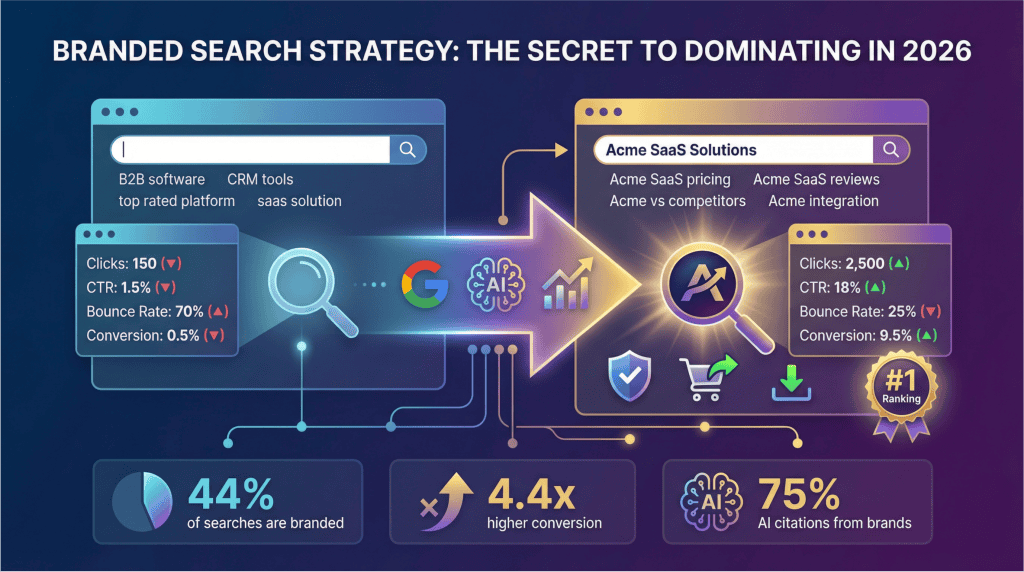
For years, SEO has been a game of keywords and backlinks. But in 2026, the rules have changed. With the rise of AI-powered search engines like Google AI Overviews and the increasing sophistication of search algorithms, a new primary ranking factor has emerged: branded search. This article explores why branded search is the cornerstone of modern SEO, backed by the latest data and expert insights. We will provide a strategic framework for dominating your brand’s search results, complete with real-world examples from today’s leading brands.
What is Branded Search?
Branded search refers to user queries that explicitly include a brand name, its products, or unique variations of its identity. These searches are a powerful signal of user intent, trust, and loyalty. They indicate that the user is no longer in the discovery phase; they are already familiar with your brand and are actively seeking you out. The difference in intent is massive, as non-branded searches indicate research intent, while a branded keyword signals a much higher navigational or transactional intent
.
| Search Type | Example | User Intent | Trust Level |
| Non-Branded | “best running shoes” | Low-Medium | Low |
| Branded (Specific) | “Nike Air Zoom Pegasus price” | High | High |
| Branded (Navigational) | “Amazon account login” | High | High |
| Branded (Review) | “Samsung Galaxy S25 review” | High | High |
According to recent research, approximately 44% of Google searches involve branded terms, and this number is growing
. In an AI-driven world, where search engines prioritize delivering trustworthy answers, branded search is your most valuable asset.
Why Branded Search is the #1 Ranking Factor in 2026
1. AI Search Engines Prioritize Trusted Brands
AI-powered search engines like Perplexity and Google’s AI Overviews are designed to provide direct answers, not just a list of links. To do this, they need to be confident in the information they provide. As a result, they heavily favor well established, trusted brands. Data shows that 75% of AI brand citations come from editorial media and social conversations, not direct website content, and 61% of corporate reputation mentions in AI come from earned media
This means that building a strong brand is no longer just a marketing goal it’s a technical SEO requirement.
SEO expert Matt Diggity emphasizes this shift, stating, > “Stop chasing Google’s shrinking informational traffic. Start capturing AI search visitors who convert 4.4X better.”
2. Higher Conversion Rates and ROI
Branded search traffic is highly qualified. These users are already in your funnel, and they are much more likely to convert. Research confirms that branded queries have 4.4x higher conversion rates from AI traffic compared to traditional search
Furthermore, a 1-point lift in brand awareness can increase sales by about 1%
This direct correlation between brand strength and revenue makes a branded search strategy a highly profitable investment.
3. Resilience Against Algorithm Updates
Google algorithm is constantly changing. The December 2025 core update, for example, heavily emphasized E-E-A-T (Experience, Expertise, Authoritativeness, Trustworthiness) and brand signals
While non-branded keywords can be volatile, a strong brand provides a stable foundation that is resilient to algorithm updates. As one SEO specialist noted, > “AI doesn’t reward ‘more content.’ It rewards better signals — hierarchy, stats, citations, and depth. This is the new technical SEO.”
Real-World Examples of Branded Search Dominance
Theory is one thing, but seeing branded search strategy in action provides a clearer picture of its power.
Case Study: Nike’s Athlete-Intent SEO
Nike has mastered the art of branded search by focusing on what they call “Athlete-Intent SEO.” Instead of just targeting broad terms, they dominate specific, high-intent branded searches like “Nike Air Zoom Pegasus price” or “Nike running shorts for marathon.” This strategy allows them to capture users at the exact moment of purchase intent, leading to explosive online growth and making them a prime example of a retail brand using SEO to accelerate its business.
Case Study: Apple’s Event-Driven Search Spikes
Apple is a master of creating massive branded search volume through its marketing events. During one Super Bowl, the brand Fetch saw a 7,249% increase in brand search volume after its ad aired, achieving over 90% share of brand impressions in the App Store search results
Apple employs a similar strategy, using its product launch events to create a surge of searches like “new iPhone features” or “Macbook Pro M4 review,” effectively owning the conversation and SERPs for days.
The 5-Step Branded Search Strategy.
Step 1: Build Brand Authority with Original Research
As the data shows, AI citations are heavily influenced by earned media. SEO expert Matt Diggity argues that in 2026, > “Original research is the new link building. AI models and journalists cite what they trust, and that’s never generic content.”
Instead of just blogging, conduct surveys, compile proprietary data, and publish unique findings. These become evergreen citation sources that AI platforms and journalists will reference for years, making your brand synonymous with that insight.
Step 2: Demonstrate E-E-A-T with High-Quality, Structured Content
Create content that showcases your expertise and provides real value. This includes in-depth case studies, thought leadership articles, and comprehensive guides. Crucially, this content must be structured for AI consumption with a clear H2/H3 hierarchy, specific sourced statistics, and standalone answer blocks. This is how you move from simply publishing content to earning AI citations.
Step 3: Encourage and Capture Branded Queries
Actively encourage users to search for your brand. Promote “{brand} + {keyword}” searches in your marketing materials and build a strong community on social media. As the team at Dentsu notes, branded searches are the result of your brand-building efforts, and your branded keyword strategy acts as a “net to capture the demand you’ve created.”
Step 4: Dominate Your Branded SERP
When a user searches for your brand, you must own the entire first page of results. This includes your website, blog, social media profiles, positive third-party reviews, and your Google Business Profile. This is your digital storefront, and you must control the narrative.
Step 5: Monitor and Measure Your Brand’s AI Presence
In 2026, tracking keyword rankings is not enough. You must monitor your brand’s presence in AI-generated results. New KPIs to track include AI Presence Rate (the percentage of queries where your brand appears in AI responses), Citation Authority, and Brand Sentiment. This is the new frontier of SEO analytics.
How NEURONwriter Can Help
NEURONwriter is built to execute a modern, brand-first SEO strategy. It moves beyond simple keyword density to help you build true topical authority.
- Build Topical Authority: NEURONwriter topic cluster functionality is essential for demonstrating the topical authority that AI platforms prioritize. By creating comprehensive pillar pages and supporting cluster content, you signal to search engines that you are an expert on a given topic.
- Create E-E-A-T Content: The Content Editor, powered by advanced NLP models, guides you to create high-quality, authoritative content. It helps you incorporate semantically related terms and expert-level language, directly improving your E-E-A-T signals.
- Generate Original Ideas: The “Next Content Ideas” feature helps you brainstorm original topics for articles, reports, and case studies—the very assets Matt Diggity identifies as crucial for earning AI citations.
- Maintain a Consistent Brand Voice: Using Custom Templates, you can ensure that your brand’s unique voice and perspective are consistent across all content, strengthening brand recall and trust.
Conclusion
As SEO expert Sushil Dahiya puts it, the goal is > “Shifting from ‘ranking for clicks’ to ‘earning AI citations + embedded conversions.’”
In 2026, branded search is not just a part of SEO it is the foundation of a sustainable growth strategy. By building a strong brand, creating original research, and structuring your content for AI, you can create a powerful competitive advantage that will drive traffic, leads, and revenue for years to come.
FAQ
Is non-branded SEO dead?
No, but its role has changed. Non-branded SEO is still important for top-of-funnel awareness, but branded search is what drives high-intent traffic, conversions, and long-term growth.
How long does it take to build a strong brand?
Building a brand takes time and consistent effort. It’s a long-term strategy that involves PR, content marketing, and community building. The rewards, however, are a defensible moat around your business.
What is the role of paid ads in a branded search strategy?
Paid ads are crucial for brand defense. Competitors can bid on your branded keywords. Running your own branded campaigns ensures you control the top of the SERP, protect your traffic, and present a unified message.