The NEURONwriter Manual: Mastering Content Optimization & AI Visibility.

In today’s hyper-competitive digital landscape, creating content that consistently ranks and converts feels like an impossible task. The old rules of SEO are being rewritten by the rise of AI search, and simply “writing good content” is no longer enough. Top-performing content teams don’t rely on guesswork; they operate on a systematic, data-driven playbook.
This playbook is built on four foundational pillars that transform content creation from a creative gamble into a repeatable science. It’s a comprehensive approach that covers the entire content lifecycle, from initial planning to post-publication analysis and iteration. This guide will walk you through each of these four pillars, demonstrating how to implement them using NEURONwriter to build a durable content moat that stands up to algorithm changes and competitive pressure.
This is not a theoretical exercise. It is a practical, step-by-step framework for engineering high-performance content in 2026.
The Four Pillars of a Winning Content Strategy
A successful content strategy in the AI era rests on four interconnected pillars, followed by a continuous operational rhythm:
Pillar 1: Data-Driven Blueprinting: The strategic work you do before writing a single word. This involves deep analysis of the SERPs, competitors, and user intent to create a data-backed blueprint for your content.
Pillar 2: Semantic & Structural Optimization: The process of writing and structuring your content to be perfectly aligned with what both users and search engine algorithms are looking for. This is where you build semantic depth and authority.
Pillar 3: AI-Powered Augmentation: Leveraging artificial intelligence not to replace human creativity, but to augment it—scaling content creation and fine-tuning it for the new world of AI Search Optimization (AEO).
Pillar 4: Performance-Driven Iteration: Closing the loop by tracking your content’s performance, analyzing the data, and using those insights to continuously refine and improve your strategy over time.
By mastering these four pillars, you move from being a reactive content creator to a proactive content strategist, capable of building a powerful and defensible organic growth engine. Let’s explore each pillar in detail.
Pillar 1: Data-Driven Blueprinting.
Every successful building project starts with a detailed blueprint. The same is true for high-ranking content. Before you write, you must first understand the landscape. This foundational stage is about replacing assumptions with data, and NEURONwriter is the essential tool for this process.
Deconstructing the SERP.
Your first step is to run a Content Analysis in NEURONwriter for your target query. This isn’t just about finding keywords; it’s about deconstructing the entire search engine results page (SERP) to understand the rules of the game.
- Analyze Top Competitors: NEURONwriter analyzes the top 30+ ranking pages, revealing who is winning and, more importantly, why. Look at their Content Scores, content length, and heading structure. This is your benchmark.
- Identify User Intent: By examining the titles, meta descriptions, and types of content that are ranking (e.g., blog posts, product pages, videos), you can gain a clear understanding of what users are actually looking for. Are they seeking information, comparing products, or looking to make a purchase?
Building Your Semantic Roadmap.
Once you understand the competitive landscape, you need to build a semantic roadmap for your article. This is where NEURONwriter NLP-driven analysis shines.
- Essential Terms and Entities: The Terms in Article and Terms in Headings sections provide a comprehensive list of the keywords, concepts, and entities that the top-ranking articles are using. This is your guide to building topical authority. By covering these terms, you signal to Google that your content is comprehensive and authoritative.
- Uncovering Content Gaps: Use the competitor analysis to see what your rivals are not covering. Are there unanswered questions? Are there related topics that have been overlooked? These gaps are your opportunity to create something uniquely valuable.
Insight: This blueprinting phase is the most critical part of the process. By investing time in data-driven planning, you dramatically increase the probability of your content succeeding. You are no longer guessing what will work; you are following a proven formula.
At the end of this stage, you will have a clear target Content Score, a list of essential terms and topics to cover, and a deep understanding of the user intent you need to satisfy. You have your blueprint. Now, it’s time to build.
Pillar 2: Semantic & Structural Optimization
With your blueprint in hand, you can now move to the writing and optimization phase. This is where you craft a piece of content that is not only well-written and engaging for humans but also perfectly structured and semantically rich for search engines.
Writing in the Content Editor
The Content Editor in NEURONwriter is your interactive workspace for this pillar. As you write, it provides real-time feedback, guiding you toward a higher Content Score. The process is a feedback loop:
Write and Incorporate Terms: As you draft your article, naturally weave in the recommended terms from your SERP analysis. The editor will track your progress, turning terms from red/yellow to green as you use them.
Monitor Your Content Score: Your score will increase as you add more relevant terms and improve your structure. This score is a direct measure of how well your content aligns with the top-ranking pages.
Focus on Quality and Flow: A high score is the goal, but not at the expense of readability. Use the term suggestions as a guide to ensure you are covering the topic comprehensively, but always prioritize creating a high-quality, engaging piece of content for your audience.
Engineering the Perfect Structure
How your content is structured is just as important as what it says. A logical structure makes your content easy for users to skim and for search engines to parse.
- Logical Heading Hierarchy: Use a clear H1, H2, and H3 structure to organize your content. The Content Structure view in NEURONwriter helps you visualize your outline and ensure it flows logically.
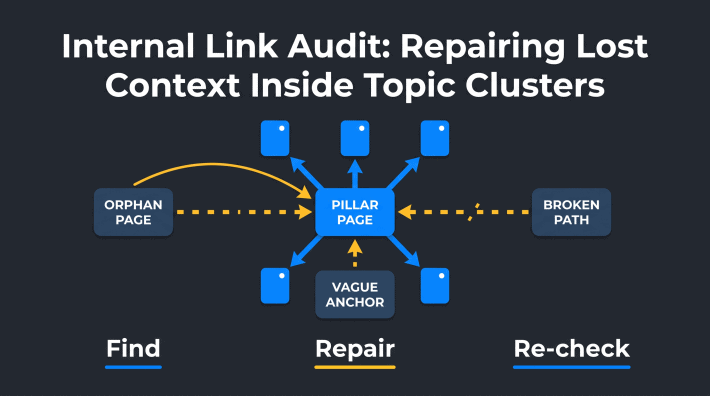
- Internal Linking for Authority: Use NEURONwriter’s internal linking suggestions to connect your new article to other relevant pages on your site. This creates a topical cluster, signaling to Google that you have deep expertise in this area and distributing authority across your site.
By the end of this phase, you will have a piece of content that is not only optimized to compete in the SERPs but is also genuinely valuable and easy for your audience to consume.
Pillar 3: AI-Powered Augmentation
The third pillar is about using artificial intelligence as a powerful assistant to scale your efforts and optimize for the new frontier of AI search.
Scaling Content Creation
NEURONwriter AI writing tools can dramatically accelerate your content creation process. You can generate a full first draft based on your SERP analysis or use AI to help you write specific sections, like introductions, conclusions, or FAQs. The key is to use AI as a starting point, a way to overcome writer’s block and build a solid foundation that you can then refine with your own expertise and insights.
Optimizing for AI Search (AEO)
Getting your content cited in Google AI Overviews requires a specific set of tactics known as AI Search Optimization (AEO).
- The Atomic Answer Framework: This is the most critical AEO tactic. For each key question your article answers (ideally in an H2 heading), provide a direct, concise summary of 40-60 words. This creates a perfectly “extractable” block of text that AI models can easily lift and feature in their answers.
- Injecting Information Gain: To be cited by an AI, your content must offer unique value. Use your competitor analysis from Pillar 1 to identify information gaps, and then fill them. This could be a unique data point from your own research, a case study, or an expert quote that can’t be found anywhere else.
Insight: AI is not a replacement for human expertise. It is a tool for augmentation. The winning strategy is to combine the scale and speed of AI with the unique insights, experience, and creativity that only you can provide.
Pillar 4: Performance-Driven Iteration & The Continuous Improvement Workflow.
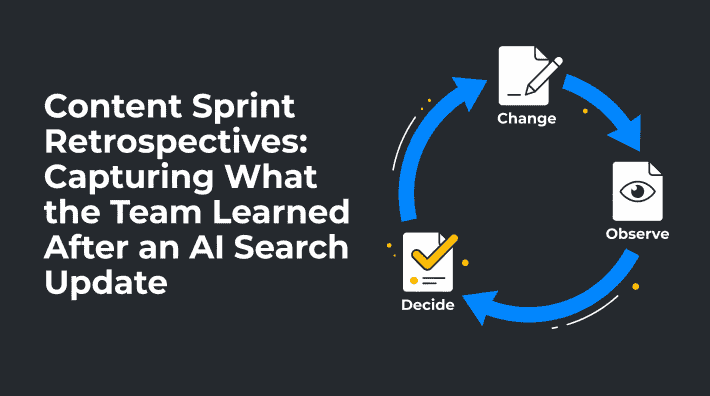
Publication is not the end of the content lifecycle; it’s the beginning of the feedback loop. The fourth pillar is about using data to measure your content’s performance and establishing a consistent operational rhythm to continuously iterate on your strategy.
Closing the Loop with GSC Integration.
By connecting your Google Search Console account to NEURONwriter, you can track the real-world performance of your optimized content. Monitor key metrics like clicks, impressions, and average position directly within the NEURONwriter interface. This allows you to draw a straight line from your optimization efforts (i.e., improving a Content Score) to tangible results (i.e., higher rankings and more traffic).
The Continuous Improvement Workflow
Top-performing content teams operate on a consistent rhythm of analysis and refinement. Here is a proven workflow you can adopt:
Weekly Actions – The Agile Tune-Up
Each week, focus on quick wins and fast feedback. Your weekly routine is about staying fresh and fixing obvious issues:
- Review Top Performers & Opportunities: Check your GSC data in NEURONwriter. Are there any articles with high impressions but low CTR? Consider optimizing the title or meta description. Are there keywords you rank for on page 2 that could be pushed to page 1 with a content refresh?
- Publish New Content (Batch): Aim to publish at least one new, highly optimized article every week. This keeps you inside the freshness window that algorithms favor and gives AI models more new content to analyze.
- Refresh Aged Content: Identify content older than ~90 days and update or rewrite a portion of it. Even a light refresh (new examples, updated stats, a 2026 update note) can signal to models that your page is up-to-date, possibly boosting its chances to be cited.
Monthly Actions – The Strategic Checkpoint
Every month, step back a bit and look at bigger trends and strategic alignment:
- Month-over-Month Performance Review: Compare this month’s traffic and rankings to last month’s across your key content clusters. Are you trending upward broadly? Which areas saw the most growth or decline? A month is enough time to smooth out weekly noise and see real movement.
- Analyze Competitor Moves: Review the SERPs for your most important keywords. Have new competitors emerged? Have the top-ranking articles changed? Use NEURONwriter to analyze their content and identify what they are doing differently.
- Plan Next Month’s Content & Tech Focus: Decide what new content themes to tackle next, and which technical improvements to schedule for the coming month. Perhaps last month you focused on one product line; next month you shift to another, or double down if something’s working.
Quarterly Actions – The Big Picture and Evolution
Every quarter, do a deep dive and adjustment at a strategic level:
- Holistic Content Audit: Perform a full audit of a key content cluster. Are there any content gaps? Are your internal links creating a strong, cohesive hub? Use NEURONwriter to re-analyze your cornerstone content against the current SERPs and identify major update opportunities.
- Content Strategy Review: Look at all the content you produced or updated in the last quarter. What’s the qualitative outcome? Which pieces got the most traffic, engagement, or conversions? Use this data to refine your content strategy for the next quarter.
- E-E-A-T Assessment: Step back and evaluate your site’s overall Experience, Expertise, Authoritativeness, and Trust. Are your author bios clear? Are you citing credible sources? Are you showcasing real-world experience? Plan initiatives to strengthen these signals over the next quarter.Read our E-E-A-T Ultimate Guide for a comprehensive framework on building trust signals.
This iterative process transforms your content strategy from a series of one-off projects into a dynamic, self-improving engine for organic growth.
Conclusion: From Guesswork to Growth Engine
The era of “spray and pray” content is over. To win in 2026 and beyond, you need a systematic, data-driven approach. The four pillars—Data-Driven Blueprinting, Semantic Optimization, AI-Powered Augmentation, and Performance-Driven Iteration—provide a comprehensive framework for success.
By implementing this playbook with NEURONwriter, you can move beyond guesswork and start engineering content that consistently performs. You can build a powerful, defensible organic growth engine that delivers measurable results and stands the test of time. The tools and the strategy are in your hands. It’s time to build.