The Content Strategist Playbook: From Research to ROI.
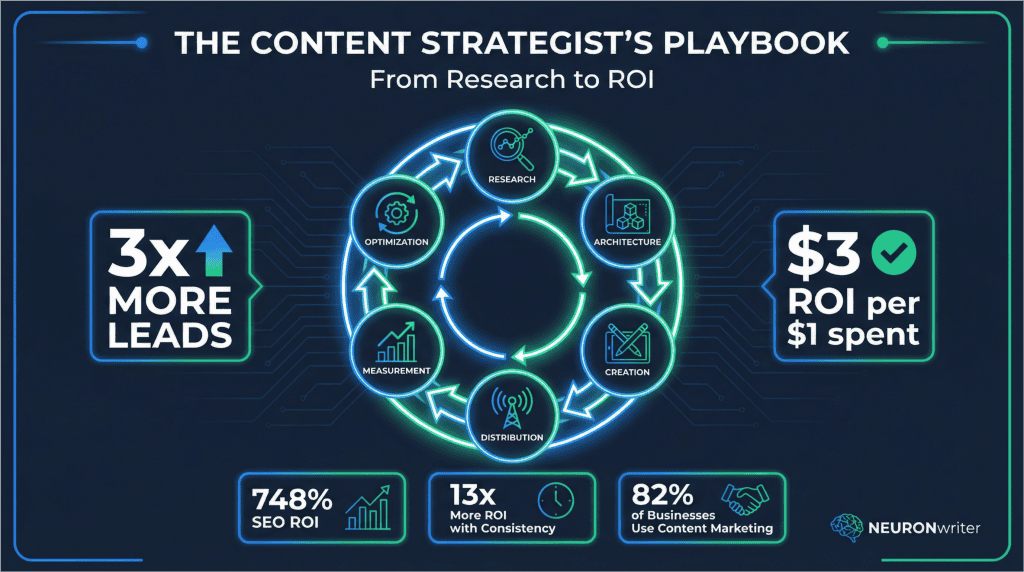
Content marketing is no longer an optional extra now 82% of companies treat it as the foundation of their strategy.
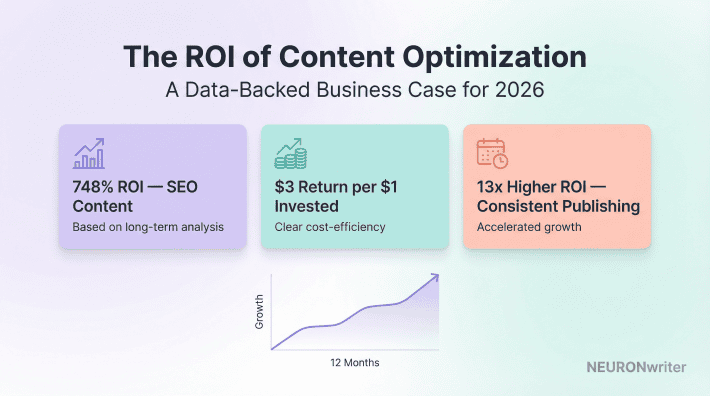
Yet, a significant gap persists between content production and tangible business results. While content marketing delivers an impressive $3 for every $1 invested—outperforming paid ads by 67%—a staggering 64% of marketers cannot accurately measure their ROI. This isn’t just a measurement problem; it’s a strategy problem.
Many organizations are stuck in a content hamster wheel, churning out blog posts and videos with no clear connection to business objectives. They chase vanity metrics like traffic and social shares, while the C-suite asks tough questions about revenue, customer acquisition costs, and market share. This disconnect is where most content strategies fail.
This playbook is designed to bridge that gap. It provides a structured, six-phase framework for content strategists to move from reactive content creation to proactive, data-driven programs that deliver predictable and provable ROI. This is not just about creating better content; it’s about building a strategic asset that fuels business growth.
Phase 1: Research — Building on Intelligence, Not Assumptions
The foundation of any successful content strategy is not creativity, but intelligence. Before a single word is written, a strategist must understand the business landscape, the target audience, and the competitive environment. This phase is about replacing assumptions with data.
Align with Business Goals
First, translate high-level business objectives into specific content marketing goals. If the business goal is to “increase market share in the enterprise segment,” the content goal is not to “get more traffic.” It is to “increase qualified leads from enterprise accounts by 20%” or “rank for keywords demonstrating enterprise-readiness.”
Deep Audience Research
Go beyond basic personas. A content strategist must map the entire buyer’s journey, identifying the questions, pain points, and information needs at each stage. This involves analyzing customer interviews, sales call recordings, and support tickets to understand the intent behind the search queries. What are the real problems your audience is trying to solve?
Keyword Research & Entity Mapping
Modern keyword research is not just about volume and difficulty. It’s about understanding semantic relationships. A strategist must perform entity mapping, identifying the core people, products, and concepts that define the niche. This process, which can be accelerated with NLP-driven tools, ensures that your content aligns with how Google AI understands the world, a critical factor for visibility in AI Overviews.
Competitive Content Gap Analysis
Analyze the content of competitors who are already winning. What topics do they cover in-depth? What formats are they using? Where are their content gaps? A thorough analysis reveals opportunities to create content that is not just different, but demonstrably better, more comprehensive, or more authoritative.
Phase 2: Architecture — Structuring Content for Authority
With a foundation of research, the next phase is to design the content architecture. This is not about individual articles, but about building a cohesive content ecosystem that establishes topical authority.
The Hub-and-Spoke Model
This is the cornerstone of modern content architecture. A “hub” page provides a comprehensive overview of a broad, strategic topic (e.g., “Content Marketing Strategy”). “Spoke” pages then dive deep into specific sub-topics (e.g., “Content Calendar Planning,” “Content Distribution Channels”). This structure signals to search engines that you have deep expertise in your domain.
The Editorial Calendar as a Strategic Tool
An editorial calendar should be more than a simple schedule. It is a strategic document that maps content releases to business priorities, product launches, and seasonal trends. It ensures a consistent publishing cadence a key factor for success, as businesses that blog consistently see 13x more positive ROI.
Content Types and Formats.
Diversify your content formats to match audience preferences and strategic goals. While blog posts are a staple, consider incorporating video, webinars, original research reports, and interactive tools. For example, video content has been shown to deliver ROI 49% faster than text-based content, making it ideal for campaigns needing quicker returns.
Phase 3: Creation — The Quality-Efficiency Balance
This is where strategy meets execution. The creation phase is a balancing act between producing high-quality, authoritative content and maintaining an efficient workflow. This balance is achieved through a smart combination of human expertise and AI assistance.
Data-Driven Content Briefs
Every piece of content should start with a detailed brief that is grounded in the research from Phase. A good brief includes the target audience, primary keyword/entity, target word count, key questions to answer, internal linking targets, and a list of NLP terms to include for semantic richness. This ensures that every writer, whether in-house or freelance, is aligned with the strategic goals of the content.
Integrating E-E-A-T Signals
To build trust and authority, content must demonstrate Experience, Expertise, Authoritativeness, and Trustworthiness (E-E-A-T). This means including author bios with credentials, citing original data, quoting subject matter experts, and providing clear, verifiable information. Our E-E-A-T guide provides a deep dive into practical implementation.
The AI-Assisted Workflow
AI is no longer just a writing tool; it’s a strategic partner. As one expert from the Content Marketing Institute noted, “If 2024 was the year of adopting content generation with AI… then 2026 is the year it all comes together”. A modern workflow uses AI for:
- Research: Summarizing competitor articles and identifying key themes.
- Outlining: Generating structured outlines based on NLP analysis of top-ranking content.
- Drafting: Creating a first draft that a human expert then refines, edits, and enriches with unique insights.
This hybrid approach allows teams to scale content production without sacrificing quality.
Phase 4: Distribution — Content That Finds Its Audience
Great content is useless if no one sees it. Distribution is not an afterthought; it must be planned from the beginning. A multi-channel distribution strategy ensures that your content reaches your target audience where they are most active.
SEO as the Primary Distribution Channel
With an ROI of 748% for B2B companies, SEO is the most powerful distribution channel for content. Every piece of content should be optimized for search, with a focus on ranking for keywords that indicate commercial intent. This includes on-page optimization, internal linking, and earning backlinks from authoritative sources. A strong SEO foundation ensures that your content continues to generate traffic and leads long after it’s published, a key factor in preventing content decay.
Email Amplification
Email marketing remains a top-performing channel, and it works best when fueled by high-quality content. Repurpose blog posts into email newsletters, create automated nurture sequences for new subscribers, and use content to re-engage dormant leads.
Social and Community Distribution
Share your content on relevant social media platforms and in online communities where your target audience gathers. This is not about spamming links, but about adding value to conversations. Share key insights from your articles, create shareable graphics, and engage with comments and questions.
Internal Linking as a Distribution Engine
Your existing content is a powerful distribution channel. A robust AI Overviews optimization strategy relies on a strong internal linking structure to distribute authority and guide users (and search engine crawlers) to your most important pages.
Phase 5: Measurement — Proving ROI to Stakeholders
This is the phase that separates content strategists from content creators. A strategist must be able to connect content performance to business results and communicate that value to leadership.
The Content Marketing ROI Formula
The formula is simple: ROI = [(Return – Investment) / Investment] x 100. The challenge lies in accurately tracking the variables.
- Investment: Include all costs salaries, freelance fees, software subscriptions (like NEURONwriter), and any paid promotion.
- Return: This is the revenue generated from conversions that were influenced by content. This requires a robust attribution model.
A Multi-Layered KPI Framework
| Stage | Metrics | What They Tell You |
| Awareness | Organic Traffic, Keyword Rankings, Social Reach | Is your content being seen by the right audience? |
| Engagement | Time on Page, Bounce Rate, Comments, Shares | Is your content resonating and holding attention? |
| Conversion | Leads Generated, Form Submissions, Demo Requests | Is your content driving valuable actions? |
| Revenue | Customer Acquisition Cost (CAC), Customer Lifetime Value (CLV), Attributed Revenue | Is your content contributing to the bottom line? |
Attribution Modeling
For businesses with long sales cycles, a simple last-click attribution model is insufficient. A multi-touch attribution model (linear, time-decay, or U-shaped) provides a more accurate picture of how content influences conversions over time. This is critical for proving the value of top-of-funnel content that may not lead to an immediate conversion but plays a crucial role in the buyer’s journey.
Phase 6: Optimization — The Compound Content Effect
A content strategy is not a static document; it is a living program that requires continuous optimization. This final phase is about creating a flywheel effect, where each piece of content builds on the success of the last.
The Content Refresh Strategy.
Identify your top-performing content and regularly update it to keep it fresh and accurate. This can involve adding new data, updating examples, and expanding sections to cover new developments. A content refresh can often deliver a significant traffic boost with minimal effort.
Proactive Content Decay Prevention.
Monitor your content for signs of decay declining traffic, slipping keyword rankings, or a rising bounce rate. Proactively address these issues by updating the content, improving internal linking, or promoting it through new channels.
Gap Analysis and Expansion.
Use your analytics to identify new content opportunities. What questions are users asking that you haven’t answered? What related topics are driving traffic to your competitors? This ongoing analysis fuels the next cycle of your content strategy, ensuring that you are always expanding your authority.
How NEURONwriter Powers the Entire Playbook.
NEURONwriter is designed to support every phase of this playbook, transforming it from a theoretical framework into an actionable workflow.
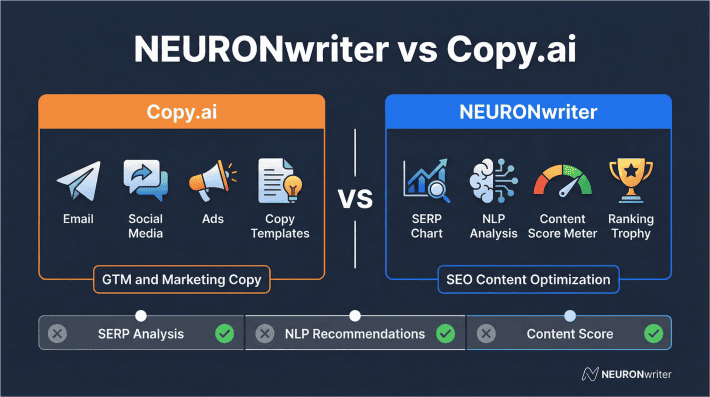
- Phase 1 (Research): Use NEURONwriter SERP analysis and NLP recommendations to perform deep keyword and entity research, identifying the terms and topics you need to cover.
- Phase 2 (Architecture): Plan your content clusters and hub pages based on the topical depth revealed in your analysis.
- Phase 3 (Creation): Generate data-driven content briefs and use the Content Editor to optimize your drafts for a high Content Score, ensuring semantic completeness.
- Phase 4 (Distribution): The high-quality, SEO-optimized content you create is primed for success in your primary distribution channel.
- Phase 5 (Measurement): By tracking the performance of content created with NEURONwriter, you can directly correlate your investment in the tool to improvements in rankings, traffic, and leads.
- Phase 6 (Optimization): Use NEURONwriter to identify underperforming content and re-optimize it with new NLP recommendations to reclaim lost traffic.
FAQ
How long does it take to see ROI from a content strategy?
While some results can be seen earlier, content marketing typically requires 3-6 months to show meaningful ROI. For SEO-focused content, which has the highest long-term value, expect a 6-9 month timeline to reach full potential. Patience and consistency are key.
What is a realistic ROI to expect from content marketing?
A good benchmark is a 3:1 to 5:1 revenue-to-spend ratio. However, this can vary significantly by industry and the quality of the strategy. SEO-driven content can achieve much higher returns over the long term.
How do I convince my boss to invest in a content strategy?
Frame your proposal in the language of business results. Use the statistics in this playbook to build a business case. Project the potential ROI based on industry benchmarks and show how a structured content strategy will drive measurable KPIs like qualified leads and attributed revenue, not just traffic.
Should I gate my content to generate leads?
It depends on the content and the stage of the buyer’s journey. Top-of-funnel educational content should generally be ungated to maximize reach and SEO value. High-value, bottom-of-funnel content like original research reports, webinars, or tools can be gated to capture qualified leads.
What’s more important: content quality or quantity?
Quality is the foundation. Without it, quantity is just noise. However, a successful strategy requires both. The goal is to produce the highest possible quality at a consistent and sustainable quantity. An AI-assisted workflow, as described in this playbook, is the most effective way to achieve this balance.