Mastering AI Overviews: A Data-Driven Guide to Winning Citations.
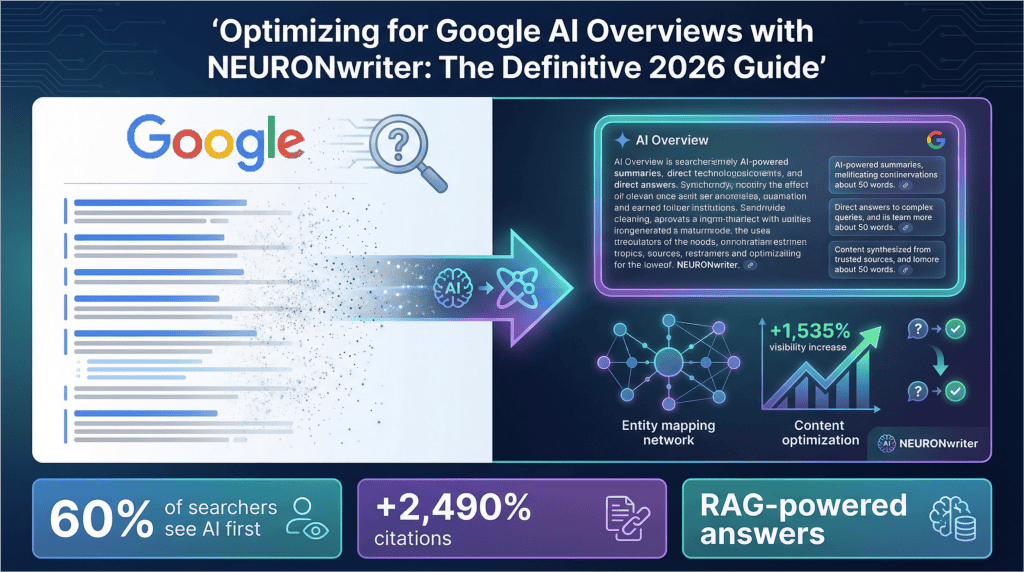
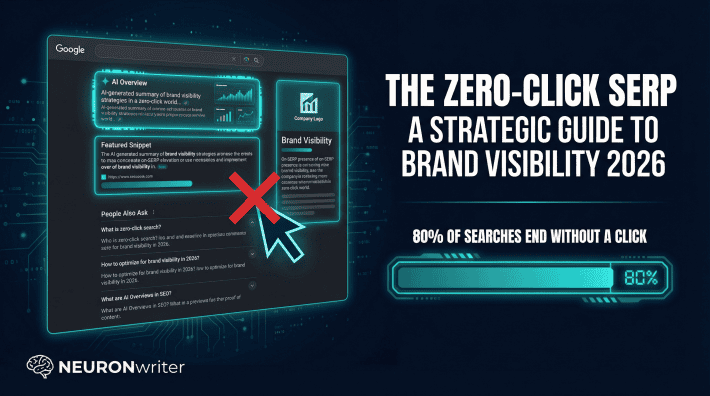
The landscape of search has fundamentally changed. With Google AI Overviews now appearing in over 60% of search results, the old SEO playbook is obsolete
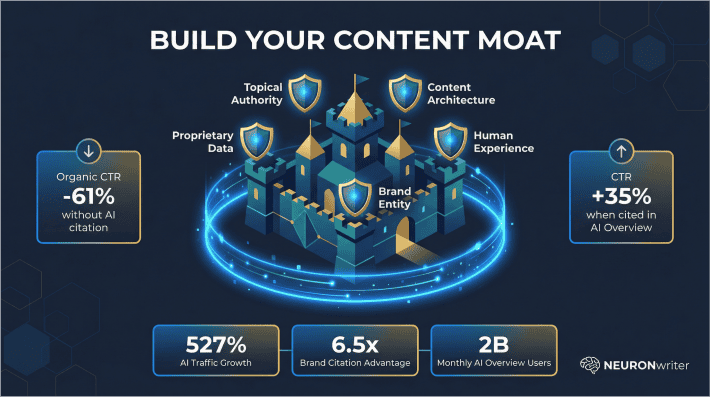
Data shows that organic click-through rates on these searches have plummeted by as much as 61%, from 1.76% to a mere 0.61%
However, this disruption presents a monumental opportunity: pages that successfully win citations within AI Overviews see a 35% increase in organic clicks and a staggering 91% increase in paid clicks compared to their non-cited competitors
Winning in this new era requires a paradigm shift. It’s no longer about tactical optimization or “gaming” an algorithm. It’s about deeply understanding how Large Language Models (LLMs) evaluate, trust, and cite information. This guide moves beyond basic advice to provide a data-driven, expert-level framework for engineering content that earns AI citations through AI Search Optimization (AEO). We will dissect the theoretical underpinnings of AI ranking factors and translate them into a practical, actionable strategy you can implement with NEURONwriter.
The Theoretical Foundation – How AI Overviews Think.
To optimize for AI Overviews, you must first understand how they function. Unlike traditional search, which primarily relied on on-page signals and backlinks, AI-driven search operates on a principle of inferred authority and semantic completeness.
As SEO expert Ben Wood explains:
“Large language models (LLMs) learn from the open web: journalism, reviews, forums, social platforms, video transcripts, and expert commentary. Reputation is inferred through the frequency, consistency, and context of brand mentions.”
This means authority is no longer just about what you publish on your site; it’s about how your brand and content are perceived and discussed across the entire digital ecosystem. A comprehensive 2025 study analyzing over 15,000 AI Overview results identified seven core ranking factors that determine citation. These factors provide a clear roadmap for what AI models value most.
The 7 Core Ranking Factors for AI Overviews.
A groundbreaking study by Wellows identified and ranked the key factors influencing AI Overview citations, providing a clear hierarchy of importance for content strategists
.
| Rank | Ranking Factor | Correlation/Impact | Why It Matters |
| 1 | Semantic Completeness | r=0.87 (p < 0.001) | AI prioritizes self-contained answers it can extract without external context. |
| 2 | Multi-Modal Content | +156% Selection Rate | Combining text, images, and video signals comprehensive, high-quality content. |
| 3 | Factual Verification | +89% Probability | AI cross-references claims with its knowledge base, rewarding verifiable facts. |
| 4 | E-E-A-T Signals | 96% of Citations | Experience, Expertise, Authoritativeness, and Trust are foundational to AI confidence. |
| 5 | Entity Knowledge Graph | 4.8x Boost | Content with 15+ connected entities is seen as more authoritative and comprehensive. |
| 6 | Optimal Passage Length | 130-160 words | This length provides sufficient context for a standalone answer, making it ideal for extraction. |
| 7 | Traditional SEO Metrics | Declining Importance | Backlinks and keyword density are now secondary to signals of authority and content quality. |
Deep Dive: The Primacy of Semantic Completeness
The single most important factor, with a statistical correlation of r=0.87, is Semantic Completeness. This is the ability of a passage to provide a complete, self-contained answer without requiring the user to click a link or read another section. Content scoring above 8.5/10 for semantic completeness is 4.2 times more likely to be cited in an AI Overview.
This concept is best understood through the “Information Island” test: if a single paragraph from your article were extracted and shown on its own, would a reader understand it completely? If the answer is no, it fails the test. This is why AI models, despite being able to process millions of tokens of context, still choose to extract concise, self-contained passages of 130-160 words.
The Practical Implementation – Engineering for Citation.
Understanding the theory is the first step. The next is translating it into a practical, repeatable process. This is where you move from strategist to engineer, using NEURONwriter to build content that aligns perfectly with the seven core ranking factors.
Engineering Semantic Completeness with NEURONwriter.
Your goal is to create “Information Islands” for every key concept. NEURONwriter Content Editor and NLP Analysis are your primary tools for this.
- The Inverted Pyramid Method: Structure each key section by front-loading the answer. The first 1-2 sentences should directly answer the question, followed by supporting details and context. This ensures that even a partial extraction by the AI provides immediate value.
- Achieving High Content Scores: As you write, incorporate the recommended terms from NEURONwriter NLP analysis. A high Content Score (aim for 85+) is a direct proxy for semantic completeness, indicating that you have covered the topic as comprehensively as the top-ranking, human-written articles.
- Inline Definitions: For any technical term, provide a brief, inline definition. For example, instead of saying “Optimize for cosine similarity,” write “Optimize for cosine similarity a mathematical measure of content relevance to better align with user intent.”
Building Entity Density and E-E-A-T.
AI models build confidence by connecting your content to established entities in their Knowledge Graph and verifying your E-E-A-T signals.
- Entity Optimization: Use NEURONwriter’s SERP analysis to identify the key entities (people, places, concepts) mentioned in top-ranking content. Ensure you not only mention these entities but also explain their relationships, helping the AI build a dense, interconnected understanding of your topic.
- Structured Data for E-E-A-T: Implement Person schema for authors to clearly signal their expertise. Use Citation schema for any data or quotes to demonstrate trustworthiness. Learn more about strengthening E-E-A-T signals for AI trust. NEURONwriter content structure recommendations can help you organize your content for easy schema markup.
Multi-Modal and Factual Verification.
- Integrate Visuals: Don’t just write text. Embed relevant YouTube videos, create custom infographics, and use high-quality images with descriptive alt text. NEURONwriter and other content optimization tools can guide this process.
- Cite Authoritative Sources: For every factual claim or data point, link out to a credible, authoritative source (e.g., academic studies, government reports, industry research). This makes your content easily verifiable for AI models, increasing its probability of being cited by up to 89%.
The Strategic Framework – A 90-Day Implementation Sprint.
Adopting this expert-level approach requires a structured plan. Here is a 90-day sprint framework to systematically upgrade your content for AI Overview dominance.
Sprint 1: Foundation (Days 1–30)
- Objective: Achieve semantic completeness across your most important content.
- Actions:
1.Audit your top 20 articles using NEURONwriter Content Analysis.
2.Rewrite key sections of each article to pass the “Information Island” test.
3.Implement the Inverted Pyramid structure for all H2/H3 sections.
Sprint 2: Enhancement (Days 31–60)
- Objective: Enrich your content with entities and multi-modal elements.
- Actions:
1.Implement structured data (Schema) for authors, organizations, and citations.
2.Optimize your top 10 articles for entity density based on NEURONwriter analysis.
3.Embed at least one relevant video or custom graphic in each of these articles.
Sprint 3: Authority Building (Days 61–90)
- Objective: Strengthen off-page and E-E-A-T signals.
- Actions:
1.Launch a digital PR campaign to earn mentions on authoritative industry sites.
2.Update all author bios with credentials, awards, and links to their social profiles.
3.Conduct a full E-E-A-T audit of your website to ensure credibility signals are clear and consistent.
Conclusion: From Chasing Algorithms to Building Authority.
The rise of AI Overviews marks a fundamental inflection point for SEO. The tactics of the past are no longer sufficient. Success in this new era belongs to those who can move beyond chasing algorithm updates and instead focus on building genuine, verifiable authority.
By understanding the theoretical principles of how AI models evaluate content and by systematically applying a data-driven framework, you can engineer content that is not only preferred by users but is also primed for citation. The seven core ranking factors provide the blueprint, and tools like NEURONwriter provide the engineering workbench. The future of search is here, and it rewards authority above all else.