
Beyond Keywords: A Practical Guide to Search Experience Optimization (SXO).
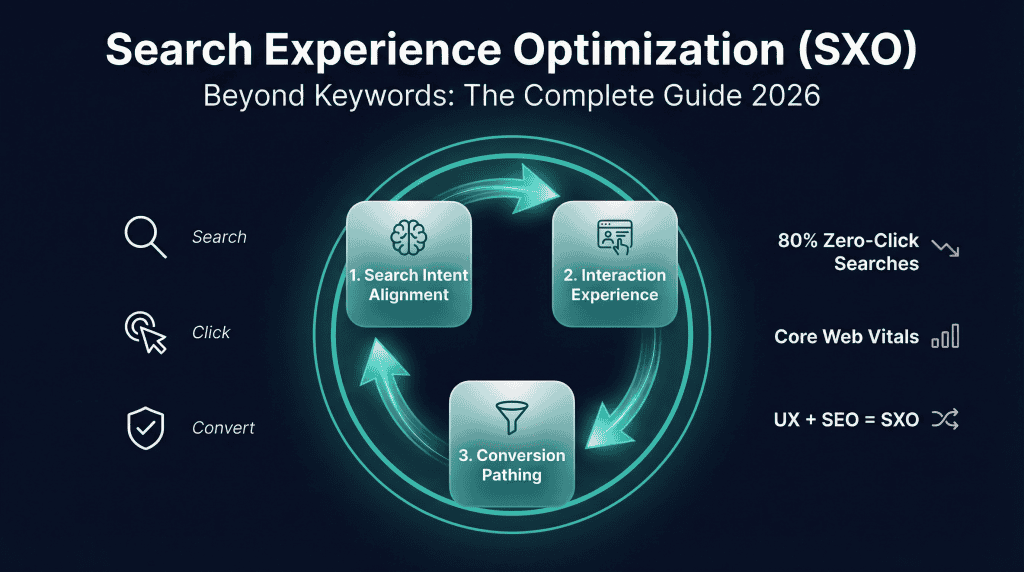
For years, SEO has been a game of keywords and backlinks. We optimized for what people typed into a search box. But in an era where 80% of searches end without a click and AI can provide instant summaries, the old rules are no longer enough.
The new frontier of search is not about being found; it’s about being helpful, credible, and seamless. This is the domain of Search Experience Optimization (SXO).
This guide will provide a practical, no-nonsense framework for understanding and implementing SXO. We will move beyond the buzzwords to explore the three core pillars of a successful SXO strategy, the key metrics that actually matter, and how to build a content workflow that is optimized for user experience from the ground up. You will learn why traditional SEO is incomplete without UX, and how a tool like NEURONwriter can help you bridge that gap by focusing on the deep, structural elements of your content that signal quality to both users and search engines.
What is Search Experience Optimization (SXO)?
Search Experience Optimization (SXO) is a methodology that merges traditional Search Engine Optimization (SEO) with User Experience (UX) design. Its goal is to optimize the entire user journey, from the moment a user sees your brand in the search results to the moment they convert on your website. It recognizes that ranking is not the end goal; it is the beginning of a conversation. If that conversation is confusing, slow, or unhelpful, the user will leave, and search engines will notice.
“SXO is essentially SEO that takes the full experience seriously. Traditional SEO focuses heavily on being found. UX focuses on what happens once a user arrives. SXO connects those two because, in real life, they are not separate.” — RicketyRoo
This connection is not just philosophical; it is algorithmic. Google’s ranking systems are increasingly designed to reward sites that provide a superior user experience. Signals like Core Web Vitals, mobile-friendliness, and user engagement metrics are no longer “soft” skills; they are core components of a successful SEO strategy.
The Three Pillars of a Winning SXO Strategy.
A successful SXO strategy is built on three core pillars that address the user’s journey at every stage.
| Pillar | Key Question | Core Metrics |
| 1. Search Intent Alignment | Does your content provide a direct, comprehensive, and credible answer to the user’s query? | Dwell Time, Bounce Rate, SERP CTR |
| 2. Interaction Experience | Is your website fast, intuitive, and easy to use, especially on mobile devices? | Core Web Vitals (LCP, INP, CLS), Mobile-First Indexing |
| 3. Conversion Pathing | Is it easy and logical for the user to take the next step, whether that’s reading another article, signing up for a newsletter, or making a purchase? | Conversion Rate, Goal Completions, User Flow |
These three pillars are interconnected. A page that perfectly matches search intent will still fail if it takes 10 seconds to load. A lightning-fast site will fail if the content is irrelevant. And a site that excels at both will fail if the user doesn’t know what to do next. SXO is about optimizing the entire system, not just the individual parts.
A 5-Step Framework for Implementing SXO.
Implementing SXO does not require you to abandon your existing SEO efforts. It requires you to augment them with a user-centric perspective. Here is a 5-step framework to get you started.
Step 1: Audit Your Core Web Vitals
Your first step is to ensure your site meets Google’s baseline for a good user experience. Use Google Search Console to check your Core Web Vitals report. Your goal is to have a “Good” score for all three metrics: Largest Contentful Paint (LCP), Interaction to Next Paint (INP), and Cumulative Layout Shift (CLS). According to Google, sites that meet these thresholds are up to 24% less likely to have users abandon the page before it even loads.
Step 2: Conduct a Search Intent Audit
For your top 10-20 performing pages, ask yourself: does this page provide the best possible answer to the user’s query? Be honest. Look at the top-ranking competitors. Are they using more images, videos, or data visualizations? Is their content better structured and easier to scan? Use a tool like NEURONwriter to perform a SERP analysis and identify the key terms, entities, and questions that your content may be missing. This is the foundation of our guide to topical authority, and it is essential for SXO.
Step 3: Optimize for the “Above-the-Fold” Experience
Google’s own patents reveal that content appearing “above the fold” (i.e., visible without scrolling) is given a higher relevance score
Your most important information—your primary headline and a clear, concise answer to the user’s query—should be immediately visible. This is not just good for SEO; it’s good for users, who are often making a split-second decision about whether to stay on your page.
Step 4: Map Your Internal Linking to the User Journey
Your internal links should not be random. They should be a strategic tool for guiding users through their journey. A user who lands on an informational blog post should have a clear path to a more detailed guide, a product page, or a case study. As we explore in our guide to internal linking, this not only improves user experience but also distributes PageRank more effectively throughout your site.
Step 5: Implement a “Trust Signal” Audit
In an era of AI-generated content, trust is more important than ever. Your site needs to be visually and textually credible. This includes:
- Author Bios: Clear, credible author bios with links to their social profiles.
- Citations and Sources: Linking out to authoritative sources to back up your claims.
- Social Proof: Testimonials, case studies, and user reviews.
- E-E-A-T: Demonstrating experience, expertise, authoritativeness, and trustworthiness. Our guide to E-E-A-T provides a deeper look at how to implement this.
How NEURONwriter Powers Your SXO Strategy.
SXO is not just strategy — it’s execution.
Tools like NEURONwriter can support this process by helping you:
- SERP-Driven Content Structure: NEURONwriter’s analysis of the top-ranking competitors provides a data-driven blueprint for structuring your content. It shows you what questions to answer, what headers to use, and what terms to include to create a comprehensive, user-centric article.
- Readability and Accessibility: The platform’s real-time Content Score includes a readability metric, helping you ensure your content is easy to understand for a broad audience. This is a key component of a positive user experience.
- Schema Markup: NEURONwriter automatically generates schema markup, including FAQ schema, which helps you win rich snippets and provide answers directly in the SERP. This is a core tactic for optimizing for the zero-click SERP.
- Topical Authority Planning: By helping you plan and build out topic clusters, NEURONwriter ensures that your content is not just a collection of random articles, but a cohesive, interconnected library of information that establishes your site as an authority.
But remember:
tools don’t create value — your content does.
Conclusion: The Future of SEO is Experience
Search Experience Optimization is not a fad; it is the natural evolution of SEO in a world where users have more choices and less patience than ever before. By shifting your focus from keywords to experience, you are not just optimizing for search engines; you are optimizing for the people who use them. This is the most sustainable, long-term strategy for winning in the AI-driven search landscape of 2026 and beyond.
FAQ
What is the difference between SEO and SXO?
SEO focuses primarily on getting a site to rank in search results. SXO is a broader discipline that combines SEO with User Experience (UX) to optimize the entire user journey, from the search query to the on-site conversion.
Are Core Web Vitals still important in 2026?
Yes. Core Web Vitals (LCP, INP, and CLS) remain a core component of Google’s ranking algorithm and a key indicator of a site’s technical health and user experience.
How does SXO relate to zero-click searches?
SXO is a direct response to the rise of zero-click searches. By optimizing for SERP features like Featured Snippets and People Also Ask boxes (using schema markup), you can increase your brand’s visibility and provide value to users even if they don’t click through to your site.
Can I do SXO without a dedicated UX team?
Yes. While a dedicated UX team is helpful, many of the core principles of SXO can be implemented by SEOs and content creators. Tools like Google Search Console, Google Analytics, and NEURONwriter provide the data and insights you need to get started.
Is SXO just for large companies?
No. SXO is a mindset and a methodology that can be applied to businesses of all sizes. In fact, smaller businesses can often be more agile in implementing UX improvements, giving them a competitive advantage.