What is WebMCP? The New Protocol for AI-Optimized SEO in 2026.
For years, Search Engine Optimization (SEO) has been about making content understandable to search engines. We added structured data, optimized meta tags, and refined our semantic hierarchies. But as we move deeper into 2026, the paradigm is shifting from informational search to transactional action. This shift is being driven by a new web standard called WebMCP.
If you want your website to not just be read by AI, but actively used by AI agents to complete tasks for users, understanding WebMCP is no longer optional it is the foundation of Agentic Engine Optimization (AEO).
The End of Screen Scraping: Why WebMCP Was Developed.
Until recently, when an AI agent (like ChatGPT or Gemini) tried to perform an action on a website such as booking a flight or adding an item to a shopping cart it relied on a method akin to screen scraping. The AI would analyze the HTML or visual layout, guess which button meant “Buy Now,” and attempt to fill out forms. This process was slow, error-prone, and easily broken by simple design changes.
WebMCP (Web Model Context Protocol), developed jointly by Google and Microsoft and introduced as an early preview in Chrome 146, fundamentally solves this problem. Instead of forcing AI agents to guess how a website works, WebMCP allows websites to explicitly declare the tools and functions they offer
As technical SEO expert Dan Petrovic noted, this is “the biggest shift in technical SEO since structured data”.
How WebMCP Works: The Technical Foundation.
WebMCP operates through a new browser interface called navigator.modelContext. Through this API, websites publish a Tool Contract a structured catalog of available interactive functions
When an AI agent visits a WebMCP-enabled site, it reads this Tool Contract. The contract defines the name of the function, the parameters it requires, and the expected output.
There are two primary ways to implement this:
- Declarative API: Designed for simple operations. Developers add specific WebMCP attributes to existing HTML forms. This allows AI agents to easily execute standard web interactions like filtering, sorting, or basic form submissions with minimal code changes.
- Imperative API: Designed for complex, multi-step scenarios like e-commerce checkouts or dynamic pricing configurations. This requires JavaScript to register functions that the AI agent can call directly, waiting for results before moving to the next step.
For example, instead of an AI guessing how to add a product to a cart, the website explicitly provides a function like addToCart(productId, quantity, size, color). The agent knows exactly what data to send, completing the transaction in 1-2 seconds with virtually zero errors, compared to the 5-10 seconds required by legacy scraping methods.
Why WebMCP is Revolutionary for B2B and E-Commerce.
The implications for transactional websites are massive. In the B2B space, buyer journeys are notoriously complex, involving multi-step qualification processes and custom quote requests.
With WebMCP, an industrial supplier can expose a “request quote” tool. A procurement manager’s AI agent can then submit identical RFQs across multiple vendors simultaneously, without ever needing to adapt to each site’s unique form layout
The vendor whose site exposes structured tools gets queried instantly; the vendor relying on manual form completion gets skipped.
For e-commerce, the friction of the checkout process is drastically reduced. Users can simply tell their AI assistant, “find running shoes under $50 and add them to my cart.” If your site supports WebMCP, the AI can execute that command directly. If it doesn’t, the AI can only provide a link, leaving the user to do the manual work.
The Impact on SEO: From Informational to Actionable.
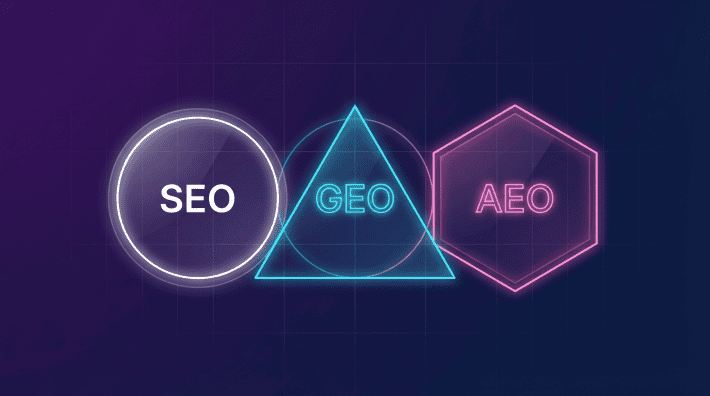
WebMCP marks the evolution from Generative Engine Optimization (GEO) to Agentic Engine Optimization (AEO).
While traditional SEO and GEO focus on ensuring your content is cited in AI Overviews, WebMCP ensures your site is actionable. Structured data (like JSON-LD) tells the AI what your page is about (e.g., “This is a product that costs $100”). WebMCP tells the AI what it can do (e.g., “Here is the function to buy this product”). For a deeper look at how structured data fits into this picture, see our guide on schema markup for AI agents.
In 2026, SEO strategies must incorporate both. Sites that fail to implement WebMCP risk losing highly qualified, transactional AI traffic to competitors who have made their sites agent-ready. Furthermore, because WebMCP allows agents to complete transactions with fewer page loads, it reduces server strain and can positively impact Core Web Vitals, indirectly boosting traditional ranking factors. For a full overview of the technical foundations that support agentic readiness, our Technical SEO Checklist for 2026 is a natural companion to this article.
How NEURONwriter Prepares You for the Agentic Web.
While WebMCP handles the transactional layer, the informational foundation of your website must be flawlessly structured for AI agents to understand your offerings in the first place. This is where NEURONwriter remains your most critical asset.
Before an AI agent calls a WebMCP function, it must first determine if your page is topically relevant to the user’s query. NEURONwriter advanced semantic SEO capabilities ensure that your content is densely packed with the exact entities and NLP terms that AI models look for when evaluating expertise.
By using NEURONwriter to build comprehensive topical authority, you ensure that your brand is the one AI agents recommend before they initiate a WebMCP transaction. NEURONwriter helps you structure your content perfectly, bridging the gap between being easily understood by generative engines and being fully actionable by autonomous agents.
FAQ
What is the difference between WebMCP and structured data?
Structured data (like Schema.org) is informational it tells search engines what a page is about. WebMCP is actionable it tells AI agents what functions they can perform on the page (like adding to a cart or booking a ticket).
Which browsers currently support WebMCP?
As of early 2026, WebMCP is available as an early preview in Google Chrome (version 130 and later) behind an experimental flag. It is expected to be supported by Edge soon and is on track to become a W3C standard for all major browsers.
Do I need to rewrite my entire website to use WebMCP?
No. You can use progressive enhancement. The Declarative API allows you to add simple attributes to existing HTML forms for basic functions, while the Imperative API can be used selectively via JavaScript for more complex, multi-step transactions.
How does WebMCP affect traditional SEO rankings?
While WebMCP is primarily for AI agent interaction, sites that implement it may see indirect SEO benefits. AI agents can complete tasks with fewer page loads, which improves server response times and user experience metrics (like Core Web Vitals), which are factors in Google’s traditional ranking algorithms.