
Multimodal SEO: Optimizing for Text, Image, and Voice Search
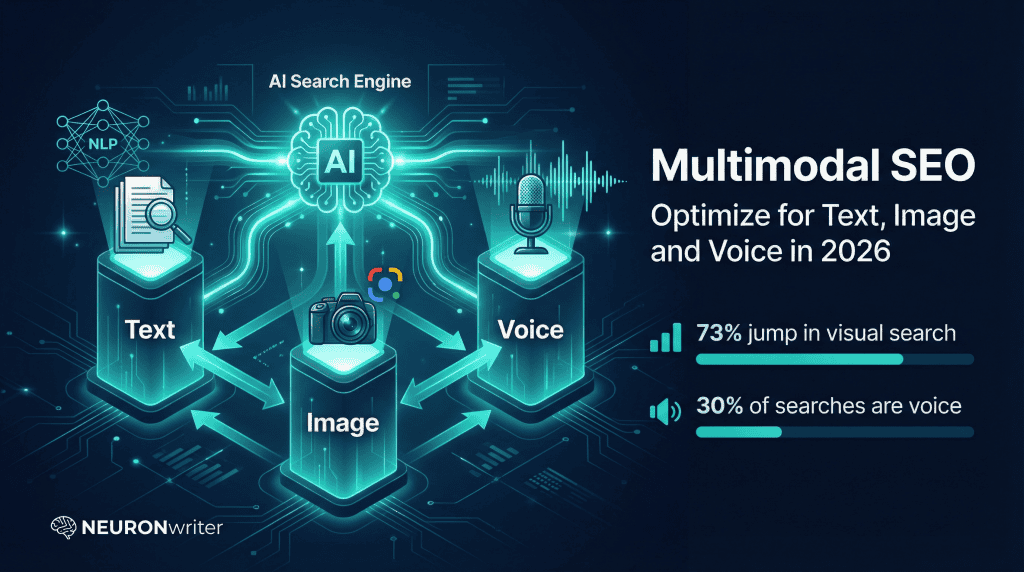
For years, SEO has been a text-dominated discipline. We obsessed over keywords, meta descriptions, and the written word. But in 2026, that is no longer enough. The rise of AI-powered search engines like Google, powered by natively multimodal models like Gemini, has fundamentally changed the game. These models don’t just read your content; they see it, hear it, and understand it in a holistic way.
This is the era of Multimodal SEO a unified strategy for optimizing your content across text, image, and voice. It’s about ensuring your brand is visible not just when someone types a query, but when they snap a photo with Google Lens, ask a question to their smart speaker, or search for a video on YouTube. With visual search experiencing a 73% jump in usage and voice search now accounting for 30% of all web browsing sessions, a text-only SEO strategy is a strategy for obsolescence.
This guide will provide a comprehensive framework for building a modern, multimodal SEO strategy. We will explore the three core pillars of multimodal optimization text, image, and voice and show how a unified approach, powered by tools like NEURONwriter, is the key to winning in the new landscape of AI-driven search.
What is Multimodal SEO?
Multimodal SEO is the practice of optimizing your website and its content to be discoverable and understandable across multiple types of search inputs and outputs. It moves beyond traditional, text-based SEO to encompass a holistic strategy that includes:
- Text Search: The classic keyword-driven search we all know.
- Visual Search: Using an image as the query (e.g., Google Lens, Pinterest Lens).
- Voice Search: Using spoken language to query a search engine or voice assistant (e.g., Siri, Alexa, Google Assistant).
- Video Search: Searching for and within video content (e.g., YouTube).
At its core, multimodal SEO is about providing search engines with a rich, interconnected, and machine-readable understanding of your content in all its forms. It’s about structuring your data so that an AI model can understand that the product in your image is the same product described in your text, and the same product that a user might ask for via voice search.
“Leverage multimodal content: prioritize video, images, and social for omni-media plans, as AI pulls from diverse formats beyond text. Prioritize intent, not just keywords.” — Advanced Web Ranking
This is no longer a futuristic concept. Google core AI models are already multimodal. They process information from different modalities simultaneously to provide a single, unified answer. If your content is not optimized for this new reality, you are becoming invisible to a rapidly growing segment of the search market.
The Three Pillars of Multimodal SEO.
A successful multimodal strategy is built on three pillars of optimization, each addressing a different way that users and AI models interact with your content.
Pillar 1: Text Optimization (The Foundation)
Text remains the foundation of multimodal SEO. It provides the core semantic context that helps search engines understand the meaning and relevance of your content. The principles of modern, text-based SEO are more important than ever in the multimodal era:
- Entity-Driven SEO: As we explored in our guide to Entity SEO, focusing on well-defined entities rather than just keywords is crucial. This helps AI models understand the “things, not strings” that your content is about, creating a solid foundation for multimodal understanding.
- Topical Authority: Building comprehensive topic clusters demonstrates your expertise and provides the rich, interconnected content that AI models need to see you as a credible source. A deep dive into this can be found in our guide to topical authority.
- Structured Data (Schema Markup): Schema is the glue that holds your multimodal strategy together. It is the language you use to explicitly tell search engines what your content is about, connecting your text, images, and videos into a single, machine-readable entity.
Pillar 2: Visual Search Optimization.
With Google Lens now processing over 12 billion visual searches per month, optimizing your images is no longer optional. Visual search is a critical channel for discovery, especially in e-commerce, travel, and lifestyle niches.
| Strategy | Action | Why It Matters for Multimodal SEO |
| Descriptive Filenames | red-vintage-leather-handbag.jpg instead of IMG_4728.jpg | Provides immediate, clear context to search engine crawlers. |
| Detailed Alt Text | “A red vintage leather handbag with a gold buckle, sitting on a wooden table.” | Makes your images accessible and provides rich descriptive text for AI models. |
| Image Schema | Use ImageObject schema to provide explicit details like author, copyright, and subject matter. | Connects your image to your brand entity and provides verifiable data. |
| High-Quality, Unique Images | Avoid generic stock photos. Use original, high-resolution images. | AI models are increasingly rewarding originality and penalizing visual duplication. |
| Optimized File Size | Compress images using modern formats like WebP or AVIF. | Page speed is a critical ranking factor, and large images are a common bottleneck. |
Pillar 3: Voice Search Optimization
Voice search is characterized by its conversational nature and its focus on direct answers. With 58% of voice searches being for local business information, it is a critical channel for driving real-world action
- Focus on Conversational Keywords: People don’t talk the way they type. Optimize for long-tail, question-based keywords that mirror natural language (e.g., “What is the best SEO tool for an agency?” instead of “seo tool agency”).
- Target Featured Snippets: 40.7% of all voice search answers come from a featured snippet
Structuring your content with clear headings, lists, and concise answers to common questions is the key to capturing this “position zero.”
- Optimize for Local Search: Ensure your Google Business Profile is complete, accurate, and up-to-date. Encourage customer reviews and ensure your name, address, and phone number (NAP) are consistent across the web.
- Prioritize Page Speed: Voice search users expect instant answers. A slow-loading page will be skipped over in favor of a faster competitor.
How NEURONwriter Powers Your Multimodal Strategy.
A true multimodal strategy requires a tool that understands the interconnected nature of modern SEO. NEURONwriter is uniquely positioned to power your multimodal efforts by providing a centralized platform for the foundational elements that all three pillars share.
- Semantic SEO at its Core: NEURONwriter NLP-powered analysis helps you identify and include the key entities and semantic terms that AI models need to understand your content’s context. This creates the strong textual foundation that your visual and voice strategies are built upon.
- Built-in Schema Markup: NEURONwriter automatically generates schema markup, including FAQ and How-to schema, making it easy to provide search engines with the structured data they need to connect your text, images, and videos.
- Content Structure for Featured Snippets: By analyzing the structure of top-ranking content, NEURONwriter helps you organize your articles with the clear headings, lists, and concise answers that are essential for winning featured snippets and, by extension, voice search answers.
- AI Visibility Tracking: In a multimodal world, success is not just about clicks. NEURONwriterAI Visibility tracking helps you measure your brand’s presence across different search modalities, providing a holistic view of your performance in the new AI-driven landscape.
The Future is Unified.
Multimodal SEO is not about choosing between text, image, or voice. It’s about creating a unified, cohesive strategy that recognizes that your users and the AI models that serve them interact with your brand across all of these modalities. The brands that will win in 2026 and beyond are those that break down the silos between their content types and build a single, interconnected, and machine-readable brand presence.
FAQ
What is the most important pillar of multimodal SEO?
Text remains the foundation. Without a strong, semantically rich textual base, it is difficult for search engines to understand the context of your images and voice content. Start with a solid entity-based SEO strategy and then expand to visual and voice.
How do I measure the ROI of multimodal SEO?
Look beyond traditional traffic metrics. In Google Search Console, track your image and video search performance. Use tools like NEURONwriter to track your AI Visibility and share of voice in generative answers. For voice search, track the performance of your featured snippets and the volume of local actions (e.g., calls, direction requests) from your Google Business Profile.
Is multimodal SEO only for e-commerce brands?
No. While e-commerce brands see a clear benefit from visual search, any business can benefit from a multimodal strategy. A B2B SaaS company can use video tutorials to capture “how-to” queries. A local restaurant can use voice search optimization to drive foot traffic. A publisher can use image SEO to drive traffic to their articles.
How does E-E-A-T relate to multimodal SEO?
E-E-A-T (Experience, Expertise, Authoritativeness, Trustworthiness) is crucial. High-quality, original images and videos demonstrate experience. Authoritative text content builds trust. A consistent brand presence across all modalities reinforces your authoritativeness. Our guide to E-E-A-T provides a deeper look at this connection.
How long does it take to see results from a multimodal strategy?
Like all SEO efforts, multimodal is a long-term investment. You may see initial improvements in image search traffic or featured snippet performance within a few weeks. However, building true multimodal authority can take several months as search engines begin to understand the interconnected nature of your content.