Content Verification: How to Check Claims, Sources and Product Facts Before Publishing
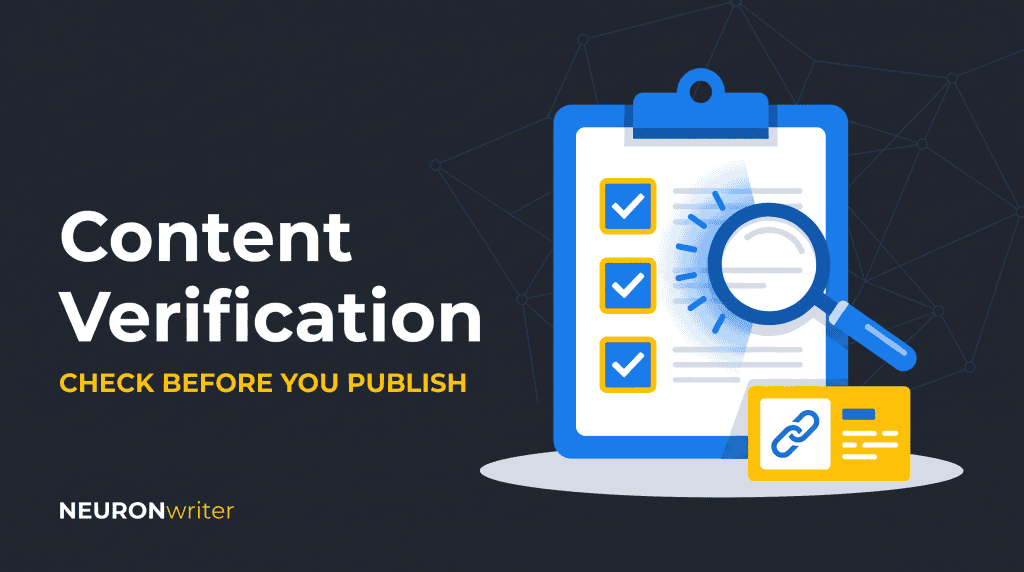
Idea: Content verification is a final review that checks whether the important statements in an article are accurate, current and easy to support. It is not only a spelling check. It asks a simple question: can we show where this claim came from?
Challenge: A draft can sound confident while still containing an outdated statistic, an unclear product description or a claim copied from a weak source. This is especially easy to miss when a writer uses an AI-generated draft or works quickly from several notes.
Summary: Use a short, repeatable process: mark claims that could affect a reader’s decision, check them against the best available source, record the result, and ask a second person to review only the highest-risk items. The result is clearer content, fewer corrections and more trust.
Related reads:
Content Optimization Workflow for SEO: Research, Brief, Write, Refresh, Measure
How to Get Cited by AI: From Citation Gap to Content Brief
AI Visibility Measurement Framework for Content Teams
What Content Verification Means for Written Content
Content verification means checking a written page before it goes live. The goal is to confirm that the claims, sources, names, dates, product facts and links are correct enough for readers to rely on.
This is different from checking whether an image or video file is authentic. Here, the focus is the information in an article: what it says, what it promises and what evidence supports it. Google’s guidance for people-first content emphasizes clear value and trustworthiness. A simple review process helps a team meet that standard before a weak statement reaches readers.
Why a Final Check Protects Readers and Your Brand
A small error can create a much larger problem. An old price may confuse a buyer. A feature described too broadly may create a support request. A statistic without context can make an article look less trustworthy when someone checks it.
Verification does not make content slow. It makes the review targeted. Most sentences in a draft do not need a long investigation. The team should spend time on statements that influence a decision, make a promise or could become wrong after a product, market or policy change.
| If the draft says… | The reader may assume… | What to check |
| “This feature saves time.” | The result is guaranteed for every user. | Clarify the use case and avoid an unsupported promise. |
| “Most teams do X.” | There is research behind the statement. | Find the original source, date and sample—or remove the claim. |
| “The platform includes Y.” | The feature is available now. | Confirm the exact product fact with the responsible owner. |
| “See our guide.” | The link opens a useful, current page. | Open the URL and confirm its context and destination. |
The Five Things to Verify Before You Publish
Every article has its own details, but these five checks catch most avoidable problems.
1. Important claims and numbers
Mark any sentence that includes a number, a comparison, a promise or a statement about what readers should do. Then ask: what is the best source for this? A primary source is usually stronger than a blog post that repeats someone else’s finding. If you cannot find solid evidence, use more careful language or remove the sentence.
2. Sources and context
A source can be real but still be a poor fit. A study from several years ago may not describe today’s situation. A statistic about a large company may not apply to small teams. Record the publication date, the original author and the exact point the source supports. This is the simple meaning of provenance: knowing where a claim came from.
3. Product facts and screenshots
Product copy ages quickly. Before publishing, ask the person responsible for the product to check feature names, availability, limits, integrations and screenshots. Do not guess based on an old help article. A clear, accurate description is more useful than a long list of possible capabilities.
4. Dates, names and links
Check dates in examples, job titles, version numbers and company names. Then open every important internal link. A link may work technically while pointing to a page that no longer supports the sentence around it. Full, relevant internal links help readers move through a topic without sending them to a dead end.
5. AI-generated drafts and missing evidence
AI can make a draft faster, but it cannot replace editorial responsibility. Treat every factual claim in an AI-assisted draft as unverified until it has a source, product confirmation or a clear reason to remain. The same rule applies to claims that sound familiar: confidence is not evidence.
A Simple Content Verification Checklist
A checklist turns a vague final review into a short, repeatable routine. The table below can live in the brief, a shared document or the editor’s review notes.
| Item | Control question | Evidence to keep | Typical owner |
| Main claim | Is it accurate and specific? | Original source or approved internal note | Writer |
| Statistic | Is the number current and in context? | Source URL, date and relevant excerpt | Writer or researcher |
| Product fact | Is the description exactly right today? | Product-owner confirmation | Product owner |
| External source | Does it support this exact sentence? | URL and short note | Writer |
| Internal link | Does it work and fit the reader’s next step? | Checked full URL | Editor |
| AI-assisted text | Is each factual statement supported? | Sources or rewritten copy | Writer and editor |
You do not need to keep evidence for every ordinary sentence. Keep it for the points a reader could challenge or act on. That makes later updates much easier.
A Four-Step Review Process That Does Not Slow the Team Down
A strong process is small enough to use every time. The goal is not to create an approval maze. It is to give the right person the right question at the right moment.
1. Mark the claims that matter
Before the final edit, highlight decision-making claims. These include prices, results, product capabilities, legal or health-related statements, dates, comparisons and customer quotes. If a sentence would matter to a buyer, it deserves a quick check.
2. Verify against the best available source
Use the closest reliable source: an original study, an official page, a documented product note or an approved customer record. If several sources disagree, do not choose the most exciting number. Explain the limits, soften the claim or leave it out.
Check the date and author before you confirm a source. Then read the lines around a statistic or quote, not only the sentence you want to use. The wider context may show an important limit, a different audience or a result that no longer applies. This one-minute check prevents many misleading claims.
3. Record the decision
For every higher-risk claim, add a short note: “confirmed,” “rewritten,” “removed” or “waiting for owner.” A few words are enough. This record creates transparency and means the next editor does not have to repeat the same work.
4. Send only risky items to a second reviewer
A second review is valuable when the risk is high, not for every sentence. Send it to a product owner when a product fact is unclear, to a subject expert when a claim could mislead readers, or to a legal reviewer when internal policy requires it. This keeps the workflow moving.
How to Judge Whether a Source Is Good Enough
A source does not need to be perfect to be useful, but it should fit the claim you want to make. The closer the source is to the fact, the better. For a product feature, use an approved product record. For a study, link to the original study. For a customer statement, use the approved quote and make sure the customer agreed to its use.
Check three things before you rely on a source: who created it, when it was published and what it actually proves. A headline, search snippet or AI answer may help you find a source, but it should not be the final evidence for a claim. This small step improves the authenticity and transparency of the finished page.
| Source type | Usually strong enough for | Check before using it |
| Official product or policy page | Current feature, limit or policy statement | Version, date and product-owner approval |
| Original research or public data | A statistic or research finding | Sample, date and the exact conclusion |
| Customer interview or approved quote | A real-world example | Permission, context and exact wording |
| Search snippet or AI answer | Finding a possible source | Locate and check the original source first |
Content Verification Is Not a Guarantee
A final check does not mean every sentence will remain correct forever. It means the team has checked the important information against the best available evidence at the time of publishing. New data, product changes and updated guidance can still make a page less accurate later.
That is why a simple review date matters. Keep the source record with the draft, and return to pages when their topic changes. This is more honest than claiming a page is permanently verified. It also makes it easier for the next writer to see what was checked, what was uncertain and what needs an update.
Keep a Small Record of Each Important Check
A short record makes content verification easier next time. Keep the claim, source, review date and decision together in the brief or editorial notes. The record can be only one line, but it gives the team a transparent answer when someone asks why a statement was included.
This also helps when the article is refreshed. Instead of starting from zero, the editor can see which facts were checked, which source was used and which point needs a new review. A small record is usually more useful than a complicated system nobody updates.
Common Mistakes to Avoid
The first mistake is checking grammar but not the facts. Clear writing cannot rescue an inaccurate statement. The second is treating a search snippet, AI answer or copied sentence as a source. These may point you toward useful information, but they are not proof by themselves.
The third mistake is using one old source forever. Add a review date to content with changing prices, product details, search behavior or industry data. The fourth is hiding uncertainty. When information is incomplete, say what you know, what you do not know and when the page will be reviewed again.
A useful rule: The more a claim could affect a reader’s choice, the stronger and more current its evidence should be.
How NEURONwriter Helps Build Evidence-Ready Content
NEURONwriter can support a better starting point for content verification by helping teams structure a content brief, organize a clear topic scope and keep related terms in context. It gives the writer a more focused draft to review rather than a pile of disconnected notes.
The final evidence check remains a human task. Use the content brief to list required sources, product owners and internal links before writing. Then use the checklist in this article before publication. This creates a practical bridge between research, writing and review.
Frequently Asked Questions
What is content verification?
Content verification is a pre-publish review of the important facts in a written page. It checks whether claims, sources, product details, dates and links are accurate, current and supported.
Is content verification the same as proofreading?
No. Proofreading checks spelling, grammar and layout. Content verification checks whether the information itself is correct. A good final review includes both.
Which claims need verification first?
Start with numbers, comparisons, product capabilities, prices, dates, customer quotes and advice that could change a reader’s decision. These claims carry the highest risk if they are wrong.
Can AI-generated content be used without verification?
No. AI-generated text can be useful as a draft, but factual claims still need a reliable source, a product-owner check or a rewrite that does not overstate what is known.
How many sources should an article have?
There is no fixed number. Use enough strong sources to support the claims that matter. One primary source can be better than five weak or indirect sources.
Who should own content verification?
The writer should check the sources they use. The editor should check clarity, links and important context. A product owner or subject expert should confirm higher-risk facts that only they can verify.
How often should verified content be reviewed?
Review pages when a product, price, policy, data point or linked page changes. For time-sensitive articles, add a regular review date so old facts do not remain unnoticed.
Does content verification help SEO?
It supports SEO indirectly by improving accuracy, clarity and reader trust. Strong sources and correct product facts also make content more useful for people who find it through search.