AI Brand Monitoring: How to Audit and Correct Wrong Brand Descriptions
Semantic Summary
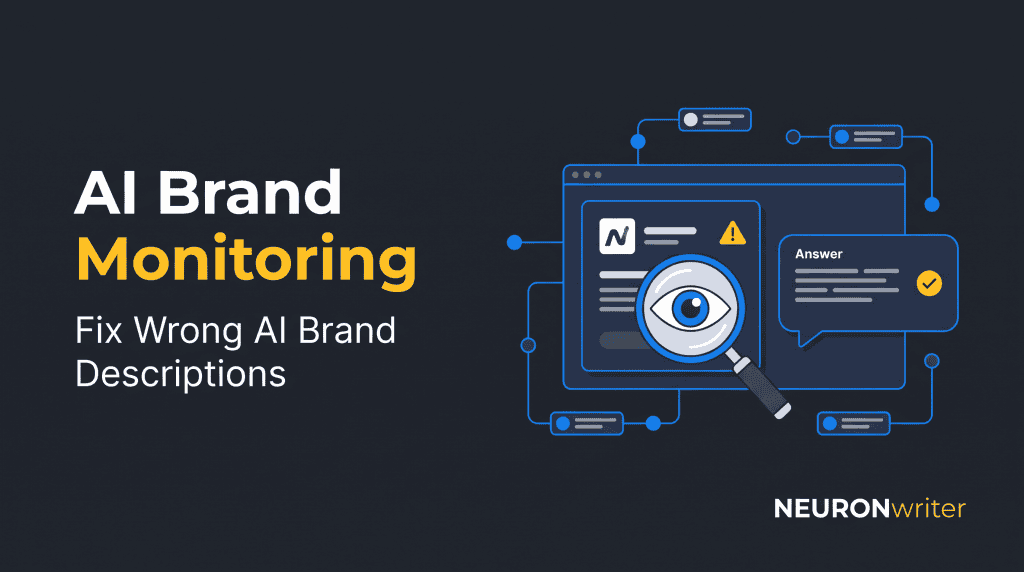
Idea: AI brand monitoring means checking what AI answers say about your company, product, and category. The goal is not simply to count brand mentions. It is to make sure the information a potential buyer sees is clear, current, and correct.
Challenge: A brand can appear in an AI answer and still be misrepresented. An answer may list a feature you do not offer, put you in the wrong category, describe an old pricing model, or use outdated language. More visibility is not helpful if it creates confusion.
Summary: Use a simple audit: choose important buyer questions, save the exact answer, compare every important claim with approved facts, give the issue a risk level, and assign one clear next action. This turns AI brand monitoring from a vague dashboard metric into a practical way to protect your brand.
Related reads:
Brand Mentions vs. Backlinks: Why AI Search Changed the Rules
AI Visibility Measurement Framework for Content Teams
How to Get Cited by AI: From Citation Gap to Content Brief
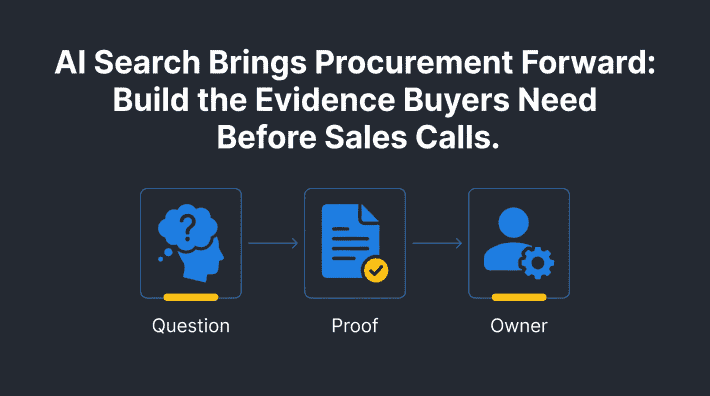
AI search is becoming part of how people learn about brands. Someone may ask an AI assistant which product suits their needs, what a company does, whether a feature exists, or how two types of software differ. The answer can shape a buyer’s first impression before they ever visit your website.
That creates a simple problem: an AI answer can mention your brand and still get it wrong.
The fix is not to panic, argue with every answer, or publish a new page for every question. Start with a calm, repeatable check. Look at what the answer says, compare it with your approved product facts, and decide whether the issue needs action. This article gives you that process in plain language.
What AI Brand Monitoring Means.
AI brand monitoring is the regular check of how AI answers describe your brand. It looks at your name, product claims, category, audience, and public reputation across selected AI platforms.
This is different from ordinary brand monitoring. Traditional search often shows a list of pages. AI search gives the user a written answer. That answer can combine information from several sources, use old wording, or shorten a complex product into one sentence. The result may sound confident even when it is incomplete.
For example, an AI answer might say that a company is “a keyword tool for bloggers.” That may be partly true, but it may leave out the product’s workflow, target users, or newer capabilities. Another answer might say a company offers a feature that was removed, renamed, or never existed.
A useful AI brand monitoring process asks four basic questions:
| Question | What you are checking | Why it matters |
| Is the brand mentioned? | Whether your brand appears in an answer. | A missing brand can show a visibility gap. |
| Is the description correct? | Whether the answer matches approved facts. | Wrong information can confuse buyers. |
| Is the context fair? | Whether the answer uses the right category, audience, and use case. | A true fact can still be misleading without context. |
| Is there a sensible next step? | Whether the issue can be fixed through content, documentation, or a public correction. | Not every incorrect answer needs the same response. |
The main point is simple: brand visibility is not the same as brand accuracy. A mention is only useful when it helps the right person understand what you actually offer.
AI Brand Monitoring vs Traditional Search and Social Listening
AI brand monitoring checks the written answers produced by AI systems; traditional search and social listening check different things. You need all three views only when they help answer a real business question.
Traditional search shows how your pages appear in Google Search. Social listening shows what people say in public posts, comments, and discussions.
AI brand monitoring checks how AI platforms like ChatGPT, Gemini, Perplexity, and Google AI Overviews describe your brand when someone asks a question.
These systems are often called large language models, meaning AI systems that produce written answers from patterns and available information.
| Check | Plain-language question | What it can reveal |
| Traditional search | Can people find our page when they search? | Search visibility, page titles, and organic visits. |
| Social listening | What are people saying about us in public? | Customer concerns, praise, rumours, and brand health. |
| AI brand monitoring | What does an AI answer say about us? | Wrong product claims, missing context, brand mentions, and AI citations. |
A good AI brand monitoring workflow does not replace traditional search or social media management. It adds one more useful check. It helps you see whether your brand is represented clearly in AI-driven search and generative AI answers.
You do not need to chase a list of “best AI brand monitoring tools” to begin. A small question list, a shared sheet, and free public sources such as Google Search Console and Google Analytics are enough for the first review.
An AI monitoring platform can make recurring checks easier later, but the important work is still reading the answer, checking the fact, and choosing a sensible response.
Why an Incorrect Brand Mention Matters
An incorrect mention can affect trust at the exact moment a buyer is comparing options. It may lead a person to dismiss your product, expect the wrong feature, or choose a competitor because the answer gives them an incomplete picture.
This does not mean every small wording difference is a crisis. AI answers change. They can also shorten complex information for speed. Your job is to separate minor wording choices from real mistakes.
A simple rule helps:
Treat a brand description as important when a buyer could make a different decision because of it.
For instance, a short description that leaves out a minor detail may not need action. But an answer that says your product is for a different audience, has a feature it does not have, or lacks a feature it does have can be more serious.
For instance, a short description that leaves out a minor detail may not need action. But an answer that says your product is for a different audience, has a feature it does not have, or lacks a feature it does have can be more serious.
| Type of issue | Example | Likely risk | First response |
| Small wording gap | The answer uses a broad label for your product. | Low | Record it and watch future answers. |
| Missing context | The answer names the product but leaves out who it is for. | Medium | Improve the clearest owned page for that audience. |
| Wrong product claim | The answer says you offer a feature that you do not offer. | High | Check your public facts and decide whether a correction is needed. |
| Wrong category | The answer places you in a category that does not match your real use case. | High | Review category language across key pages and third-party sources. |
| Outdated information | The answer repeats an old product name, price, or policy. | Medium to high | Update the source of truth and track whether the error repeats. |
This kind of work also helps your wider SEO and content strategy. Clear product information helps people, search engines, support teams, sales teams, and AI systems understand the same thing. Google’s guidance for AI features still begins with helpful, people-first content and sound page fundamentals not a special trick for AI.
The Three Types of Wrong AI Brand Descriptions
Most problems fall into three clear groups: a wrong fact, a wrong category, or wrong context. Once you know the group, the next step becomes easier.
Wrong Product or Feature Claim
A wrong product claim says that your brand does or does not do something. This is often the most urgent problem because it can affect a purchase decision.
Examples include an AI answer saying that you provide a feature, integration, service, price plan, or technical option that is not available. The opposite can also happen: it may say you do not support something that you do support.
Start by checking your main product page, feature page, pricing page, help centre, and public announcements. If your own pages use different wording, the problem may begin there. Pick one approved sentence that states the fact clearly. Then make sure important pages use the same language.
Wrong Category or Audience
A wrong category describes what kind of product you are, or who you are for, in a way that does not fit. This can make the brand appear in the wrong buyer conversation.
For example, an AI answer may describe a content platform as a writing-only product when it also supports planning and optimisation. Or it may present a business product as suitable only for a completely different type of customer.
Fixing this often requires better category language, not more pages. Look for the main page that explains your product and the pages that explain who benefits from it. Make the category, job-to-be-done, and audience easy to understand in the first few paragraphs.
Outdated, Incomplete, or Harmful Context
A context problem uses information that may once have been correct but no longer gives a fair picture. It can come from an old review, an outdated news story, a community discussion, or an older version of your own page.
Do not assume that a new blog post will solve this. First, find the source behind the statement. If the source is a public page you control, update it. If it is a third-party page with a factual error, request a correction through the normal relationship you have with that publisher or customer platform. If the answer has no clear source, record the issue and check it again later before making big changes.
A Simple Brand-Representation Audit.
A brand-representation audit is a short process for checking whether important AI answers describe your brand correctly. You do not need to test hundreds of questions. Start with a small group that matters to buyers.
Choose the Questions That Matter to Buyers
Start with the questions a real buyer, customer, partner, or journalist might ask. Use plain questions, not only short keywords. Your sales calls, support tickets, demos, reviews, and website search can help you find them.
Good starting questions include:
- What does [brand] do?
- Who is [brand] for?
- Does [brand] offer [important feature]?
- Is [brand] suitable for [specific use case]?
- What is the difference between [brand category] and [nearby category]?
- What should a buyer know before choosing [brand]?
Keep the first set small. Ten well-chosen questions are more useful than a long, random list. If you use an AI monitoring platform, use the same set of questions each time. This makes later comparisons more meaningful.
Record the Exact AI Answer and Its Context
Save what the AI platform actually showed before you interpret it. Record the full question, the platform, date, language, market, and answer text. If a visible source or link appears, record that too.
This matters because AI responses can vary by wording, date, platform, and context. A single answer is an observation, not proof that every user sees the same description.
| Field | What to save | Simple reason |
| Question | The exact question you asked. | A small wording change can produce a different answer. |
| Platform | The AI platform you checked. | Different platforms can show different results. |
| Date and market | When and where you checked. | Product facts and answers can change over time. |
| Answer text | The sentence or paragraph about your brand. | Gives reviewers something real to check. |
| Visible source | Any page or link shown with the answer. | Helps you find the public information behind the claim. |
| Issue type | Wrong fact, wrong category, missing context, or no issue. | Keeps the audit easy to sort. |
Use a shared sheet or a simple work tracker. You do not need a complicated dashboard to begin. The important thing is that everyone on the team sees the same evidence.
Check the Claim Against Approved Facts
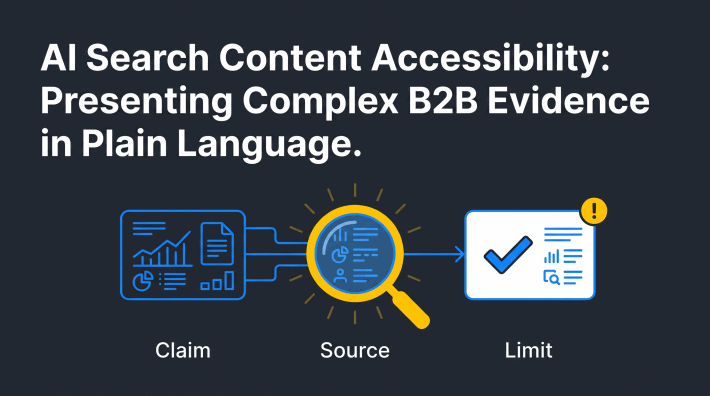
Compare each important claim with a source of truth. A source of truth is the page or document your company trusts for a specific fact, such as a feature page, pricing page, legal policy, product documentation, or approved product message.
Ask these questions:
- Is the claim correct today?
- Does the answer leave out a condition or limitation that matters?
- Is the claim written in a way a buyer could misunderstand?
- Do your own public pages explain the point clearly enough?
- Is the error repeated across more than one answer or platform?
Keep the language simple in the audit. Do not write “semantic mismatch” if “wrong category” explains the problem. The person who owns the next step should understand the issue without needing a specialist translation.
Mark the Issue by Risk and Urgency.
Give every problem a simple risk level so the team knows what to handle first. A high-risk issue affects a buyer decision, legal promise, price, product capability, or serious reputation claim. A medium-risk issue makes the brand harder to understand. A low-risk issue is minor wording that does not change the decision.
| Risk level | Use it when | Example response | Owner |
| High | The answer gives a wrong product fact or a serious harmful claim. | Verify the fact, update the right source, and involve product or legal review if needed. | Product owner or designated reviewer. |
| Medium | The answer creates a misleading picture of the category or audience. | Improve the canonical product or solution page and review public descriptions. | Product marketing or content lead. |
| Low | The wording is imperfect but unlikely to change a decision. | Log it, then check whether it repeats in the next review. | Content owner. |
A risk label is not a prediction of what AI will say next. It is simply a way to use your team’s time well.
How to Read Sources and AI Citations
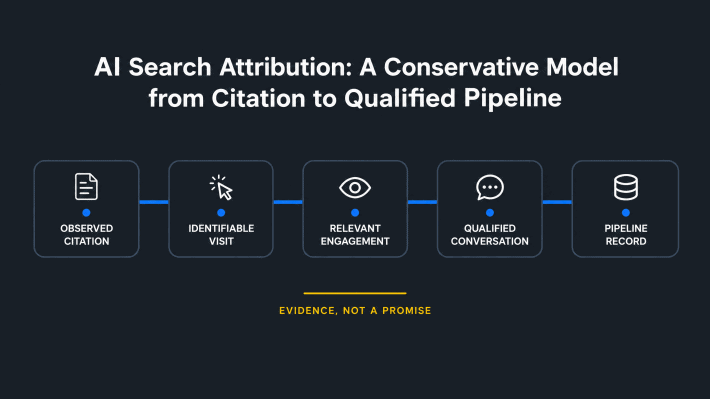
A source shown beside an AI answer is useful evidence, but it is not a full explanation of why the answer was written that way.
An AI citation is simply a source link or source label shown with an answer. It can help you check a claim, but it does not prove that changing one page will immediately change the next answer.
When an answer includes a source, open it and ask three simple questions. Is the page current? Does it actually support the claim? Is it an owned page, a third-party page, or a source that should be corrected? This turns citation monitoring into a practical fact-checking step.
| What you see | What it may mean | What to do next |
| An AI citation to your own page | The page may be helping the system understand a product fact. | Check whether the sentence is clear, accurate, and current. |
| A citation to an old third-party page | Older information may be part of the answer context. | Check whether the claim is factual and request a correction if appropriate. |
| No visible source | The answer may not show its evidence clearly. | Save the wording, check again later, and avoid guessing the cause. |
| Several sources disagree | The subject may be unclear or changing. | Update your strongest source of truth and make the current fact easy to find. |
Use sources to understand the answer, not to overclaim. A careful audit says, “this source may be relevant,” rather than “this source caused the answer.” That distinction keeps your AI brand monitoring honest and useful.
How to Respond Without Overreacting
The best response depends on where the wrong information comes from. Sometimes you need to improve an owned page. Sometimes you need to correct a third-party source. Sometimes you simply need more observations before you change anything.
Fix an Owned Page When the Information Is Unclear
If your own page is unclear, update the page that should be the main source of truth. Use a direct statement near the top. Add a short explanation, a useful FAQ, or a clear comparison only when it helps the reader.
For example, instead of saying “our platform supports advanced content intelligence,” say what the user can actually do. Plain language makes the page easier for a buyer to understand and easier for any system to quote accurately.
Avoid creating five near-identical pages to repeat the same fact. Improve the strongest existing page, then link to it from related pages where that context helps. The AI Visibility Measurement Framework explains why stable prompts, clear metrics, and a consistent review process matter more than scattered checks.
Correct Public Information When a Third-Party Source Is Wrong
If the wrong claim appears on an independent page, first check whether it is truly inaccurate or simply an opinion. You can ask the publisher to correct a factual error. Keep the request short, polite, and supported by a public source of truth.
Do not try to hide valid criticism. A fair review may point to a real weakness, missing feature, or limited use case. Your better response may be to improve the product, explain the limitation clearly, or make your positioning more specific.
Recheck the Same Question Over Time
Check important questions again on a regular schedule. AI brand monitoring works better when you compare the same questions over time. A weekly or monthly check is usually enough for many teams; you may check sooner after a product launch, major page update, pricing change, or serious error.
Use free, widely available sources when they help. For example, Google Search Console can show how people reach your pages from Google Search, while Google Analytics can help you understand visits that arrive from identifiable referral sources. These tools do not tell you every detail of an AI answer, but they can add useful context to your audit.
The Small Set of AI Brand Monitoring Metrics That Matter
Keep your monitoring results simple. A long dashboard can hide the one fact that needs attention. Start with a few clear measures that show whether your brand appears, whether it is described correctly, and whether an issue is improving.
| Metric | Simple meaning | Useful question |
| Brand mentions | How often your brand is named in the chosen AI answers. | Does the brand appear when it should? |
| Brand accuracy | How many important claims are correct after a manual check. | Is the brand represented truthfully? |
| Brand presence across AI | Which selected AI platforms mention the brand. | Are there clear gaps between platforms? |
| AI citations | Whether an answer shows a public page as a source. | Can we check where the claim may come from? |
| Issue count by risk | Number of high, medium, and low-risk mistakes. | What needs action first? |
| Repeat rate | Whether the same wrong description appears again. | Did the last update improve the situation? |
These are visibility metrics, not promises of a ranking or sales result. Use them for benchmarking your own progress over time. The most useful number is often not how often your brand appears, but whether a buyer gets the right answer when the brand appears in an AI-generated response.
AI Brand Monitoring Checklist: Platform Coverage and Data Quality
A useful AI brand monitoring check needs the same questions, clear notes, and a fair comparison over time. If you change the question, platform, language, and audience every week, your monitoring results will be hard to trust.
Use this checklist before you compare a new result with an old one:
| Checkpoint | Simple rule | Why it helps |
| Question list | Keep the main buyer questions the same for each review. | Lets you see whether the brand description has changed. |
| Platform coverage | Check the AI platforms your audience actually uses. | Shows where brand visibility is strong, weak, or unknown. |
| Market and language | Record the country and language of the question. | A brand can be represented differently in different markets. |
| Answer capture | Save the relevant answer wording, not only a score. | Makes it possible to check the real claim later. |
| Source check | Note any public page shown beside the answer. | Helps separate a visible source from a guess about the cause. |
| Accuracy review | Compare important claims with approved facts. | Keeps the audit focused on what a buyer could misunderstand. |
| Next review | Set a date to check the same question again. | Turns one result into ongoing monitoring. |
Some AI brand monitoring tools can run multi-engine monitoring and produce an AI visibility tracker or dashboard. That can save time when a team needs regular benchmarking. But the basic quality rule stays the same: monitor your brand with the same questions, read the answer, and verify the important facts before you act.
AI Brand Monitoring Across Markets and Languages
Your brand may be described differently in different markets. A product name, feature, category, or customer example can mean different things in another language or region. That is why each AI brand monitoring record should include the market and language, not only the question.
For example, a product may be available in one market but not another. A local page may use an old product name. A translated page may explain a feature less clearly than the main English page. Generative AI platforms can repeat any of these differences in their answers.
| What you notice | Simple check | Possible next step |
| A wrong answer appears in one market only | Check the local page, local help content, and public descriptions for that market. | Ask the local content owner to clarify the source of truth. |
| The same answer changes by language | Compare the question and answer side by side. | Make core product facts consistent across the important language pages. |
| A feature is described without a market limit | Check whether availability or pricing differs by country. | Add a short, clear condition on the right owned page. |
| The category changes across markets | Look at the first paragraph of the key product and solution pages. | Use the same plain category wording where it is accurate. |
This is not a reason to create separate content for every small wording difference. Use the audit to find the few cases where a buyer could receive the wrong message. Then improve the clearest existing page for that market.
A Weekly AI Brand Monitoring Routine
A small weekly routine can prevent brand errors from becoming normal. The routine should be short enough that a busy team will actually use it.
| Step | What to do | Time needed |
| 1. Check | Run your small list of buyer questions on the AI platforms your audience uses. | 15–30 minutes |
| 2. Record | Save new or changed descriptions of the brand. | 10 minutes |
| 3. Compare | Check important claims against approved product facts. | 15–30 minutes |
| 4. Assign | Give each real issue a risk level and owner. | 10 minutes |
| 5. Act | Update one source of truth, request one correction, or schedule a recheck. | Varies by issue |
| 6. Review | Note what changed and what still needs evidence. | 10 minutes |
This workflow helps separate useful work from noise. It also gives marketing, product, sales, and support teams a shared way to talk about AI brand visibility. Instead of saying “AI got us wrong,” the team can say: “This answer makes a medium-risk category error. The product page owner will clarify the audience and we will check the same question next month.”
The same routine also makes it easier to improve AI brand visibility over time. Your team can see whether the brand appears in AI-generated answers, whether the explanation is accurate, and whether a change to content or product information has made a useful difference. That is more helpful than watching a single mention count without context.
Use the monitoring results to make one decision at a time. If the evidence shows a wrong feature claim, fix the feature fact. If it shows a weak category description, improve the main category page. If the evidence is unclear, recheck the question instead of guessing. This small decision rule keeps AI monitoring useful for marketing teams, product teams, and anyone responsible for brand health.
How NEURONwriter Helps Teams Monitor Brand Representation
NEURONwriter can help turn AI brand monitoring into a repeatable content and visibility workflow. Its AI Visibility feature helps teams review selected questions, brand mentions, citations, competitors, and opportunities across supported AI answers.[2]
The value is not only the list of mentions. It is the next decision. A team can use a repeated question set to spot a wrong description, collect the evidence, compare it with approved facts, and assign a clear action. The action may be a product-page update, a content brief, a documentation review, or a recheck after more evidence is available.
Use the How to Get Cited by AI workflow only when the audit shows a real content gap. If the issue is an inaccurate product fact, a clearer source-of-truth page or a public correction may be the better first step.
Frequently Asked Questions
What is AI brand monitoring?
AI brand monitoring is the regular check of how AI answers describe your company, product, category, and audience. It looks beyond brand mentions to see whether the information is correct, current, and useful for a potential buyer.
Why can an AI answer describe my brand incorrectly?
AI answers can simplify complex information, use outdated public content, or combine details from different sources. That is why it helps to check important buyer questions against your current, approved product facts.
What is the difference between AI visibility and brand accuracy?
AI visibility means your brand appears in an answer. Brand accuracy means the answer describes the brand correctly. A high number of mentions is not helpful if buyers are given the wrong feature, audience, or category.
Which AI platforms should I check?
Start with the platforms your buyers use most. For many teams, that may include ChatGPT, Gemini, Perplexity, and AI results in Google Search. You do not need to check every platform at once; use a small, stable set first.
How often should I monitor my brand in AI answers?
A weekly or monthly review is usually enough for a small, important question set. Check sooner after a product launch, pricing change, major website update, or when someone reports a serious wrong answer. The goal is ongoing monitoring of the same useful questions, not a one-time check of every possible AI prompt.
What should AI brand monitoring results include?
Keep the results simple: the question, AI platform, brand mention, answer wording, visible source, accuracy check, risk level, owner, and next review date. This gives teams useful visibility data without turning a basic audit into a hard-to-read report.
Do I need an AI brand monitoring tool to get started?
No. Start with a short list of buyer questions, a shared sheet, and a regular review. An AI brand monitoring tool can make larger checks easier, but it cannot replace a person who checks whether a product claim is correct and decides what to do next.
Why should I record market and language in an AI brand audit?
AI answers can differ by country and language. Recording both details helps your team see whether the problem comes from a local page, a translation, a market-specific product limit, or a broader brand description.
Should I create a new blog post for every wrong AI mention?
No. First find the page that should already explain the point. Often the best answer is to improve a current product page, feature page, FAQ, or help article instead of creating another similar URL.
Can I correct an AI answer directly?
In most cases, you cannot edit an AI answer directly. You can improve your own public information, correct factual errors on third-party pages where appropriate, and recheck the same buyer question over time.
What should I do when an AI answer shows a source link?
Open the source and check whether it is current and whether it supports the exact claim. A source link is useful evidence, but it does not prove that one page caused the AI answer. Record what you found and choose the smallest sensible next action.
How does NEURONwriter support AI brand monitoring?
NEURONwriter helps teams track selected buyer questions, brand mentions, citations, competitors, and content opportunities. Your team can then use a simple audit to decide whether the next step is a content update, a product fact review, a public correction, or another check.