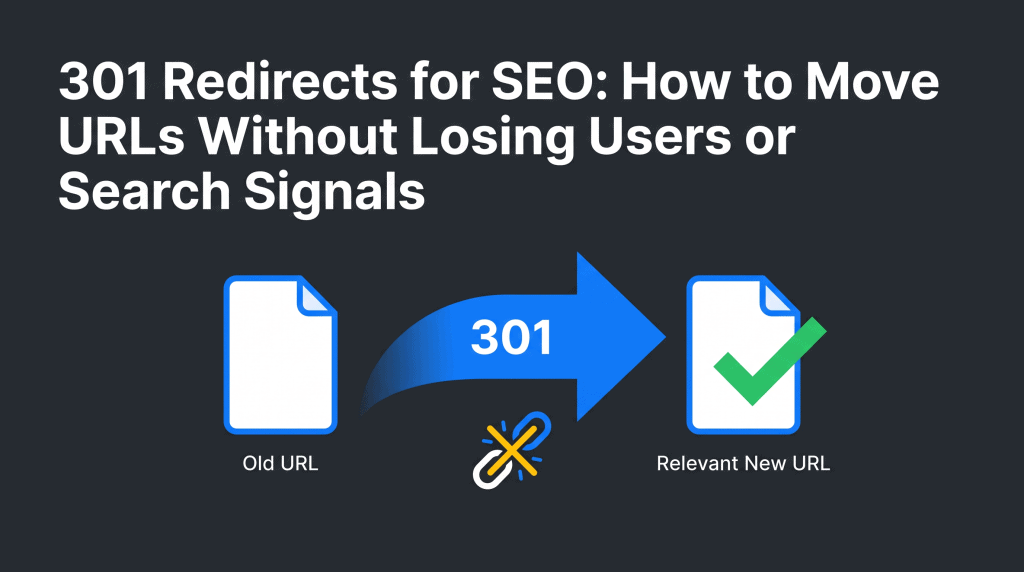
Semantic Summary Idea A 301 redirect tells visitors and search engines that a page has moved permanently to a new URL. Challenge A redirect only helps when the new destination matches the old page’s purpose. Sending every removed URL to a homepage, or creating chains and loops, creates a worse experience. Summary Decide whether the […]
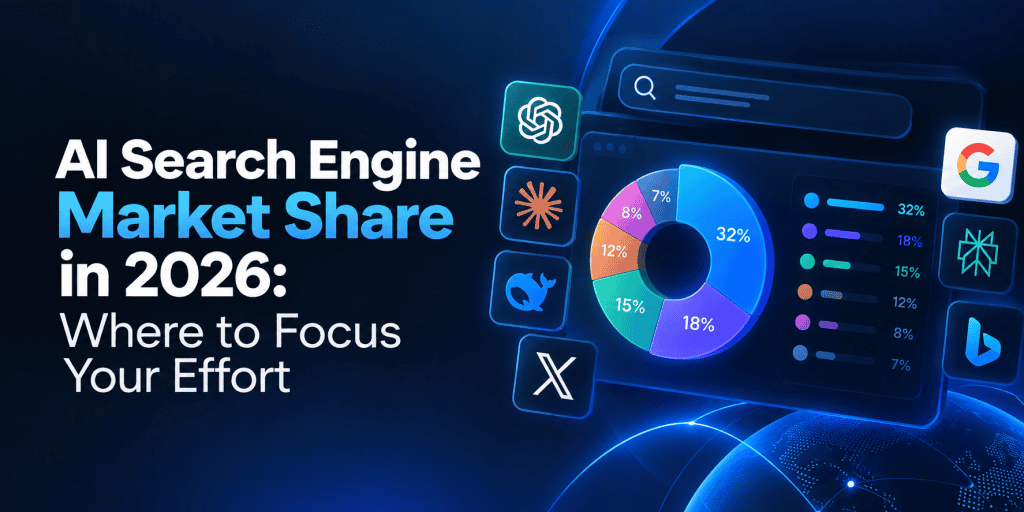
AI Search Engine Market Share in 2026: Where to Focus Your Effort
Semantic Summary Idea: There is no single, reliable figure for AI search market share. Published estimates differ widely because they measure different things, so the useful question is where your own audience looks. Challenge: Headlines compare incompatible metrics such as sessions, searches, and users. Teams then chase the biggest name or ignore the channel entirely. […]
Grok and X’s Search Integration: A New Front for Brand Visibility
Semantic Summary Idea: Grok, xAI’s chatbot, combines real-time posts from X with web search and shows citations, so brand visibility there depends on both your X presence and your open-web pages. Challenge: Most advice on Grok mixes vendor claims with guesses, and a citation from an X post is not the same as a verified […]
DeepSeek and the Rise of Non-US AI Search Engines: Should You Care?
Semantic Summary Idea: DeepSeek and other non-US AI search engines are worth understanding, but for most sites they are a watch-and-verify item rather than a new optimization channel because the fundamentals that earn citations elsewhere largely carry over. Challenge: Search results for “DeepSeek SEO” mix three very different questions using DeepSeek as an SEO tool, […]
Claude and Anthropic’s Web Search: What It Means for Content Discovery
Semantic Summary Idea: Claude’s web search behavior is more selective than ChatGPT or Perplexity it tends to cite fewer sources, favors smaller and niche outlets over top-tier mainstream media, and effectively never cites Reddit, all of which changes what “getting cited by Claude” actually requires. Challenge: Claude cite generative ai discussions often conflate two unrelated […]
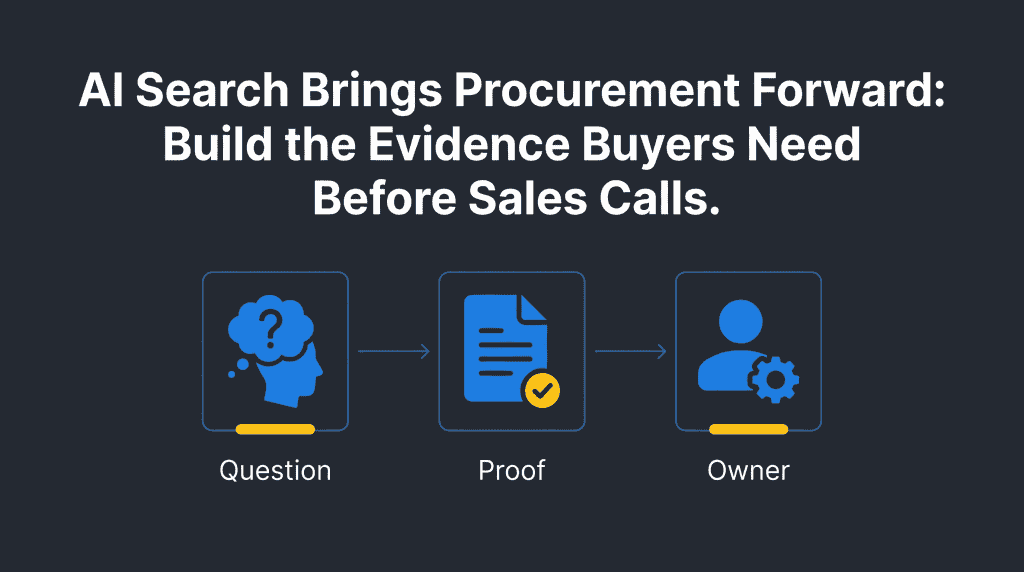
AI Search Brings Procurement Forward: Build the Evidence Buyers Need Before Sales Calls
Semantic Summary Idea: Buyers can reach validation questions earlier when AI-assisted research helps them compare options, summarize claims, and prepare internal questions before they speak with sales. Challenge: The evidence that answers those questions is often scattered across product, security, support, commercial, and documentation teams and can be accurate in one place but stale, incomplete, […]
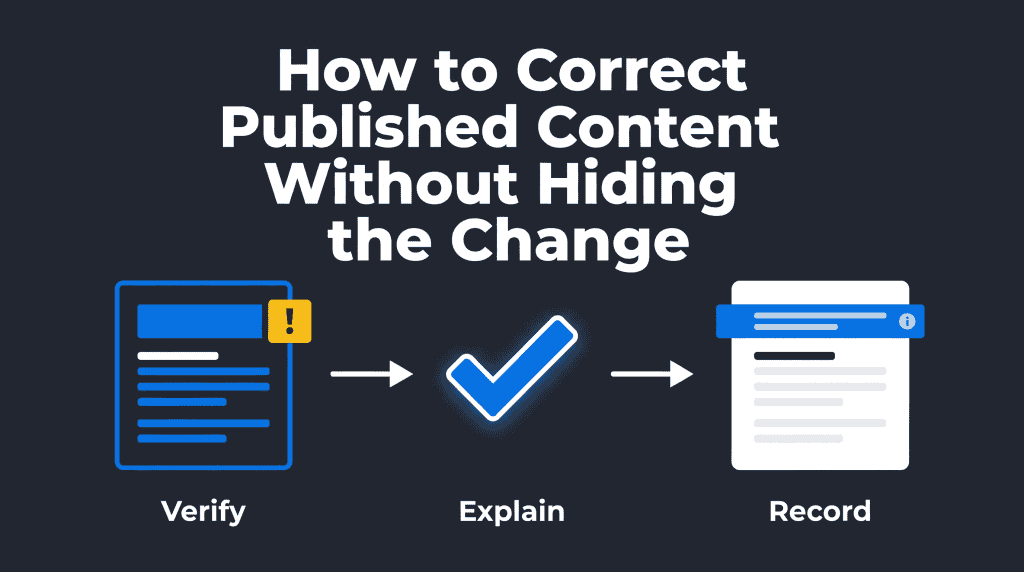
How to Correct Published Content Without Hiding the Change
Semantic Summary Idea: A correction is not just an edit. It is a reader-trust decision about what changed, who could be affected, and how clearly the page should explain it. Challenge: Teams often fix a live error quietly, change the date, or remove the page before deciding whether readers who saw the original information need […]
Google AI Mode vs. AI Overviews: What’s Actually Different for SEOs
Semantic Summary Idea: AI Overviews and AI Mode are two distinct Google search surfaces, not one feature under two names they pull from different retrieval scopes, produce different response formats, and require separate tracking. Challenge: Because both sit on top of the same underlying Google index and get grouped together as “Google’s AI stuff,” teams […]
Perplexity SEO Services: What They Actually Do (and Whether You Need One)
Semantic Summary Idea: Perplexity AI SEO services package a specific set of work crawlability fixes, direct-answer content structure, authority building, and citation tracking that many in-house teams can also do themselves once they understand what’s actually involved. Challenge: The market for Perplexity SEO agencies has grown fast enough that it’s hard to tell which parts […]
How ChatGPT Actually Chooses Sources: A Technical Breakdown
Semantic Summary Idea: ChatGPT doesn’t rank websites the way a traditional search engine does when it’s actually searching at all, it runs a structured retrieval pipeline that pulls a shortlist of documents, ranks them, and extracts specific passages, rather than scoring your whole domain against a query. Challenge: Content teams often reason about ChatGPT citations […]