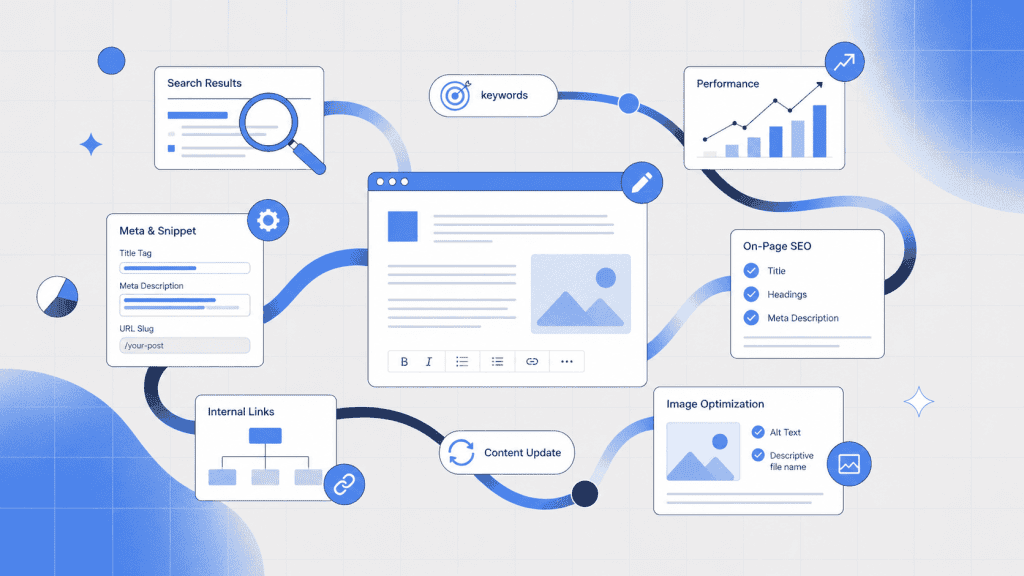
A content engine is more than a publishing calendar. It’s a system that keeps producing useful content, distributing it and learning from performance without starting from zero every week. Many teams struggle because content depends on individual bursts of effort. Someone suggests a topic, a writer creates an article, the post goes live and the […]

How to Train Your Writers (Human or AI) on Your Brand Voice
Semantic Summary Idea: Teaching writers how to capture your brand voice is the hardest part of scaling content. In 2026, the challenge has doubled because marketing teams must now train both human freelancers and AI content generators. Without a systematic training framework, your content quickly becomes generic, eroding reader trust and brand identity. Challenge: According […]
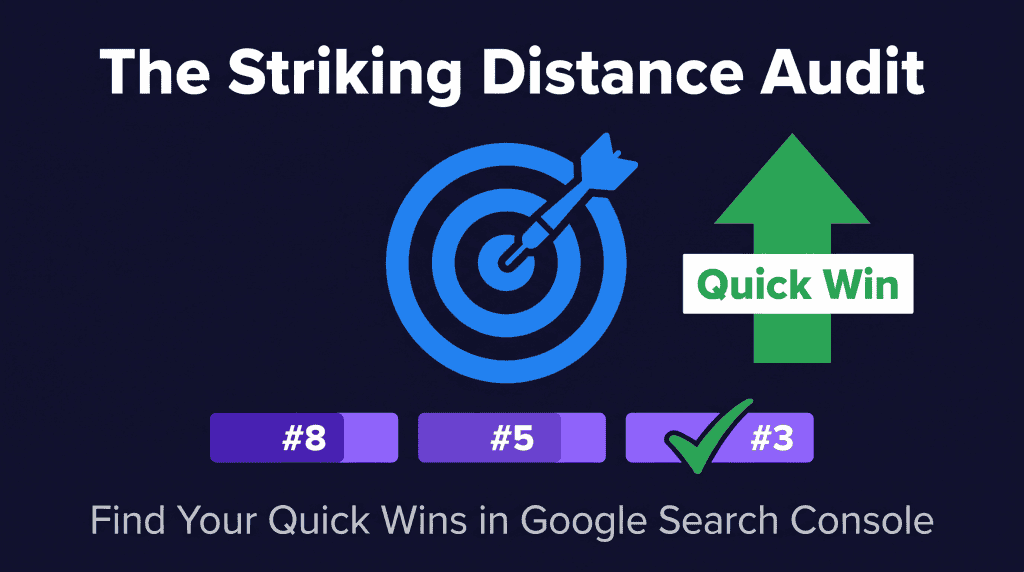
How to Find Striking Distance Keywords in GSC
Semantic summary Idea: A striking distance audit is the process of finding keywords where your website already ranks on page one or two of Google, but just outside the top three spots (usually positions 4 through 15). Because Google already considers your page relevant, making small, targeted optimizations can push these pages into the top […]
Brand Visibility in the AI Era: From Infrastructure to Content Understanding – Lessons from Pawel Sokolowski presentation during SEMKRK26
Paweł Sokołowski, CEO of CONTADU and NEURONwriter, recently had the pleasure of sharing some insights at the SEMKRK26 conference. The topic addressed – “Brand visibility. Technicalities in the AI era.” – sparked many questions and a lively discussion, which only confirms its importance in today’s rapidly changing world of SEO and content marketing. Today I […]
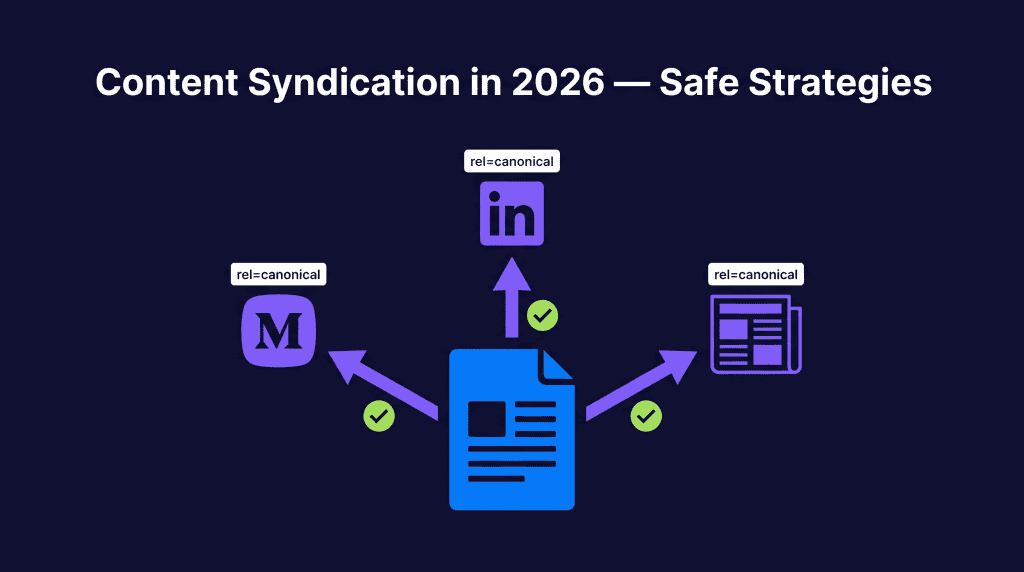
Content Syndication in 2026: Safe Strategies That Won’t Trigger Duplicate Penalties.
📍 Semantic summary Idea: Content syndication means taking an article you already wrote and publishing it again on other platforms like Medium, LinkedIn, or industry websites. It is one of the easiest ways to reach more readers without creating new content. Many marketers avoid it because they fear a so-called “duplicate content penalty.” In 2026, […]
How to Create a Content Refresh Plan That Improves SEO Performance
What if some of your best SEO opportunities are already sitting on your website, buried inside articles you published months or even years ago? Publishing new content matters, but it is not always the fastest route to better rankings. An existing page may already have backlinks, search impressions, internal links and topical authority. It may […]
Digital PR for SEO: Earning Citations Without Asking for Links.
📍 Semantic Summary Idea: Traditional link building is dying. In 2026, AI search engines like ChatGPT, Perplexity, and Google’s AI Overviews prioritize trust and entity recognition over raw backlink counts. To build this trust, brands must pivot to Digital PR—the practice of earning editorial coverage, brand mentions, and citations in high-authority publications through newsworthy stories […]
Using NEURONwriter to Map and Dominate Entity Clusters.
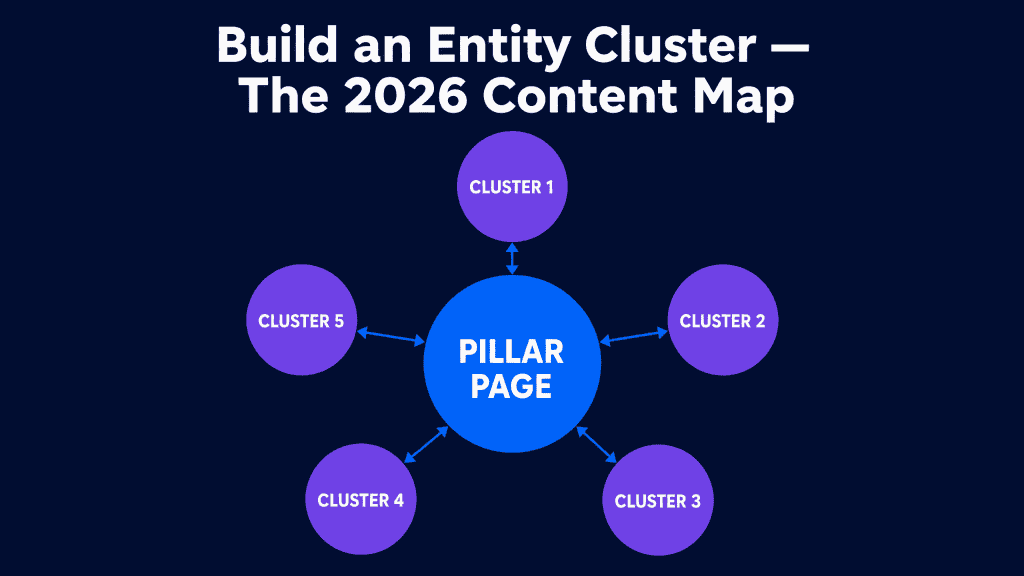
📍 Semantic Summary Idea: A topic cluster is an information architecture strategy that organizes a website around a central “pillar” page and multiple supporting “cluster” articles. In 2026, building a successful cluster is no longer about grouping similar keywords together. It is about mapping the relationships between distinct entities (concepts, people, products) to prove deep, […]
Entity Salience: How Google Determines What Your Page is Really About.
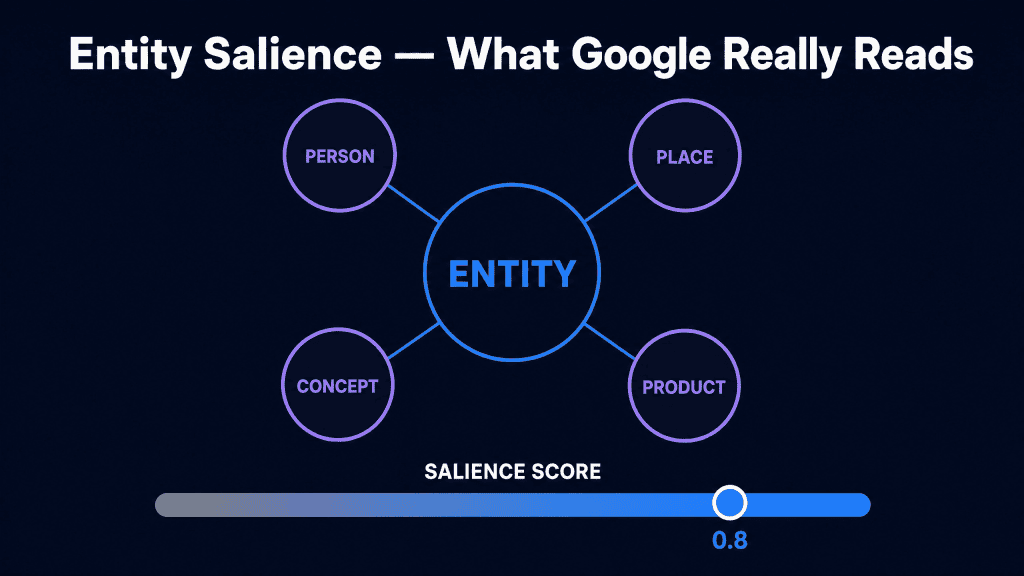
📍 Semantic Summary Idea: Search engines no longer rely on counting how many times a word appears on a page to understand its topic. Instead, they use Natural Language Processing (NLP) to identify “entities” — specific people, places, concepts, or things — and measure their “salience,” which is how central those entities are to the […]
6 Best Tools for an AI-Powered Content Operations Stack in 2026
Content teams no longer struggle to generate enough words. Their harder problem is coordinating research, briefs, AI agents, writers, approvals, publishing and performance data without creating a maze of disconnected systems. The best content operations tools solve distinct parts of that problem. One platform may guide research and optimization, another may automate handoffs and a […]