SEO and PPC: How to Combine Strategies for Better ROI
Semantic Summary
Idea: In the competitive digital landscape of 2026, treating organic search and paid advertising as separate silos is a costly mistake. Integrating SEO and PPC creates a powerful synergy that maximizes your visibility at the top of the search engine results pages (SERPs) while lowering your overall customer acquisition costs.
Challenge: Many marketing teams debate whether to use SEO or PPC, splitting their budgets and failing to share valuable search terms data between departments. This disjointed approach means SEO teams guess at high-converting keywords, while PPC teams overspend on broad terms without the benefit of organically ranking landing pages to improve their Quality Scores.
Summary: By combining SEO and PPC, you create an integrated digital marketing strategy where PPC data informs your long-term SEO content, and strong organic rankings reduce your reliance on expensive paid search results. Utilizing tools like NEURONwriter and Google Search Console helps bridge this gap, ensuring your organic and paid efforts work together to dominate the search landscape.
Related reads:
The Cost of Bad Content: Calculating the ROI of Semantic Optimization
The “Striking Distance” Audit: Finding Quick Wins in Google Search Console
Understanding SEO and PPC
Before exploring how to combine these disciplines, it is essential to establish a clear understanding of the difference between SEO and PPC, and how search engine algorithms treat them.
What is SEO?
Search engine optimization (SEO) is the process of improving your website to increase its visibility in organic search results. SEO builds long-term authority through high-quality content, semantic relevance, and technical excellence.
When you use SEO effectively, you earn placement in the search results without paying for each click, resulting in highly sustainable organic traffic.
What is PPC?
PPC (Pay-Per-Click) advertising, commonly executed through Google Ads, is a model of search engine marketing where advertisers pay a fee each time their PPC ad is clicked.
Unlike SEO, which takes time to mature, a PPC campaign delivers immediate visibility at the top of search engine results, allowing you to target specific search terms with precision.
The Role of Search Engines
Search engines aim to provide users with the most relevant answers as quickly as possible. They divide the search results page into paid and organic search sections.
While organic search rankings are determined by complex algorithms assessing relevance and authority, paid search results are determined by a bidding system combined with the quality and relevance of the landing page.
The Importance of Visibility
Visibility in search is the cornerstone of any successful digital marketing strategy. If users cannot find your brand when searching for relevant keywords, your business effectively does not exist online.
How SEO Increases Visibility
Effective SEO strategies increase visibility by earning trust. When your content consistently answers user queries, search engines reward you with higher organic search rankings.
This organic visibility is highly trusted by users; many searchers explicitly scroll past ads to click on organic and paid listings that have earned their spot through merit.
The Impact of PPC on Visibility
While SEO builds trust, PPC guarantees placement. A well-funded PPC campaign ensures your brand appears at the absolute top of the search, above the organic results.
This immediate visibility is crucial for competitive keywords, time-sensitive promotions, or when launching a new product where organic authority has not yet been established.
Combining Efforts for Enhanced Presence
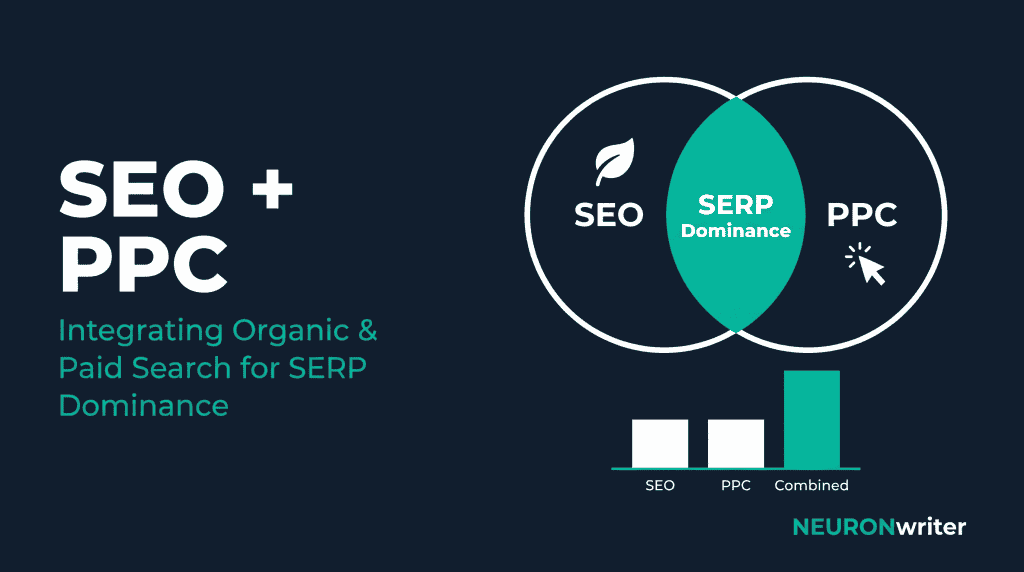
The true power of search engine marketing lies in the synergy between SEO and PPC. When you use SEO and PPC together, you can occupy multiple spots on the same search results page.
This combined SEO and PPC approach pushes competitors down the page, increasing your overall click-through rate and establishing undeniable brand authority.
SEO and PPC Strategies
To achieve maximum SERP dominance, both your organic and paid strategies must be finely tuned before they are integrated.
Effective SEO Strategies
Modern SEO content strategy requires more than just sprinkling keywords into text. It demands deep semantic relevance. Tools like NEURONwriter help you build comprehensive content that satisfies search intent perfectly.
By focusing on topical authority rather than isolated keywords, your SEO efforts create a robust foundation that can capture a wide array of organic search queries.
Crafting a Successful PPC Campaign
A successful PPC strategy relies on meticulous PPC targeting and compelling PPC ad copy. You must identify high-intent keywords using tools like Google Keyword Planner and structure your campaigns to deliver users to a highly relevant landing page.
The alignment between the ad copy and the landing page content is critical for maintaining a high Quality Score, which lowers your cost-per-click.
Evaluating PPC Data for Insights
One of the greatest advantages of paid search is the immediate feedback it provides. Evaluating PPC data reveals exactly which search terms convert into sales and which do not.
This data is a goldmine; instead of waiting months to see if an SEO keyword converts, you can use PPC to test keyword viability in real-time.
Integrating SEO and PPC
The transition from running parallel campaigns to an integrated SEO and PPC strategy requires a fundamental shift in how your marketing teams collaborate.
Creating an Integrated SEO and PPC Strategy
Creating an integrated strategy means ensuring that SEO and PPC work together seamlessly.
| Tactic | How It Works | Benefit |
| Data Sharing | Use high-converting PPC search terms to dictate your SEO content calendar. | Eliminates guesswork in keyword research. |
| SERP Dominance | Bid on PPC keywords where you already rank #1 organically. | Captures up to 80% of total clicks on the page. |
| Budget Optimization | Reduce PPC spend on expensive keywords once organic SEO builds top-3 rankings. | Lowers overall customer acquisition cost. |
| Landing Page Synergy | Use NEURONwriter to optimize PPC landing pages for semantic SEO. | Improves Google Ads Quality Score, lowering CPC. |
Benefits of Using SEO and PPC Together
When PPC and SEO strategies are aligned, the benefits multiply. PPC data informs SEO content creation, ensuring you only spend time writing articles for proven, profitable keywords.
Conversely, high-quality content for SEO serves as the perfect landing page for PPC ads, improving user experience and conversion rates. This integrated approach ensures that organic and paid efforts amplify each other rather than competing for the same budget.
Overcoming Challenges in Integration
The biggest challenge in combining SEO and PPC is organizational silos. Often, the SEO team uses Google Search Console while the paid team uses Google Ads, and they rarely communicate.
To overcome this, mandate monthly cross-departmental meetings where SEO and PPC data are reviewed together. Establish a shared keyword strategy document that clearly outlines which channels are targeting which competitive keywords.
Measuring Success: ROI of Combined Strategies
To justify the investment in an integrated approach, you must accurately measure how well SEO and PPC work together to drive revenue.
Metrics for Tracking SEO and PPC Performance
You cannot simply look at total traffic. You must track specific metrics across both channels:
* Assisted Conversions: How often a user clicks a PPC ad but returns later via organic search to purchase.
* Combined CTR: The total click-through rate when both a paid ad and an organic listing appear for the same query.
* Cost Per Acquisition (CPA): How the blended cost of organic content creation and PPC spend translates into a single customer.
Analyzing ROI from Combined Strategies
Analyzing ROI requires looking at the holistic digital marketing strategy. If leveraging PPC data helps your SEO team rank for a keyword that brings in $10,000 a month in organic revenue, that revenue must be factored into the ROI of the PPC campaign that originally discovered the keyword.
Adjusting Your Marketing Strategy Based on Data
An integrated strategy is never static. If you notice a sudden drop in organic search rankings due to search engine algorithms updating, you must temporarily increase your PPC budget to maintain visibility.
Conversely, when your SEO content finally reaches the top of the search engine results, you can scale back your paid search spend on those specific terms and reallocate the budget to new, untested markets. By constantly adjusting based on shared data, you ensure your brand maintains absolute dominance in the SERPs.
FAQs: SEO and PPC Integration
What is the main difference between SEO and PPC?
SEO focuses on earning organic visibility through content optimization and authority building over time. PPC involves paying for immediate ad placement at the top of search engine results.
Should I use SEO or PPC for my business?
You should use both. SEO provides sustainable, long-term traffic, while PPC delivers immediate results and valuable conversion data. An integrated SEO and PPC strategy yields the best ROI.
How can PPC data inform my SEO strategy?
PPC campaigns provide immediate data on which keywords actually convert into sales. You can use this PPC data to prioritize your SEO content calendar, ensuring you only invest time ranking for profitable terms.
Does bidding on PPC keywords improve my organic SEO rankings?
No, spending money on Google Ads does not directly influence Google’s organic search algorithms. However, the increased brand visibility and traffic from PPC can lead to more natural backlinks and brand searches, which indirectly benefit SEO.
Why should I bid on a keyword if I already rank #1 organically?
Bidding on a keyword where you already rank organically allows you to dominate the search results page. Studies show that having both an ad and an organic listing significantly increases the overall click-through rate compared to having just one.
How does SEO improve my PPC campaigns?
Optimizing your PPC landing pages with semantic SEO tools like NEURONwriter improves the page’s relevance. High relevance increases your Google Ads Quality Score, which lowers your cost-per-click (CPC).
What is keyword cannibalization between SEO and PPC?
While organic pages can cannibalize each other, SEO and PPC do not cannibalize each other in a negative way. Appearing in both paid and organic search results for the same query actually reinforces brand authority and captures more total clicks from competitors.